Scratching the surface with Cobh’s Pat Kinevane
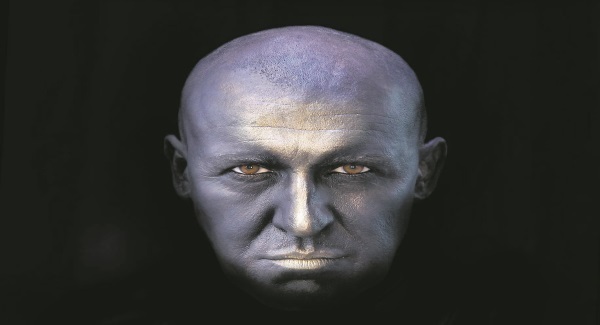
Pat Kinevane is waning with jet lag when we meet in a cosy Dublin hotel bar. He’s still engaging company, however, and as we chat, the scone and tea begin to work wonders. He’s just back from New York where his most recent one-man show, Underneath, has finished a three-week run.
The New York Times deemed it “a luxurious yarn” and judged its Kinevane “a monologuist of untrammeled imagination, who loves to ferret out the poetic glitter in dark, dank corners.” Not bad for what he calls “the rehearsals” for his upcoming run in Cork.
“They were great audiences and people were very kind to us,” he says of New York.
It’s been ever thus since Kinevane hit on this solo-show formula, with Forgotten (2006) and Silent (2011) playing to scores of Irish venues and travelling to another score of countries, lauded and awarded as they went.
“When Forgotten came along, everything went great,” he says, “and I wasn’t expecting that. And the same with Silent, for it to happen like that, to have those legs. This one is very different and I would never presume it was going to take the same path as the others. You can’t presume people are going to like it. But I am really, really grateful. I live on that planet. All the time. I’m 48 years of age, and I’ve had a fantastic time working and I’m healthy. That is the most important thing.”
What binds the three pieces, which will be performed in repertory at the Everyman, is their giving voice to the neglected and marginalised: Forgotten with its elderly characters in nursing homes; Silent with its homeless storyteller and, now; Underneath, with a dead woman who, “before the maggots … lived in a flat near Croke Park.”
Yet, if it’s a trilogy, it’s an accidental one. “They are a trilogy now, whether I like it or not,” he laughs. “I suppose Underneath does again address the isolation of a problem: how someone, very early in life, can be devastated and isolated by how they look. How cruel the world can be toward that. But I never planned it. After Silent, in particular, I never thought another piece would come, and it came. I see them almost as albums, with each section in them like a song.
“There are of course similarities in all of them because it’s my mad head, but I’m working with a different theme, a different landscape, a different mood each time. I wish I could have them on vinyl, though. I miss vinyl! That’s one thing I’ll never forget about Cork — going up to the record shops and bringing an album back home on the train.”
There is plenty in the three plays to show Kinevane remembers much apart from that from his native place. There’s a contrasting darkness and light in them which he attributes almost to a Cobh personality trait. “If you grow up in Cobh,” he says, “you know it can be glorious, beautiful, a riviera. And the light is like nothing else. But when it’s hard, it’s hard. Dark, windy, rain lashing in. I grew up at the top of the island, the highest point of the island, in a row of houses up there. So without a doubt, when I leave my door, even today, I’m ready for anything.”
There’s a use of colloquialisms and character that takes no prisoners, despite how well travelled the works have been.
“I don’t think anything is original in that sense,” he says. “We’re all influenced by the people around us. I don’t have a structure when I’m writing, but you are drawing on your memory of when you were growing up, local characters, local feelings, local heroes and villains.”
At the same time, Kinevane could not be accused of soft-soaping it. There are some memorably horrid encounters and characters in the plays — though he is quick to say the formidable mother in Silent is fictional.
“My own mother is an old dote,” he says. “I don’t feel distant [from Cobh]. I’m very aware that the whole thing has gone by in a flash, from starting off to now — but in a good way.”
Conversation with Kinevane touches on his early days with drama groups in Cobh, family, the pressures of online life, music, children, the changes in Dublin over the past 20 years. The stuff of normal life, in other words — but there’s a political core evident, a softly spoken conviction that society should and could be more just.
“When I’m asked what made me want to work this way, I think maybe it had something to do with wanting to address certain things, be they political or social or both. I wanted to kind of push that needle a bit and say, right, let’s put a spotlight, through theatre, on the plight of the elderly, the plight of the homeless.
“I swear, I thought these pieces would be obsolete. But the homeless thing is through the roof. And Forgotten has its 10th anniversary next year and that situation hasn’t improved.”
Kinevane rails against the way old people are treated by some banks.
“There is a drive in me, but I know I am a pussy cat, the softest man in the world. So maybe the only way I can make sense of my sorrow and my fury is to do it this way and maybe stir people up in a way to think we, as strong citizens, can change things.”
He also isn’t enamoured with with the Irish theatre world’s “frock dramas” from the 19th century.
“I think that really is obsolete. That doesn’t serve anyone anymore. I find it a little vulgar now. There’s room for it, but I find it intensely offensive that people are spending money on that, for only a small section of the theatregoing community. I think the theatre going community wants to be challenged.”
Kinevane describes writing Forgotten, not knowing whether his ideas about the elderly were widely shared — particularly in a society that is so quick to dismiss their experiences. “But then here was this mass of people who did think like that. I wouldn’t address these things in my everyday life. That takes a lot of f**kin guts. But I believe in fairness and justice, balance and peace in society rather than extremes. And people have said to me, ‘I’ll never look at a homeless person that way again’, or ‘I’ll look at my elderly aunt differently.’
“If it’s just one person you give impetus to, spark change in, that’s huge to me. That’s such a treasure for me.”















