Doctors on call: TV series shows why you should never be afraid to get checked out
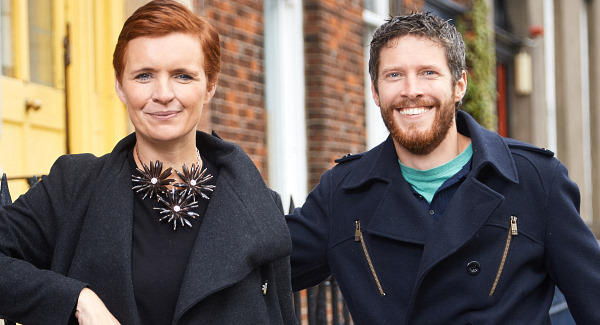
HANDS up anyone who’s had a niggling pain, a nagging sore throat, or a funny-looking lump and thought ‘Ah it’s nothing, it’ll go away, I won’t bother the doctor’?
Reluctance to see a doctor is a really common problem, says Cork-born Dr Pixie McKenna, star of Channel 4’s hit medical series Embarrassing Bodies. “People think the diagnosis might be something serious. They don’t want to know. They’re hoping it’ll go away. They’re in denial.”
Embarrassment’s a factor too, says Cork-based GP Dr Phil Kieran, who alongside Pixie presents a new health series on RTÉ TV from next week. “I deal a lot with patient embarrassment. They say they’re sorry to talk about their bowels or their genitals. They don’t realise it takes up a lot of my working day,” says Dr Phil, 33, who is dad to one-year-old Daragh.
The six-part show, You Should Really See A Doctor, features the medical duo visiting key events across Ireland and setting up pop-up clinics, where they meet the ‘invisibly sick, the obviously sick, and the people who think they’re sicker than they really are’.
People who think they’re sicker than they are have often been googling away on doctor.com websites. “We’re seeing a lot more cyberchondria, people self-diagnosing online and convinced they have something horrendous, terminal and infectious,” says Dr Pixie, who has seen people with a lump convinced they have cancer and people who’ve had “a bit of sexual misadventure” sure they have HIV. “I’ve had people come to me who think they have way out wacky stuff like brucellosis or rabies — stuff I’ve never seen in my medical career.”
Dr Phil’s medical catastrophists — courtesy of online self-doctoring — have included a patient with an insect bite convinced he had Lyme disease and a young man on holiday in Ireland convinced he had ebola. “You get people with a very mild tummy upset and a bit of bloating straight off-the-bat thinking they have abdominal cancer.”
The impulse to go online to check out symptoms is understandable, says Dr Pixie — “you’ve got medical information at your finger-tips” — but online health advice is there for everybody, not specifically you.
“A 25-year-old with bleeding from the back passage is highly unlikely to have cancer whereas for a 55-year-old with the same symptom it could be a more serious diagnosis.”
Dr Phil’s ebola patient turned out to have glandular fever. “He had a headache, a temperature and sore joints. If he’d been in West Africa, I’d have been concerned. The Internet will give you answers regardless of the information you haven’t given it.”
Exactly, says Dr Pixie, pointing out that the internet can’t pick up on the patient’s non-verbal cues. In surgery, the doctor’s picking up on other clues to the patient’s condition. “Like excessive sweating, badly smelling breath, or too-fast breathing. The internet just produces a hitlist of conditions.” In the end, she says, common conditions are common. “The vast majority of people have simple, run-of-the-mill diagnoses.”
So when should you really see a doctor? If your inner gut is telling you something’s up, if your symptoms are lingering or getting worse, you really should go, says Dr Pixie. “If you’ve got bleeding from the back passage or a lump in your breast, go and see someone. You’ll sit at home, worrying yourself to death, and it mightn’t be anything. At least by going to the doctor, you’ll get reassurance or a referral if you need it.”
Big symptoms not to brush off without seeing a doctor, says Dr Phil, include a change in bowel habits lasting more than a few weeks, a chronic cough, or difficulty breathing. “There are people who get very short of breath, just walking short distances, and they say ‘Oh, it’s my age’ and they’re only 50. Fifty is a bit young to be signing off your life.”
Many people pride themselves on never going to a doctor but there’s a time for bothering the doctor, says Dr Pixie, who points to the invisibly sick. “Some conditions don’t give symptoms but you could be storing up trouble for the future. There are thousands of people walking around Ireland with high blood pressure and diabetes who don’t know they have [these conditions]. There are people with skin cancer who have just never checked their moles.”
She recommends the over-50s have their blood pressure and cholesterol checked — and also their blood sugar levels if they’re overweight — and to be mindful of a family history of cancer. “If there’s bowel cancer in the family, consider a colonoscopy.”
The most important thing about health-screening, she says, is that it is age appropriate. “There’s no point sending a 25-year-old for a mammogram or an 85-year-old for a cervical cancer test.”
With free GP care promised to the under-12s from October 2016, is Dr Pixie — who’s mum to three-year-old Darcy — concerned that parents will bring kids to the surgery for every little sniffle? “As a parent, I understand what it’s like when your child is sick and you’re really worried and you have this huge sense of responsibility. It’s hard for me and I’ve got medical training. I was completely panicky when my child had her first temperature.”
Yet, she says, children rarely get major, serious illnesses. “They tend to get coughs and colds — eight to ten a year if they’re in primary school. Really, it’s about doctors educating parents — you mightn’t give them a prescription but you inform them about what to do if this happens again or if it happens to another of their children.”
Dr Pixie says her daughter is “a wild child, a crackpot, full of adventure and fun – she loves life and is very happy and healthy”.
The 44-year-old, a practising GP at London’s Harley Street, always said motherhood wouldn’t change her. “That was completely incorrect. It has made me much more considerate of my own health. I’ve been lucky never to have had health problems. I eat and exercise well.” She freely admits she hates going to the doctor. “I can’t stand it. But I’ve started making more checks — I appreciate I’m no longer just responsible for myself.”
RTÉ’s new health series, You Should Really See a Doctor, puts the focus on the many among us who don’t see a doctor when we should. Some people are unwell but don’t know it. Some know they’re unwell but ignore it and do nothing. And still more think they’re unwell and take action by researching symptoms online, convincing themselves they’re more unwell than they actually are.
In the show, Dr Pixie McKenna and Dr Phil Kieran bring medical help to the nation’s doorsteps by visiting big events across Ireland with their pop-up clinic meeting people with health concerns. They visit one event in each episode including: The Taste of Cavan, The Tullamore Show, the market at Dun Laoghaire People’s Park, NUI Galway, Lisdoonvarna Matchmaking Festival and the Limerick Show.
Tackling everything from migraines to mysterious rashes, the two doctors medically observe and approach people at the event who look like they could have a potential health issue. The series follows several patients on a journey to discover their true diagnosis.
“As a doctor, it’s very hard to switch off that part of your brain that wonders: What could that be? You might see someone with a big cyst and think: Do they know they could get that treated?” says Dr Phil.
Signs that people might need a bit of medical input range from lumps, bumps and lesions to joint problems and mobility issues. These presenting signs could mean any of a range of conditions, from the more serious to the pretty harmless. A limp, says Dr Pixie, could signal arthritis or that someone has had a stroke or they’ve got nerve damage from diabetes or they’re suffering from a verruca on their foot. A tremor when the person is at rest could signify Parkinson’s disease, a flushed face high blood pressure.
Dr Phil says he and his colleague didn’t encounter anyone who was annoyed at being approached about their having a potential health problem. “Some were quite happy to talk to us but shy about being on a TV programme. One man — who won’t be on the show — had very severe adult acne. He’d had two different types of treatment but had given up, thinking this was the way things were. The condition was causing him a lot of distress and embarrassment.”
In fact, says Dr Phil, when doctors tell patients — at the end of a consultation — to come back if the problem doesn’t clear up, they mean it. Patients should come back. “There are often three, four or five treatment options.” So — just one more reason why we should really see a doctor.
CONNECT WITH US TODAY



Be the first to know the latest news and updates














