Rhyme and reason at Dublin's Lingo Festival
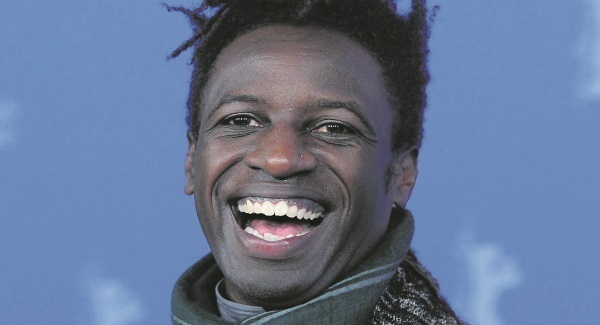
BEFORE 43-year-old Saul Williams — one of the grandmasters of the spoken word scene — got into performing in slam poetry nights, he was a rapper, just like nearly every other kid his age who grew up in early-80s New York State.
“Rap was my everything,” he says. “What’s funny is that at that time the big argument was whether it was actually music or not: ‘It’s not even music; they’re just talking!’ I remember defending hip-hop as poetry to parents and older people. ‘What is this stuff?’ ‘It’s the poetry of the streets.’ Poetry was my first line of defence for hip-hop.
“Somehow I ended up walking that line without ever planning to do so. I was heavily involved as a kid, writing raps, breakdancing, trying my hand at leaving my mark on the wall. I was dressing the part. It’s an amazing thing to be in the city, the place where a style of music is being born, to witness it. It can make the whole rest of your life nostalgic.”
Williams was first drawn into the spoken word scene in the mid-1990s. He began reading poetry at uncompetitive, open mic nights hosted at the Brooklyn Moon Café, and soon gravitated to the legendary poetry slam nights at the Nuyorican Poet’s Café on Manhattan’s Lower East Side, where old beatniks, left-wing activists and rappers mingled with East Coast literary giants. He first performed there in March 1995.
“My first time at the Nuyorican was my first time going to a slam and seeing poetry as a competitive art form. I don’t know how I would have felt about it if I didn’t win that night,” he says, laughing.
“Either way, I loved the love of poetry in the room. On the other hand, I never played too heavily into the competitive aspect. I remember maybe it was my second time reading a poem before judges. It was a poem about the truth. I got a 7 or an 8. I remember thinking how do you give a score to the truth?”
Williams says the poetry slam movement sprung out of Chicago’s Green Mill Café, an old jazz joint that used to be part-owned by one of Al Capone’s gang during the Prohibition era. This was back around 1986; Williams adds that poetry’s competitive roots go way back though — it was one of the primary sports in the original Olympics, for example.
“The history of the troubadours was somewhat competitive too,” he says. “When you think of poetry, you also think of the guy trying to get the girl. There’s that sense of who can write the best poem will win the attention that one yearns for. It’s nice to see people employing that side of their brain to say that, ‘This poem moves me because of this or this’, that poem that brings you to tears or brings you to your feet.
“If ever a poem succeeds in winning over an audience it is a beautiful miracle. Poetry is such a personal art form. It’s not so common to have people share it in such a public space. That cocktail of intimacy and vulnerability and applause is pretty potent. The most amazing thing I’ve ever seen or heard has been the thing that has made me go: ‘F**king hell, poetry!’
When a poem successfully connects the dots between a person’s interior world and what’s happening around us — I’ve seen it happen with 14-year-old kids and simultaneously with older poets as well — when a poem touches something that’s undeniable.”
New Video: Horn Of The Clock-Bikehttps://t.co/2l3kt4cFqT
— Saul Williams (@SaulWilliams) October 11, 2015
Williams has connected the dots on several published volumes of poetry. His role as a writer and actor on the 1998 film, Slam, won garlands at the Sundance and Cannes film festivals. Last year, he had the lead role in Holler If Ya Hear Me, a Broadway musical inspired by the music of the murdered rapper, Tupac Shakur, and he’s performed on records with the likes of Nas, The Fugees and De La Soul.
He also did a poetry reading alongside Allen Ginsberg at NYU about three months before Ginsberg died in 1997.“I had the opportunity to read several poems for him, and to hear him read Howl,” he says. “It was a surreal experience. The coolest part for me was that he took the time to talk to me about what he understood in my poetry. That was sweet.”
Live Words: slammin it in Cork
The second instalment of Live Words, Cork’s monthly slam poetry night, will be held on the last Thursday of this month.
Prompted by similar sessions in Dublin, including The Brown Bread Mixtape and Tongue Box, the motivation for Live Words is to provide a platform for performance poetry in Cork city.
“We want to concentrate on slam poetry as opposed to reading”, says organiser and performer Carl Plover, aka Wasps vs Humans.
“It’s performance orientated. That’s when the magic of the poems comes to life when people stand up and perform them. That’s the idea of the club.
“You could have a really beautiful poem but some people can read in a monotone. Whereas if you have someone who is a very good performance poet, they can stand up and you could hear a pin drop in the room. They breathe emotions into the words. It’s acting the words out. When it’s done properly it’s very powerful like when you see people like Saul Williams or Kate Tempest.”
This month’s club will have performances from established slam poets like Bubba Shakespeare, Cormac Lally, Tina Pisco and Saved by Silence. There will also be an open-mic slot for people eager to try out their wares.
“We’re trying to create a scene in Cork,” says Plover.
“There might be people out there who want to try. People can put their name down at the start of the evening to perform a poem as well. We want to create a ladder for people — they can come down, read a poem, if it goes well we can give them a spot.
“We want people to come along and watch top-quality poets but also they can get involved themselves.”















