Israel Galván dances to his own tune
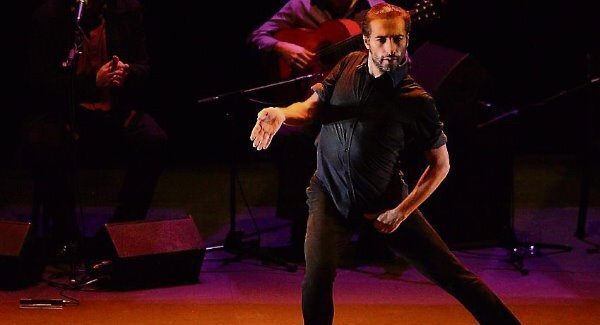
Famed for his astonishingly complicated and rapid footwork, Galván brings traditional flamenco to the cutting edge. As someone famously said, to call him a good dancer would be like saying Einstein was quite clever at physics.
Born into the business — both parents were dancers in the old style — he was soon moving away from the recognised mode and building his reputation as a risk-taker.
DISCOVER MORE CONTENT LIKE THIS
Metamorphosis, based on Franz Kafka’s novel about a man changed into an insect, was followed by Arena, which is based on bull fighting, El Final De Este Estado, a vision of the Apocalypse, and, most notably, Lo Real, which premiered in 2013, and took as its subject the Holocaust (which, as well as Jewish and other victims, killed half a million gypsies).
In Madrid, the audiences of that last show reacted with explosive disfavour; in Amsterdam, they gave him a standing ovation. Spain awarded him its top accolade, the Premios Max, in all three categories: coreografía, interpretación and espectáculo, for this grimly brilliant piece, in which Galván pushes flamenco to its limits.
Traditionally, flamenco expresses human emotions. Galván shows how it can express unthinkable suffering, too. Did he always want to dance flamenco? “I don’t feel that I ever decided to. I remember that I already danced when I was a child, because my parents were both of them dancers, and it was like a game for me, that became more an obligation as I grew up.
“It was later that I realised that dance was my language to communicate with others, and also a way to escape from reality, an imaginary world where I could move away from problems. And then I wanted to dance for myself, not for any other reason. And this I noticed when I was injured and was told that I couldn’t dance for a year. I could not even imagine such a thing.”
Dancing well was no longer enough. “I had the technical skills, but I wanted to say things through my dance. I started a search that led me to break with what I had done before. If I had not started that search, maybe I would have not kept on dancing. Dancing is what makes me feel good with myself. It is my communication language.”
Is he deliberately controversial, looking for reaction, or does he just create the work that comes naturally? “I look for new shapes in me. The body and the mind change with years. Some people like what I do, some people don’t. I dance for myself, and then I share it,” Galván says.
2 days for @DublinDanceFest! The golden age of #flamenco flyes to #Ireland...
— Israel Galván (@Israel_Glv) May 26, 2015
+Info http://t.co/LU8w1uPkqy #Dance pic.twitter.com/bgQTaO65II
And it’s not about surprising himself (or indeed audiences) constantly, he says.
“I just try to be honest with my work. I feel like an insect in metamorphosis. And the end of it, the final moment when you share it with your audience, that is the end of the cycle. It is when I really see what I did. You can rehearse for a thousand hours, but you won’t have a complete idea of what you are doing until you share it with your audience and feel their reaction.”
Israel Galván, Abbey Theatre, tonight to Saturday; www.dublindancefestival.ie









