Book review: Outline
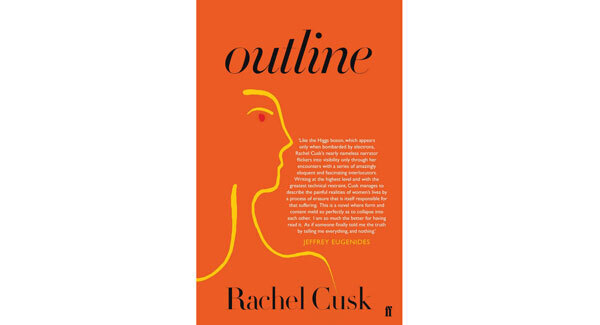
“I had come to believe more and more in the virtues of passivity,” claims the narrator of Rachel Cusk’s Outline, “and of living a life as unmarked by self-will as possible.”

Book review: Outline

Rachel Cusk

Faber, €25.50; ebook, €13.64

It’s a harmless philosophy, on the face of it, although an author who writes a novel according to that philosophy sets herself a number of obstacles, not least in terms of engaging readers while simultaneously keeping them at arm’s length.

Outline is a fascinating novel in many respects, but while it’s an easy book to admire, it is perhaps a little harder to love than a novel written by such an obviously talented author should be.

In Outline, Faye, a writer who is separated or divorced, travels from London to Athens to teach creative writing. During her stay there she meets a variety of characters, all of whom are happy to talk about their relationships and marriages, why they work or — more frequently— the reasons why they failed.

Faye proves to be a good listener, willing to allow her new companions all the time they need to offer their insights; indeed, to a large extent Faye is relevant only as a sounding board, an invisible presence who occasionally prompts her friends and colleagues into further confessions and declarations.

The temptation, of course, is to read Outline as a semi-autobiographical story.

This is Cusk’s seventh novel (her debut, Saving Agnes, won the Whitbread Prize in 2003), and she has also written non-fiction accounts of her own life, including A Life’s Work: On Becoming a Mother (2001), and Aftermath (2012), which detailed the breakdown of Cusk’s second marriage.

Both created controversy, and it doesn’t take too energetic a leap of the imagination to realise why Cusk is reimagining the role of the author here, as she puts it herself, as “an annihilated perspective”.

The result is a novel that is quite deliberately arch and contrived. Most of the characters Faye meets are akin to literary mannequins, speaking a little too effusively and exquisitely about love, life, and the universe (most, it should be said, are writers or aspiring writers, and as such might be expected to offer a certain eloquence), although some are very obviously straw men, delivering lines that allows Faye to rebut them succinctly with her own theories on the vexing nature of relationships.

That all sounds a bit starchy, but the story is actually deliciously readable for what is in effect an experimental novel.

The contrasts are often blackly funny, particularly given the way the frequent outpouring of opinions on love and passion are filtered through Faye’s dry, impersonal tone. It’s also true that Cusk is happy to have her narrator contradicted when it comes to matters of the heart.

Offering a definition of love, Faye suggests that “much of what was beautiful in their lives was a result of a shared vision of things that strictly speaking could not have been said to exist”.

That cynicism is undermined, however, when a twice-divorced man she meets on the flight to Athens poignantly declares that he still believes in love. “Love restores almost everything,” he says, “and where it can’t restore, it takes away the pain.”

In a sense, this contradiction sums up the dynamic at the heart of Outline. Faye, and very likely Rachel Cusk, is fully aware of how arbitrary life really is, and how virtually everything — love, morality, happiness, and despair — is conditioned by the individual’s unique perspective on the world.

By turns challenging, frustrating, and insightful, Outline is an enjoyable variation on the novel of ideas, albeit one in which the ideas are the emotions and psychological impulses that drive us to live and love.

x

More in this section

Cookie Policy Privacy Policy Brand Safety FAQ Help Contact Us Terms and Conditions

© Examiner Echo Group Limited













