New path lies ahead for Irish radio legend Donncha O Dulaing
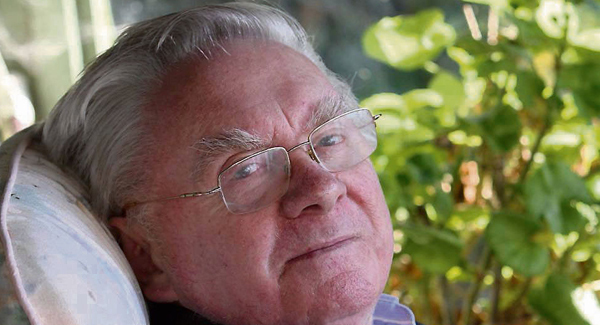
“I have great plans in my head for doing documentaries and the like — I won’t go away,” he says. “The work means my whole life to me, in fact.”
It’s a career bookended by two Presidents of Ireland: the first when O Dulaing scored ”a massive coup”, as a young journalist, by securing a series of radio interviews, in 1965, with Éamon de Valera; the second, half a century later, when Michael D Higgins presented O Dulaing with a sculpture last August, in recognition of his huge contribution to Irish culture.
Now 82, Doneraile man O Dulaing was 31 when he started in RTÉ with Highways and Byways and he found his own true path.
“Being a Corkman, I’m probably full of curiosity and I was a talker, but when I began broadcasting, my love of people really developed.
“I’m still in touch with the people I interviewed over the years; they have stayed friends with me.
“That’s the thing that has appealed to me — I don’t let them go and they don’t let me go either, which is marvellous,” he says.
The request programme Failte Isteach, which he started 15 years ago, has continued that connection — reaching out to people all over the world and they with him.
“I’m not just a voice with a microphone away in a quiet studio,” he says. “I’m part of a big world.”
It’s a world he abandoned for several months last year when he got a stroke, but says: “RTÉ were very good to me. They kept Failte Isteach going and let me back in when I was ready, which was fantastic.” It was a big set-back, because he has always been fit — having literally walked the highways and byways — in France, Israel, America and all over Ireland for over a decade, raising €2m for charity.
But his road to recovery began at home with his wife, Vera, whom he first set eyes on “as a glamorous young teacher, walking to the bus every day” in Charleville, where he was working as a dental technician. His gift of the gab charmed her so much that, afterwards, she asked him to dance at ladies’ choice at a local céili. Full forward to last year after his stroke, and 54 years of marriage, and he says: “She stood by me and was there with me all the time. The marriage has turned out even better than I thought it would. Our routine is to stay close to each other all the time and she has gone along with it.”
Their lives were rocked five years ago, when their only daughter, Sinead, died of a brain tumour, in her 40s. It affected the family, including their four sons, Feargal, Ruairi, Donal and Donncha Óg and Sinead’s husband, Eddie, “very badly”, he says. “It was horrific — the whole thing was horrific, seeing Sinead dead and so on. You wouldn’t believe it, but there it was in front of you. It’s something you don’t get over at all. But I kept on broadcasting through it all.”
Did he find comfort in the work? “I did of course. I was digging deep into my own life and the life of those I’d always been with. People were very helpful and kind. I found that RTÉ, where I had worked for so long, were very, very good to me.”
When Donncha now thinks about his own inevitable death, he finds comfort in his religious beliefs, “that I might meet my father or mother one of the days. That would be a great thing, you know.” Or Sinead,whose grave they visit often.
“I can visualise her saying to me ‘For goodness sake, take it handy now — don’t push too fast. Don’t be working all the time. Take it easy’.”
That’s what his beloved daughter used to say to him, but Donncha says “idleness is a world I wouldn’t know.”
He intends to continue as he started, until the road stops: “Working in RTÉ has been one of the best things that ever happened to me, you know. Having a passion — I have a life that goes on in the way that it always went.”
So, on Saturday week the octogenarian will tell listeners that it’s his last night, but “I will leave a door open to myself and to RTÉ . I never went away from anything and left it so that I couldn’t be back for more,” he says.















