Mental health: Where to find free or cheap counselling in Ireland
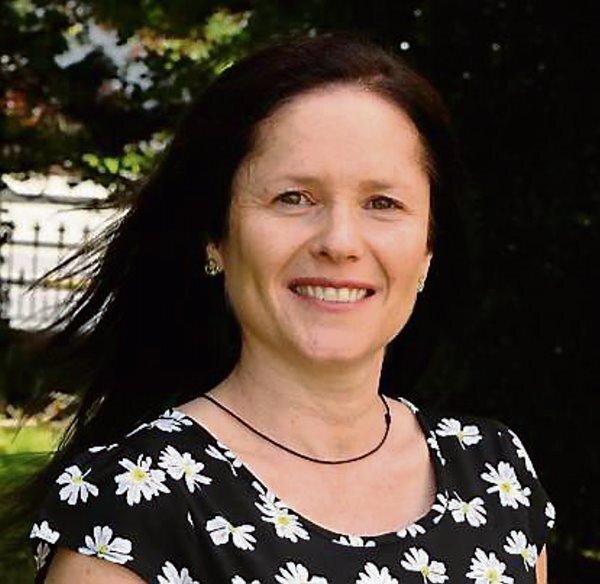
THERE’S a correlation between increased suicide rates and economic downturn, says Geraldine Sheedy, counselling psychologist. It makes sense: more people are out of work, struggling to pay mortgages and bills, and relationships are under strain.

Not everyone in financial turmoil will contemplate suicide, but many will experience sustained anxiety and clinical depression. Sheedy also says we shouldn’t underestimate the impact on parents of waving goodbye to child after child as they emigrate.
“Someone might go to their doctor complaining of physical aches and pains and come to the realisation that the problem is more psychological than they might have otherwise thought”, says Sheedy.
Symptoms of depression can include anxiety, thoughts of suicide, hopelessness, despair, back pain and stomach problems.
But counselling isn’t cheap, with prices ranging from €50 an hour upwards for the employed and €25 for the unemployed. If you’re in need of urgent and regular counselling and caught for cash, those prices can seem prohibitive.
Medical card holders can be referred by a GP to the Counselling in Primary Care (CIPC ) service. This is a HSE service for people experiencing mild to moderate anxiety, depression, stress and bereavement. The other option is to seek out low-cost community counselling.
The HSE route: Counselling in Primary Care (CIPC)
Jerry Lenihan, of Limerick Social Services, ays the CIPC service is “restrictive, limited and is not appropriate for more complex cases”.
The service is available for a maximum of eight appointments only.
“The risk is that someone might start attending the service, open up a can of worms, and then are dropped,” Lenihan says..
Sheedy says eight is a minimal number of appointments, with 50 necessary for some patients. “Nowadays, patients are being much more proactive. They’re saying they don’t want to be on medication, and want to try talking therapy first.”
As our case study describes, patients are often prescribed medication as they wait for access to a counsellor, which can take, as in Toryn Glavin’s case, up to nine months.
These medications, often antidepressants, can be helpful, but can also cause nausea and, in more extreme instances, can “rev the patient up”. Siobhan Barry, a psychiatrist and clinical director of the Cluain Mhuire Service, says the patient can become “overactive, over talkative, and unwise in their decisions. Some antidepressants would require heart-monitoring before starting and will depend on the person’s basic health in advance.”
“If the person has always been fairly low in mood or taken a fairly pessimistic mood in life, antidepressant medication is going to be of pretty limited benefit.
“My most general concern about prescribing antidepressants, to those with very chronic conditions, is that the possibility of improvement with the medication may be very limited.”
Latest figures from the HSE show that 478 people have been waiting longer than three months for access to counselling, 39 have been waiting longer than six months and six are waiting more than nine months. “Most of those waiting extended periods will have specific requirements: for example, they can only attend on a Monday morning, or after 4pm, or are waiting to be seen in a particular area,” the HSE spokeswoman said.
The HSE secondary route: The Cluain Mhuire Service
People found by their GP to have more serious anxiety or depression will usually be referred to a local secondary care mental health service like Cluain Mhuire. It can take up to three weeks for a patient to be seen for an initial assessment for psychiatric help at the Blackrock, Co Dublin centre.
If the patient has already seen a counsellor through the HSE, or has attended a low-cost community service, they may have to wait up to six weeks to be seen for initial assessment.
The service’s funding was cut in 2009 and Barry says the staff numbers have reduced, as a result.
“We have staff who are on the books and are legitimately off work on sick leave or maternity leave,” she says. These staff have not been replaced.
“That’s been the situation for the last four years and high-quality mental health care is personnel intensive”, says Barry.
Group counselling is also an option for people waiting for one-to-one sessions.
The Cluain Mhuire Service runs an anxiety management programme, based on cognitive behavioural therapy (CBT) and a dealing with depression programme,” says Barry. These run for six to eight weeks in the afternoons or evenings, in a peer-to-peer classroom format. Yes, there are waiting lists.
Low cost community counselling
Outside of the HSE, there are low-cost community services. These are staffed by, “in most cases, fully accredited, fully qualified therapists,” says Shane Kelly, of the Irish Association for Counselling and Psychotherapy (IACP). The number of people seeking this type of counselling has doubled in recent years, Kelly says.

“During the recession, the number of people presenting with anxiety would have risen. These are people who may not have had issues before, but the stress of being in financial debt would have impacted on their families and relationships,” he says.
Some of these services would have had waiting lists of up to six months, says Kelly with prospective clients treated like a hospital triage, with the most at-risk given priority.
The Dublin Counselling Centre (01-8788236) reports a waiting list of “a few weeks” and a very low price of €5.
The Village Centre, in Tallaght (087-9049497), reports “one to six weeks” waiting lists, “depending on availability”, with counselling costing a minimum of €10 a session.
The Coiscéim Counselling Programme (021-4666180) has a waiting list of “six weeks” and costs “€5, €10, €20, and upwards depending on the patient’s ability to pay.
The Limerick Counselling Service (061-314111) takes “a max of a couple weeks” and costs from €10.
The HSE also has the Connect service (1800 477 477), a telephone counselling-and-support service for adults who were abused in childhood. It’s open Wednesday to Sunday, from 6pm to 10pm.
Case study: anxious times for a student
Toryn Glavin is a patient with the Counselling in Primary Care (CIPC) service. A 20-year-old DIT event management student, she’s living in Gorey, Co. Wexford, and has a medical card.

Having developed anxiety and depression symptoms in October of 2013, her attendance at college dropped and she decided to call her GP.
After a 10-minute consultation, Toryn walked out of the doctor’s office with a prescription for antidepressants and the promise of counselling. She wasn’t offered a psychiatric evaluation.
The doctor warned her that the antidepressants might make her ill, and she developed heavy nausea that lasted two months. She went back and was prescribed a lower dosage and still the nausea persisted.
Three months passed and there was no word of a counsellor, so Toryn tried the college service.
She was put on a waiting list and sat patiently, for another three months, before calling the busy service again. Toryn was told that her appointment had fallen between the cracks.
Nine months after seeing her local doctor, Toryn was given an appointment for a CIPC counsellor.
She was diagnosed with anxiety disorder and told that antidepressants would never have worked in her case.
Three appointments into her counselling, and Toryn had little improvement in her condition.
Her great concern was that she only had five appointments left before her free counselling ran out.
Her anxiety was up against a clock.


CONNECT WITH US TODAY



Be the first to know the latest news and updates









