The Decemberists are earning their stripes
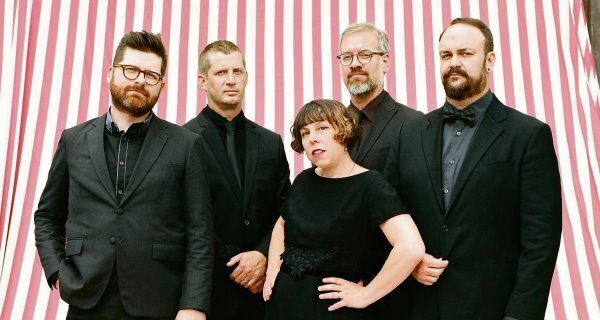
COLIN MELOY isn’t holding back. “Gun culture in this country is appalling and disgusting,” says the singer with The Decemberists. “It seems so entrenched there is so little we can do.”
This is precisely the viewpoint you would expect of Meloy. He is a long-time resident of Portland, Oregon, America’s most liberal city. Meloy is anti-guns, pro-recycling and thinks bicycle lanes God’s gift to urbanites (assuming he believes in God). In the United States this is enough to qualify you as ragingly left-wing.
“Portland is notoriously progressive — to the point of parody,” he says (a reference to hipster-baiting TV comedy Portlandia). “On the other hand, the south-eastern corner of Oregon is dominated by big ranches. The culture is very rural. It is not like Portland or Eugene. There is a big gulf in outlook. That is something we have to deal with.”
For all his firmly-held convictions, Meloy has never been especially political as a songwriter. But his outrage bubbles to the surface throughout The Decemberists first album in four years, What A Terrible World, What A Beautiful World.
While his band are from the alternative end of the American rock spectrum, that isn’t to say they are obscure. Their previous long-player, The King Is Dead, topped the US charts and they are regarded as heirs to the tradition of smart, literate rock previously embodied by REM (that group’s guitarist, Peter Buck, played on The King Is Dead) and, albeit in a far rowdier way, Nirvana. As of right now, in fact, they might be the biggest ‘independent’ band in the US — and their latest release is regarded as perhaps their most accomplished. It’s already hit the Top 10 in the US.
On the LP’s cornerstone song ‘12/17/12’, Meloy contemplates the Sandy Hook school massacre — the track takes its name from the date of the shooting — from the perspective of a frightened parent (he has a son and daughter). It makes for gritty, grueling listening.
“It didn’t want to outwardly pin it as being entirely about Sandy Hook,” he says, perhaps wary of being perceived as exploiting a tragedy. “The song was written several days afterwards. I was dealing with the rage, the helplessness, the despair. Feelings a lot of us experienced. In that sort of situation, you find yourself taking stock — you draw your family close. You look to your loved ones. That’s the natural response, I think.”
This is largely uncharted territory for Meloy. Typically, his inspirations are more esoteric. He has borrowed from Japanese mythology (‘The Crane Wife’) and from the Troubles in the North (‘The Shankill Butchers’ is about the loyalist death squad). Conventional ditties about love and bruised feelings never appealed.
“Starting out, I was sort of reacting against what I saw around me,” he says. “This was the mid-90s. There were a lot of guys with guitars wearing their hearts on their sleeves. I had no interest in singing about my broken heart — I want to write about pirates and what have you. I’ve always had broad interests.”
Irish mythology is also a touchstone. Not realising Horslips had got there first, in 2004 The Decemberists released The Tain, an EP inspired by the epic story-cycle Táin Bó Cúailnge. This was no random collisions of influences. From an Irish-American enclave of Montana, Meloy is happy to be described as a Hibernophile. He proudly claims Cork roots and traveled to the country for the first time as a 17 year old in 1991.
“That was when Ireland was still pretty ‘gritty’,” he says. “Every time I’ve been back since it’s meant a lot. I do feel a connection. “
He was especially obsessed with The Waterboys’ trad-influenced Fisherman’s Blues, going so far as to make a pilgrimage to Spiddal, Co Galway, where the album was recorded. “I was such a fan I went to the country house that they made the record in. The woman who owned the place probably thought ‘who is this geeky American?”
Why adapt the Táin? “ I was struck by the story,” he told me previously. “I thought, if someone was in a metal band, they really ought to make a concept record about this. Of course, I didn’t know The Horslips had done exactly that. Remember, Wikipedia hadn’t been invented. As we now know there’s nothing new under the sun, right? Then it occurred to me — hey, I’m in a band. I can do this.’ Which is how it started.”
During the years between the Decemberists albums, Meloy carved a parallel career as children’s writer. Working with illustrator Carson Ellis (conveniently also his wife) he penned two young adult fantasies, Wildwood and Under Wildwood. In that time, Meloy didn’t go entirely cold turkey on music. A guitar was always close to hand, he says.
“Writing songs was a nice break from the books,’ he says. “Any time I was in a jam it was enjoyable to sit down with a guitar and work on songs instead. They functioned well together.”
Coming from the rock world, where freewheeling chaos is a given, Meloy was struck by the level of organisation in the publishing industry “Music is more seat of the pants. In the books scene, they have a set way of doing stuff and they stick to it. Plans are really set in stone. That can be a advantage, from a logistical perspective. In rock, people improvise a lot more. Of course, spontaneity is ultimately what make music so special,”
Recently turned 40, Meloy sounds quite cheerful when he says that he regards rock and roll as a job rather than a lifestyle. He was never one for the fast-lane. Nowadays, his post-gig routine typically consists of a early night and a good book.
“In the first few years, maybe I lived a little,” he says.“It grew to be exhausting. The novelty wore off pretty quickly. Touring is tiring at the best of times.
“Is it a ridiculous job for someone my age? I don’t know… maybe it’s a ridiculous job full stop — regardless of how old you are.”
- The Decemberists play Vicar Street, Dublin Wednesday. What A Terrible World, What A Beautiful World is out now














