Majesty indeed: Shabazz Palaces are a force for musical change
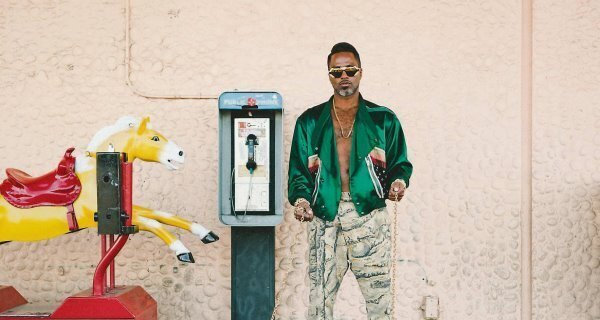
Ed Power reckons Shabazz Palaces made the album of the year. He talks to the group who managed to make hip-hop interesting again

Majesty indeed: Shabazz Palaces are a force for musical change

ISHMAEL BUTLER inhabits a plane of reality slightly removed from the one on which the rest of us live.

You can hear it in the music he makes as one half of Shabazz Palaces — a languid, esoteric fusion of genres that just about qualifies as ‘hip-hop’.

And it certainly comes across when you sit down for a chat: though friendly, his patter is weird and woolly.

He’s fascinating company, even if, half the time, you are nodding along in semi-comprehension.

Shabazz Palaces — also featuring percussionist and rhymer Tenda Maraire — are one of the most feted enterprises in rap.

Critics adore them, passionately and without reservation: they’ve been championed in the pages of the New Yorker, extolled far and wide as saviours of a genre drowning in a tide of bling and braggadocio.

Released over the summer, their second LP Lese Majesty has basked in five star reviews.

Backstage at Dublin’s Twisted Pepper, Ishmael seems grateful for the praise, though somewhat baffled by the accompanying hyperbole.

When he hears his music feted as the future of hip-hop, he’s not quite sure how to take it.

A student of jazz and various strains of African experimental composition, it is obvious he does not regard Shabazz Palaces as operating in remotely the same milieu as Kanye West or Jay Z.

He shrugs: let the critics write what they are going to write. It’s not for him to worry about.

“We’ve been described as ‘future hip-hop’. I can’t conceptualise what that actually means. It’s because the songs are different: when something is new or strange people struggle to find ways to describe it. There is a disconnect.”

That hip-hop requires salvation cannot be in doubt.

While there has been an upsurge in innovative grass-roots rap music — see also this year’s astonishing new LP from Run The Jewels— in its popular form, the scene is weighed down with cliche.

Once a genuine innovator, nowadays Kanye West is a one-man controversy machine; since coming out of self-imposed retirement, Jay Z seems more interested in being a celebrity than a force for musical change.

While Butler may not want the job, clearly there’s a gap in the market.

It is no coincidence that Shabazz Palaces hail from Seattle, he feels.

Historically, urban music did not have deep roots here: it’s the city of grunge and of fiercely independent alternative rock.

Nowadays, the hip hop scene is large and vibrant— and distinguished by the same sense of apartness that has characterised previous musical movements from the Pacific North West.

“We’re secluded, isolated. The music reflects that. Is Seattle less ‘American’? In a way, I feel we’re MORE American. The ideals that the nation is supposed to be built on — equality, individuality of expression, safety, sanctity. We embody all of that. America is the melting pot that never was. In a way I think Seattle maybe lives up to those ideals a little better.”

As well as a sensory tour- de-force Lese Majesty may be read as thoughtful critique of the ubiquity of social media in our lives.

Though he tweets and is on Facebook, Butler is ambivalent about the impact of such technologies on human behaviour.

They have made each of us a one person brand, presenting a mediated and curated version of ourselves to the world.

Is that a good thing? A bad thing? The answer may lie in the middle — but we ought at least be having a conversation about it.

“We’ve got Twitter and Facebook and Instagram,” he says.

“We see strengths and faults in all of that. We should think critically towards these things: not just towards the technology but towards the uses to which we put it. “

Butler formed Shabazz Palaces with Maraire in 2009. By that point, he had already had an interesting career.

In the 90s, he was the leader of the more mainstream Digable Planets, a hyped rap crew who briefly looked like they might be the next big thing in urban music.

Alas, conflict in the ranks saw the group come apart before they had truly arrived. The experience left Butler confused and disillusioned, though nowadays he has a more nuanced take on the demise of the band.

“I wasn’t scarred or embattled,” he says. “Now bad s**t did occur. However, there were also amazing opportunities and I learned a lot. It’s like all of life — you absorb through osmosis.

“As I get older, I don’t see the world in black and white so much: ‘this is good’, ‘that is bad’. Everything that happens to you is an opportunity to learn. You’ve got to look at it from that perspective and not concentrate on the negative.”

He grows slightly vexed when critics focus on the jazz element of Shabazz Palaces’ sound.

Yes, Butler is a fan of the genre. However he never set out to formally incorporate any of the formal strictures of jazz into his oeuvre.

Rather, he is impressed by jazz’s spirit of improvisation and experimentation: he sees the recorded form of his music as a jumping off point instead of a destination

“To just take it back to jazz? I don’t know, man. I think we should forget about genre. What we [Shabazz Palaces] do… it’s ol, man. Our music goes back to Africa. That’s where it all comes from originally. It’s been filtered and morphed into different things. But we don’t have explicit references. We take it all in and see what comes out. That’s what keeps it interesting.”

x

More in this section

Cookie Policy Privacy Policy Brand Safety FAQ Help Contact Us Terms and Conditions

© Examiner Echo Group Limited













