From the stage to Love-Hate
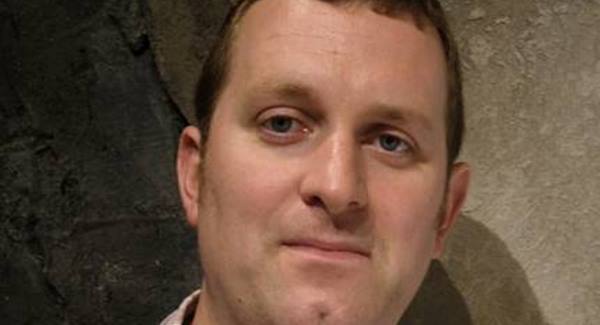
He hopes the play’s much praised writer — the creator RTÉ’s Love/Hate — will attract a big theatre audience. Flynn says that people who traditionally don’t go to the theatre might be curious about the work because it’s written by someone who is a household name. “When you think that one million people watched the last episode of season four of Love/Hate, you hope to get even a small percentage of that which, in theatre terms, would be very good.”
Defender of the Faith was first performed at the Peacock Theatre 10 years ago and hasn’t been staged since. “For a debut play, it’s extremely well-accomplished. It had 24 performances in Dublin. I wondered why it hasn’t been done outside of Dublin.”
The play, a thriller, is set on a farm in Armagh in 1986, tells the story of a family entrenched in republicanism and under the constant watch of British forces. When a visitor arrives with the aim of rooting out a police informer, paranoia envelops the farm. Joe, his son Thomas, and Barney, a long-serving farm hand, all fall under suspicion. The family’s isolated farm becomes the setting for an intense exploration of a family tested by loyalty and love.
“At the time during which the play is set, informing was rife among members of the IRA with reports that one in four members could have been touts. The play is a brilliant thriller that’s well structured and the rhythm of the language is fantastic.”
The cast includes Youghal-born actor Peter Gowen. Flynn admits that it’s challenging to direct a thriller for the stage. “It’s all about trying to keep doubt there and not giving too much away. If you don’t get that balance right, people will know from early on who the informer is.
“A big part of the challenge is to keep things tense and to keep people second guessing. There’s this paranoia and nervousness in the family because they know someone has been telling tales but they don’t know who. Even at the end of the play, there’s a question mark over the resolution.”
Despite the play being set in a very particular time, Flynn says it’s also a timeless piece. “These men are milking cows and tilling the land. Their other activities happen in the evening when they’ve done their day’s work. That’s what’s frightening. They’re soldiers in their heads.”
The play moves from one location to another. Some of the scenes are set in a farm kitchen; some on the farm and others away from it. “Owen MacCarthaigh has come up with a really ingenious design that facilitates the various scenes in a very artistic and fluid way.”
Flynn acknowledges that a lot of the best drama these days is on TV.
“It is hard to compete with that and with cinema. It has always been difficult to get people into the theatre. But I still think that when you see a good show, there’s nothing like the live experience.”

CONNECT WITH US TODAY



Be the first to know the latest news and updates

















