The war on sugar day 2: Ireland’s changing taste
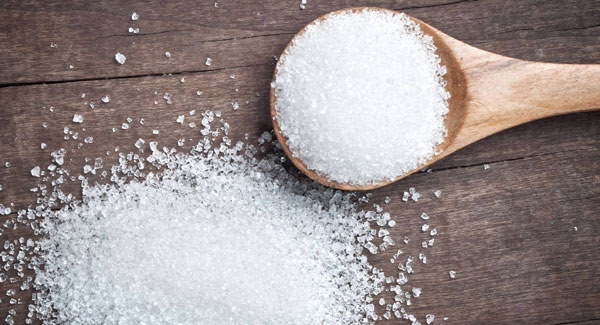
FANCY salted herring or corned beef? Or offal or spiced-sausage meatloaf? For dessert, a bowl of semolina or tapioca? These were typical foods until, and beyond, the 1950s. Food historian and Dublin Institute of Technology lecturer, Dr Máirtín Mac Con Iomaire, says there are three differences between our diet and that of our grandparents.
“They didn’t have the same variety as we do. Their food wasn’t so processed and they didn’t have ethnic/international food. It wouldn’t have been unusual for them to have bacon and cabbage five days a week. They killed and brined their own pigs. Potatoes and cabbage came straight out of the garden.”
This was before fat had fallen out of favour — our forebears appreciated that fat made for flavour, and collars of bacon were popular. This has changed in the past couple of decades, says Mac Con Iomaire. “Pigs have been bred for the last 30 years to be leaner. They’ve been cross-breeding pigs to develop leaner and longer loins — it’s a response to the market.”
Potatoes are eaten two or three times a week, displaced the other days by pasta, noodles and basmati rice. Our grandparents ate potatoes daily and ‘rice’ wasn’t savoury but sweet — Carolina rice cooked with sugar and milk. Puddings, like bread-and-butter pudding, were made with leftovers — not the sweetened brioche of today.
Mac Con Iomaire says sugar consumption worldwide was six times greater in 1964 than in 1900. “It was a bigger increase than any other foodstuff, except perhaps dried or canned milk.” Sugar was upfront for our grandparents — two spoons in your cocoa, jam on bread at tea-time, jelly and custard, and the ‘minerals’, either red lemonade, or white lemonade.
So what turned us into culinary adventurers? Package holidays started in the 1960s and Irish people came back from Spain and Italy with ideas about paella and spaghetti Bolognese. With trips to India in the 1970s we got a taste for the exotic. But our interest in foreign cuisine started with British cookery writer Elizabeth David’s books on Mediterranean food, in the 1950s. Her ideas, says Mac Con Iomaire, filtered through to an Ireland where you could still only buy olive oil at the chemist’s, as a treatment for ear infections. “But there were no big inroads until the late 1980s and ’90s, when we started to get really international — so many Irish people had to emigrate in the ’80s.”
But we haven’t only accumulated more diverse food options; we’ve accumulated more weight. Data from the Cork Open Research Archive shows that the average weight of 14-year-old boys in 2002 was 65% greater than in 1948. Similar-aged girls’ weight also increased, by 48%. According to the report “a substantial proportion of the weight increase is seen between the 1970s and 2002. Fourteen-year-old boys’ average weight increased by 10kg between 1948 and the ’70s — but there was a 14kg increase between the 1970s and 2002”.
The Irish Universities Nutrition Alliance found the number of overweight boys (aged eight to 12) more than doubled between 1990 and 2005. The number of obese girls trebled. The prevalence of obesity in 18- to 64-year-old adults has increased significantly since 1990, from 8% to 26% in men, and from 13% to 21% in women. The fallout is a top 10 of obesity-linked diseases: high blood pressure, diabetes, heart disease, high cholesterol, cancer, infertility, back pain, skin infections, ulcers and gallstones.
Robert Lustig, professor of paediatrics at the University of California and author of Fat Chance: Beating the Odds against Sugar, Processed Food, Obesity and Disease, is at the forefront of the global war on sugar. He blames fructose, a sugar molecule, for many of our health woes. In the early 1980s, US scientists picked up a Japanese innovation — a way of extracting high-fructose corn syrup (HFCS) from wet-milled maize. They used it in low-fat foods to make them palatable and, says Mac Con Iomaire, “with its low price it captured the expanding soft-drinks wing of the beverage industry”. By 2000, it almost equalled sugar in sales. It was in everything — from bagels to bread, ketchup to soup. Coca cola, sweetened with HFCS, was the world’s most widely distributed product by the 1980s, available in 145 countries.
Just this month, the Royal College of Physicians in Ireland warned that we’re facing an obesity epidemic. Their policy group on obesity called for a ban on the advertising of sugar-sweetened drinks to children. Professor Donal O’Shea (inset right), who chairs the group, cited the ‘Share a Coke’ campaign, which has seen Coca Cola swap their logo for 250 of the most popular first names in Ireland and Northern Ireland. O’Shea says we can’t expect the food-and-drinks industry to exercise responsibility in marketing to children.
“The ‘Share a Coke’ campaign is one example of this. Coca Cola has an expressed commitment not to market its products to under-12s, yet almost all of the 100 most popular names of seven- and eight-year-olds are included in their campaign.” The obesity policy group is calling for the introduction of a 20% tax on sugar-sweetened drinks in Budget 2015.
Sheena Horgan, author of Candy-coated Marketing, says it’s arguable whether or not a tax would reduce consumption of sugary products. “I’d support a tax, if the funds generated by it were used to subsidise and promote healthy food.” There is little balance in food marketing, she says. “The biggest product category that we see, in terms of advertising, is products that are high in sugar, fat and salt. Manufacturers of these products are prolific advertisers.”
Companies say sugary products are not illegal. They say consumers have a choice. Horgan has a big issue with the choice claim. “If most of the advertised products we’re seeing are unhealthy, there’s little balance. Consumers aren’t making informed choices and purchasing decisions. Most consumers aren’t aware [when doing their grocery shopping] that companies pay a premium for certain in-store positions — end-of-aisle, close-to-till. They don’t realise that they’re always being sold to, and that if they only spend five minutes in the supermarket there are certain locations they spend more time seeing.”
The food industry has deep pockets and huge vested interests — six percent of US exports are processed food, worth $56bn a year in tax revenues. “They spend a huge amount on lobbying — neither Government nor NGOs have the funds to counteract this,” says Horgan. She says that if it isn’t alcohol companies sponsoring sports events, it tends to be the less-healthy food brands doing so. “My solution would be to allow sponsorship [by these brands], but with very strict, social-based obligations.”
This might, she says, go some way towards tipping the balance in favour of non-processed, single-food ingredients — the kind our grandparents would have had on their table.
CONNECT WITH US TODAY



Be the first to know the latest news and updates









