The love that killed tragic Bridie Kirk
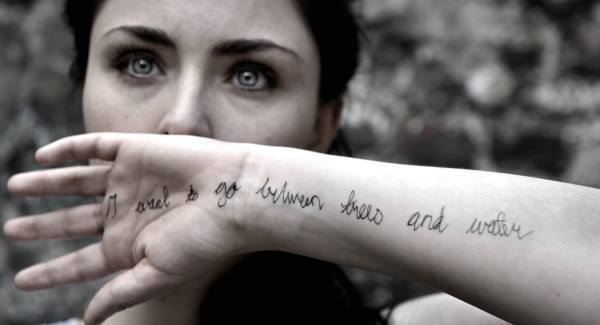
"The past is never dead," wrote William Faulkner. "It’s not even past." Between Trees and Water, a new show by Cork theatre company, Painted Bird, is convinced of this stubborn relevance of the past to the present.

The love that killed tragic Bridie Kirk

The play relates the true story of Bridie Kirk, a young Cork woman who died of poisoning during an illegal abortion in 1939. Conceived by director Fiona McGeown, with numerous collaborators, including the composer, Tom Lane, and dramaturg, Thomas Conway, the play runs in the Unitarian Church, Cork, in early September, before transferring to the Dublin Fringe Festival.

“We are sticking to the facts,” says McGeown. “We’re not fabricating anything. The characters were real people and we’re engaging with the statements that they made themselves, whether they’re family members, Gardaí officers, the state pathologist, or the two people who were charged with Bridie’s murder, her lover, John Daly, and Ellen Anthony, an off-duty nurse who was accused of administering the drug. For us, it’s about presenting the facts of the case.”

Though they are adhering to documentary evidence, McGeown says the show is not a dry re-enactment of a court case. Instead, the piece evokes the more vibrant spaces that were a part of Bridie Kirk’s life during her fateful affair.

“He was a bookmaker, so they’d meet at the racetrack,” she says. “And the night before she died, they went to the Savoy cinema. 1939 was a massive year for movies, with The Wizard of Oz and Gone with the Wind, so we try to capture that. And they also would have gone to dances, so the dancehall is a big part of the show. It’s a very physical and visual piece.”

But Bridie Kirk’s own testimony was never be recorded. Part of the ambition of the piece is to give this young woman a voice.

“It’s her story — as a woman and as a human being — that we’re most interested in,” says McGeown. “Why did she make that choice of illegal abortion? Was she in love? What was life like in the 1930s for a single Irish woman?”

Of course, the continued debate over the legality of abortion in present-day Ireland has obvious overtones with the play. The Ireland of the 1930s had a no-less-complex relationship with abortion, it seems.

“Abortion was certainly an option for an Irish woman in 1939, albeit only illegally,” says McGeown. “Sandra McEvoy, of the women’s studies department in University College Cork, has been hugely influential in explaining to us that abortion really was not uncommon. There were advertisements for pennyroyal herb and pills in the newspapers. It was quite common knowledge, but it was kept underground. They would be advertised as ‘female regulators’, to regulate the menstrual cycle. And there were drugs like quinine and ergot, which were used in normal cases of childbirth, but were also well-known as very effective abortive drugs.”

Despite the continued socio-political relevance of the subject matter, however, McGeown says the piece is principally a means of exploring what history sometimes leaves ‘hidden’.

“I know it’s a contentious issue and the play does highlight the cruelties of illegal abortion,” says McGeown. “But it’s not just about the political issues. Really, what we want to do is highlight one woman’s true experience and her reality.”

- Between Trees and Water runs at the Unitarian Church, Cork, September 1-6, and in South Studios, Dublin, September 9-14

More in this section

Cookie Policy Privacy Policy Brand Safety FAQ Help Contact Us Terms and Conditions

© Examiner Echo Group Limited













