Six items we take for granted today which were invented by women
Think of a famous inventor and more likely than not it is a man. Robert Hume looks at six items we take for granted today which were all invented by women

Six items we take for granted today which were invented by women

The paper bag,

Margaret Knight, 1870

The paper bag was once as flimsy as an envelope. Most people carried bulky groceries in baskets, crates, or under their arm. Enter Margaret Knight, who had been inventing things since she was 12. When working in a Massachusetts paper bag factory, she hit on the idea of a new machine to make heavy-duty, square-bottomed paper bags. As Knight was improving her invention, Charles Annan, a workman in the machine shop where her device had been built, stole the design and patented it as his own. She promptly sued him. “How can she have invented it?” Annan supposedly scoffed. “What does a woman know about machines?” But by producing diagrams and witness statements, Knight could prove to the court the invention was indeed hers.

Dishwasher,

Josephine Cochrane, 1886

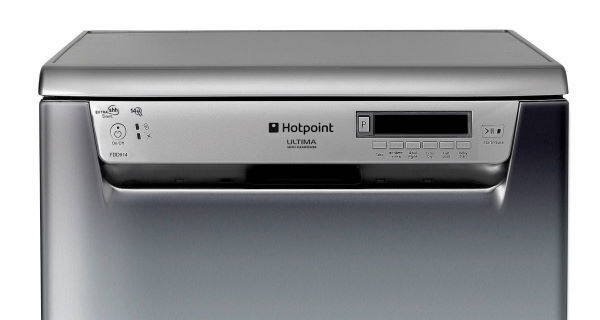
After a dinner party at her Illinois mansion, Cochrane’s servants chipped some of her china. Furious, she started doing the washing up herself — until her hands became chapped. Fortunately, her father had instilled in her a knack of problem solving: “If nobody else is going to invent a dishwashing machine, I’ll do it myself!” she proclaimed. Having measured her plates, cups and saucers, she built special wire compartments for them. With the help of a mechanic, she placed these into a wheel that lay flat inside a copper boiler. A motor turned the wheel while hot soapy water squirted up from the bottom of the boiler and rained down on the dishes.

It wasn’t exactly automatic: the soapy water had to be pumped by hand, and a kettle of water poured over the dishes to rinse them; but it worked, and hotels and restaurants ordered the “Cochrane Dishwasher”.

Windscreen wiper,

Mary Anderson, 1903

In the winter of 1903 when she was travelling on a bus in New York, Anderson noticed the driver was having difficulty seeing through the sleet and snow. Every few minutes, the poor man would have to reach through his window to wipe a fresh deposit off the windscreen by hand. Sometimes he would even stick his head out the window while driving in order to see. Back home in Alabama, she hired a draughtsman to design a “window-cleaning device”. A lever, operated from within the car, controlled a spring-loaded arm with a rubber blade that swept across the windscreen. Critics said that watching the wiper would distract drivers’ concentration from the road.

Pedal bin,

Lillian M Gilbreth, 1920

You’re carrying something messy to throw away, your hands are full, and you don’t want to spill it. Thank goodness for the humble pedal bin! All that’s required is a flick of the foot. Its creator, California-born Lillian Gilbreth was a super multi-tasker: an engineer, industrial psychologist and prolific inventor, who managed to combine a high-flying academic career (she was awarded 20 honorary degrees), with raising 12 children. Dubbed the “Mother of Modern Management“, it was her belief that every mother, like every factory owner, “needed to be an effective, efficient manager”. By using gadgets, housework could be made easier, giving women a chance to regain a little freedom. Her “pedal-operated trash can” saved time and energy, and gave housewives what she comically called a “happiness moment”.

Disposable nappy,

Marion Donovan 1959

Frustrated by the mess that filthy cloth nappies made on her daughter’s bed-sheets and clothes, Marion O’Brien Donovan from Indiana decided she had changed one damp nappy too many.

There had to be a better way of keeping babies dry. Coming from a family of inventors — her Irish-born father and uncle had invented industrial lathes — she went up to the attic, got out her sewing machine, and tearing down a piece of shower curtain, created the first waterproof nappy. Three years, and many trials later, she concluded the best material to use was nylon parachute cloth. Not only did her daughter’s clothes and bedding stay clean, she also had fewer rashes than with cloth nappies.

Liquid paper,

Bette Graham, 1956

School dropout, Bette Graham, could not get used to her new electric typewriter in a Dallas bank. It was impossible to erase mistakes, and she was tired of retyping pages because of the smallest error.

One summer she observed artists painting over their mistakes. So, why shouldn’t typists? Using a small bottle of water-based paint and a tiny brush, she started to secretly correct her typing errors; her son’s chemistry teacher helped dye the paint to match the colour of her stationery. Other secretaries flooded her with requests, and in 1956 Graham began using her kitchen blender to produce the fluid in bulk at nights and weekends — originally marketing it as “Mistake Out”. When she accidentally typed her own company name instead of the bank’s name — and could not correct so many words — she was sacked. But that gave her the opportunity to concentrate on producing more “Liquid Paper”.

More in this section

Cookie Policy Privacy Policy Brand Safety FAQ Help Contact Us Terms and Conditions

© Examiner Echo Group Limited













