John Creedon's new series says climate change is coming, weather we like it or not
YEARS ago and long before we were launching beady-eyed satellites into space, Blacksod Lighthouse in Mayo used to send its weather reports to London.
On one particular day in the summer of 1944, the lighthouse-keeper’s wife and manager of the local post office received a phone call from England asking her to confirm her husband’s earlier report. She confirmed and thought nothing of it. Some hours later, England called again and asked them to take a further reading.
“They didn’t know what was wrong with your one on the phone,” says John Creedon. “But they went ahead and did it and filed it back with herself. The English woman happened to be in the war office in London with Churchill and the rest of them and based on what they’d been told by Blacksod, they decided to delay the D-Day landings by a day.”
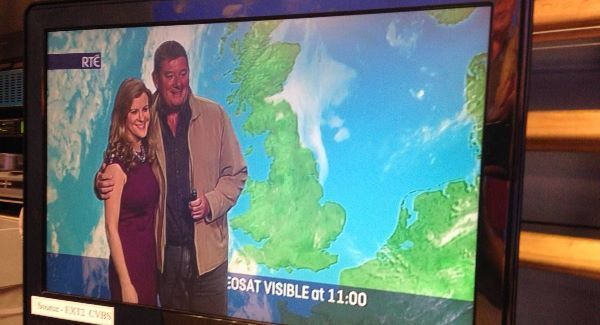
This is just one of a number of vignettes covered by Creedon in his new three-part series Creedon’s Four Seasons in One Day. The series, which starts this Sunday on RTÉ 1, investigates our relationship with weather and how it shapes our lives.
“I suppose the idea for it came off the back of the funny weather we’ve had over the last couple of years,” explains Creedon. “We’ve had those very cold winters, desperate floods and at least two hot summers. Weather is never too far from Irish conversation so we thought we’d dig up and have a real look at it.”
The show takes Creedon from the sun-kissed beaches of Florida to the cooler climes of Europe but at the heart of the series is Ireland and with the help of eco-scientists, farmers, foresters and meteorologists, he takes us on something of a whirlwind tour.
“I did an interview in the documentary with Gerald Fleming from Met Éireann,” says the Cork-born broadcaster. “And we spoke about how the weather has affected us — how it’s affected the Irish complexion and how we can’t really tolerate the sun because we’re just not used to it.
If you’re from Arizona you’re not going to talk about the weather because you know if you’ve planned a picnic on Saturday it’s going to happen because you know what it’s going to be like.”
While Creedon examines Irish weather past and present, his study also looks at the future.
“We talk to a Professor John Sweeney from Maynooth, one of the hard-hitters we have in the documentary,” explains Creedon. “He says that the scientific body of proof is enough to make us as certain of climate change, as we are of smoking causing cancer. And he has examples of it happening already in Ireland, particularly on the East Coast where he says that clay is more porous. So even though the weather is more dramatic on the west coast, it’s the East Coast that’s probably more at risk. Cork City is definitely going to see problems and we have already. If you take rising sea levels and add more rain for Ireland, you’ve got bigger rivers running down to meet higher tides. I give you Oliver Plunkett St in Cork.”
Creedon says that making the documentary has now convinced him that “the time for humming and hawing is over”. Indeed, the scientists he speaks to are not dealing with climate change as something that’s going to happen but as something that is happening now.
“Something that I took away from it was that this thing is for real,” he says. “It’s not some Californian notion. One person I spoke to in the European Space Agency said he wished something calamitous would happen because we’re just not taking any notice of it at the minute.”
In Creedon’s opinion, politics, and more specifically politicians, are at the heart of the problem. In a world obsessed with immediacy and self-gratification, long-term planning does not cut it with the man and woman on the street.
“Politics is cyclical,” says Creedon, whereas climate change is linear, it’s driving on, it’s not really going to happen on anybody’s watch. I feel there’s a lot of political inactivity; from the superpowers as well.”
Not that climate change has to be all bad for Ireland. According to some of the programme’s interviewees there are opportunities here.
“We’re very well positioned to keep on producing food and we’ve got a very good brand with a clean ecological system and so on,” says Creedon. “We’ve got good graduates and good research and development facilities. We could be at the forefront of eco science or coastal defences and we should be at the front of the class saying the planet’s in trouble and Ireland has some solutions.”
*















