Hogg in the limelight as ’Alchemical’ exhibition comes to Triskel
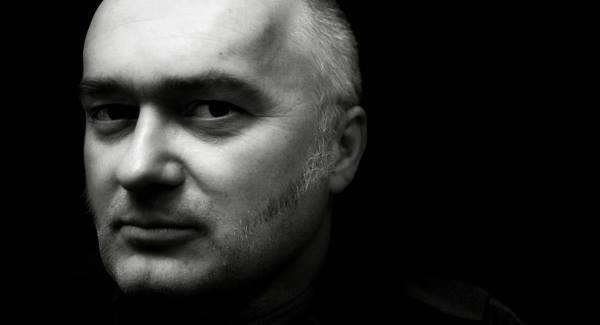
THE influence of Carl Gustav Jung is obvious in Alchemical Invocations, an exhibition by Gavin Hogg showing at the Triskel Christchurch until June 29.
Hogg has exhibited widely in Ireland and internationally, and his work forms part of collections from Moscow to New York. Having initially trained at the Limerick School of Art and Design, Hogg went on to complete a Masters in Fine Art at the Birmingham Institute of Art. More recently, Hogg returned to Limerick to complete a certificate in Jungian psychology with art therapy at the Limerick Institute of Technology. The title of the show refers to one of the central tenets of Jungian psychology, that of alchemy.
Born in Switzerland in 1875, Carl Jung was studying medicine when he developed a strong interest in spirituality. He proceeded to specialise in psychiatry which he saw as a marriage of these two somewhat disparate interests. In 1906 Jung sent a copy of his writings Studies in Word Association to Sigmund Freud. Jung then spent some time working with the ‘father of psychoanalysis’ before coming to reject Freud’s theory of sex as the primary behavioural motivator.
With an increasing interest in symbols and dreams, Jung concluded that he wished to follow his own path and to use art, dreams, myth and philosophy to further his understanding of the human mind.
Hogg’s work bears strong reference to Jung’s theories of the collective unconscious and the concept of alchemy. Comprising a selection of both large and smaller scale mixed-media works, many of the pieces featured begin as prints or collages which are then over-painted or printed, possibly representing the many layers of memory and self.
Hogg describes how he then removes elements or parts of the piece, tearing things back to “reveal the energies underneath”. Interwoven between layers, commonplace items such as bus tickets, food wrappers or newspaper cuttings are to be found. “The idea of alchemy comes into play, with the idea of taking something base or throwaway and making it precious,” explains Hogg.
Collagraph prints form the basis of most of the work in this show. Collaged and painted over to produce the finished pieces, these are a form of intaglio print, in which an image is created by cutting, carving or engraving into a flat surface.
The process of layering and stripping away encourages close examination of the work, inducing the viewer to focus on both the clearly visible and the partially concealed, veiled or shrouded elements. ensuring that there is “something there to talk to, to talk with, to ask questions about.”
A number of pieces included in the current exhibition feature a dragon-like form. For Hogg, this represents a “confrontational demon, a play on the Alchemical Ouroboros, with the legs symbolising the earth and the wings, the air”.
For Jung, the Ouroboros (a symbol depicting a dragon eating its own tail) is reputed to have had archetypal significance to the human psyche.
Relating how a dystopian novel by Dorris Lessing, Memoirs of a Survivor, has exerted an influence on his art, Hogg recounts how “the protagonist watches one of the walls of her apartment disintegrate and a whole other world opens up. I always liked that idea, the idea of what is solid and what isn’t solid. And of course on a molecular level, nothing’s solid because everything is in motion and composed of tiny units”.

CONNECT WITH US TODAY



Be the first to know the latest news and updates









