Confidence code for high achievers
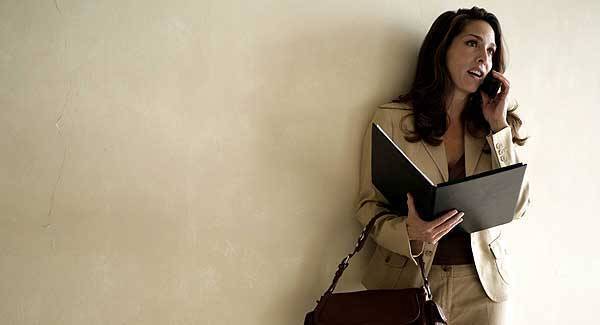
CONFIDENCE can set you apart — although hard to define, it’s easy to recognise. Yet many women, including well-known high-achievers, struggle with self-doubt and inadequacy.
Christine Lagarde, the formidable head of the International Monetary Fund, had occasional losses of confidence as she climbed the ladder.
“We assume, somehow, that we don’t have the level of expertise to be able to grasp the whole thing. We want to be completely on top of everything and we want to understand it all, and we don’t want to be fooled by somebody else,” Lagarde told best-selling authors, Katty Kay and Claire Shipman, during an interview for their new book, The Confidence Code.
This doubt is common among high-achieving women, the authors discovered.
Among the interviewees for the book were top US athletes whose coach said the tendency to dwell on failure and mistakes, and an inability to shut out the outside world were the biggest psychological impediments for his female players.
Also interviewed were a successful entrepreneur, a high-powered Washington DC lawyer, and a member of the prestigious US Explosive Ordnance Disposal team — which deals with biological and chemical weapons — and America’s first Chinese-American cabinet secretary, Elaine Chao.
The interview subjects varied widely, but the result was the same — high-achieving women struggle with self-confidence.
Kay, 49, is the main presenter for BBC World News America and a regular guest on American news shows, and her colleague, Shipman, 51, is a correspondent for ABC News and Good Morning America.
“In two decades of covering American politics, we have interviewed some of the most influential women in the nation,” they wrote in the introduction to their book.
“On closer inspection, however… we were surprised to realise the full extent to which the power centres of this nation are zones of female self-doubt. Woman after woman, from lawmakers to CEOs, expressed to us some version of the same inexplicable feeling that they don’t fully own their right to rule the top.”
Why? Differences in structure and chemistry between male and female brains may have an effect. The anterior cingulate cortex is the part of the brain that helps us recognise mistakes and analyse options — it’s bigger in women, which may be why women are cautious, brood on things, and constantly check for problems. This mind-set inhibits relaxed, confident thinking.
Hormones also play a role — oestrogen seems to encourage bonding and connection, whereas the male hormone, testosterone, encourages risk-taking and conflict.
Parenting, and cultural and societal factors are in the mix, as well — girls are rewarded by parents and teachers for being good and quiet, while we generally disapprove of a loud, disruptive girl.
In the workplace, confident, assertive women are often labelled bossy, bitchy or not very likeable — something which Sheryl Sandberg is attempting to tackle with her ‘ban bossy’ campaign.
When the New York Times newspaper recently sacked its first female editor, Jill Abramson, after less than three years in the job, the whisper was that she’d lost her job because she was too ‘bossy’ — would that ever be said about a man?
Women are confident by nature, but socialisation makes them wary of expressing it, says psychologist Patricia Murray.
“Boys are encouraged to win, and to be the best and to say it. Girls get a different message, however: ‘don’t be cocky, you’ll have further to fall if you talk yourself up.’
“Women learn not to show their confidence. Boys directly express it and it does have an influence on their success rate, because they are perceived to be more confident and thereby more successful,” she says.
“You don’t blow about yourself if you’re a girl, but if you’re a boy you can, and they’ll look up to you,” she says.
Encouraging girls to be diligent, neat and tidy can nurture a strong work ethic — but it doesn’t instil the same confidence boys get from being encouraged to take risks and push boundaries, says Dr Keith Gaynor, senior clinical psychologist with John of Gods’ Hospital. “There is this perception that it’s a negative, or unfeminine thing, when a woman is being assertive.”
But you can improve your self-confidence, say Kay and Shipman — our brains can change in response to new thought patterns and behaviour.
This can be done by tackling new challenges, moving outside your comfort zone, and not obsessing about your mistakes, says Gaynor: “The people I see who don’t have confidence don’t take anxiety-causing challenges — and if they do, they tend to be very critical of themselves.”
Says Rosemary Delaney, founder and managing editor of Women Mean Business magazine: “There is a wealth of female talent on our island — think Julie O’Neill, Colette Twomey, Margot Slattery, Deirdre Somers, Anne Heraty. Are these all confident women? I would say so. But I have little doubt that these same successful ladies have had to go out of their ‘safety zone’ — and often — to become successful.”
Add to this list the six women, including Minister Frances Fitzgerald, who now hold leading roles in our justice system.
Remaining in your comfort zone and over-focusing on criticism are among the top five errors women make, according to The Confidence Code.
These errors are: thinking too much about something; focusing too much on a piece of criticism; staying in our comfort zones; not voicing our opinions; and avoiding risks because of a fear of failure.
A 2003 study by the Cornell University psychologist, David Dunning, and Washington State University psychologist, Joyce Ehrlinger, which investigated the relationship between female confidence and competence, threw up some thought-provoking results.
Men and women who were tested with mathematics, or scientific questions, were asked to rate their own skills before the tests. The women rated themselves lower than the men, who assessed themselves as better than they were.
Although the scores on the tests were very similar — the women got 7.5 out of 10 questions correct, and the men 7.9 — the women’s perception of their own abilities was far more modest.
There’s nothing wrong with enjoying a well-founded self-confidence, says Delaney: “Personally, I will always feel more comfortable in the company of confident people in work and in life, provided that their confidence is backed up by capability,” says Delaney.
“As women, we can tend to over-analyse, over-think situations. We want everything in its correct place. We want to tick all the right boxes before we take the next step, before we ask for a pay rise, before we reach for that boardroom chair.
“This can come across as lacking in confidence. Look at our male counterparts and you will find that, once they set their sights on something, they tend to just go for it.”
However, female caution has an upside. “We, as a gender, are regarded as risk-adverse. However, research would show that we take calculated risk,” she says.
While there is a perception that by not taking risks we are not as ‘confident’ as we could or should be, she says, sometimes this more calculated approach is helpful.
“It is this more reasoned approach that could have, perhaps, saved a lot of financial and emotional stress in recent years.”
A study being carried out on perception, for the past seven years at Manchester Business School, shows how confidence and expectations may be linked.
Each year, students are asked to estimate what they expect and deserve to earn five years after graduation. Most male students expect to earn significantly more — and believe they deserve to earn more — than their female counterparts. On average, the men feel they deserve to earn £52,000 a year, while the women think a salary of £41,000 is fair.
“Women find the combative element [of the workplace] a bit more challenging — they tend to apologise more and to be less assertive than would be beneficial or wise,” says life coach Julie Silfverberg.
“Women tell me that when a man applies for a job, he’ll apply for one for which he is under-qualified, expect to get it and to learn on the job, whereas a woman thinks she already needs to know how to do it. ”
Silfverberg says that women often feel they are “not good enough”, that “they need more education or their qualifications need to be improved, etc, yet there would be men on the same level, as colleagues, who would be similarly qualified and be quite happy with themselves and have no problem earning more.”
Confidence, or the lack of it, can affect your performance, says Gaynor. “If you don’t have it, you don’t put yourself forward, you don’t push the boundaries, you hold back and wait until you’re really sure.”
It wouldn’t do any harm for the female gender to put themselves out there more assertively.
Acording to a report by Grant Thornton last year, only 21% of senior business roles in Ireland are filled by women, and just 17% of board directorships are held by women, despite a target set by the European Commission for women to make up 40% of non-executive directorships by 2020.
A 2008 report, Women and Ambition, from the Centre for Gender and Women’s Studies at Trinity College, found senior male managers outnumbered their female colleagues by 56%. In that same group, 86% of the men had children, but just 53% of the women had children.
Broadcaster Miriam O’Callaghan has spoken about the demands of motherhood — her large family was a major reason why she didn’t run in the recent presidential election.
Although the Prime Time presenter and mother-of-eight was a popular choice, she felt it wasn’t possible — in an interview she said: “My youngest boy had only turned five and you just can’t be travelling around the world. I don’t travel at all — I’ve never gone away much from my kids.”
She has spoken about the demands of juggling motherhood and career, saying that although she has a wonderful childminder, a fabulous mother, and a loving husband, she still spends much of her life “struggling to be in the right place at the right time”.
Yet motherhood is no longer the barrier it was traditionally seen to be, says Murray: “The motherhood issue affects women less and less. More often, now, the mothers I know say it has not affected the way they look at their career,” she says. Indeed, she finds mothers working outside the home are taken aback by a presumption that once they become mothers they are supposed to be less ambitious. “It’s not true, as a general rule.”
Kay and Shipman have seen the possibilities of simply having confidence.
“We notice how some people aim high, simply assuming they will succeed, while others spend the same time and energy thinking of dozens of reasons why they can’t.
“And, as women — particularly thanks to this [book] — we have both felt the life-changing impact of confidence in our professional and our personal lives.
“There’s a singular sense of fulfilment you get from simply having it and putting it to good use.”
* The Confidence Code; The Science and Art of Self-Assurance — What Women Should Know, by Katty Kay and Claire Shipman, published by HarperBusiness, €23
* Take up more space — place your elbows along the arms of your chair. Lean back to show you’re relaxed.
* During meetings, put your elbows on the boardroom table. Stretch your fore-arms across the table in front of you. Keep your hands visible.
* Stand with feet firmly planted on the ground about a shoulder-width apart, one foot in front of the other. Don’t lean or slouch.
* Speak in low, authoritative tones. Maintain solid eye contact with others. Smile occasionally.
* Adopt a power-posture — push back your shoulders slightly, expand your chest, keep your eyes up.
* Don’t fiddle. Don’t touch your face. Move your hands only slightly when talking, and in casual gestures.
* Recognise ‘defensive’ gestures and avoid them. Don’t cross your arms or legs, don’t ‘guard’ your chest or belly with your hands. Don’t hang your head.
* Smile and keep your facial expression positive. But don’t grin all the time and don’t laugh too much — especially at your own jokes. nSlow down — take your time in the way you move, the way you speak. Act as if you are relaxed. This will make you seem calm and confident.
* Mirror the person you are talking to occasionally — if they lean forward, you lean forward. Smile if they smile. It makes them subconsciously more comfortable with you but don’t over-do it.

CONNECT WITH US TODAY



Be the first to know the latest news and updates









