The Rapunzel Foundation: raising funds for alopecia sufferers
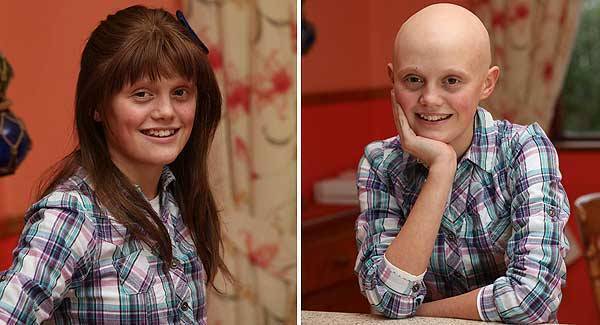
It’s slightly wavy and when she’s at school in Bridgetown Vocational School, Wexford, she wears it in a ponytail or up in a bun.
Her regard for her crowning glory goes deeper than fashion. “If I wore a bandana, everybody would stare at me. With my wig, people think I’m the same as everybody else,” says the 13-year-old, who was born with a small patch of hair on the back of her head that disappeared within six weeks.
When she was two she was diagnosed with congenital alopecia areata. “It means genetic baldness,” explains her mum, Aileen. The diagnosis came as a relief because medics had worried Claire might have a condition that would also affect her sweat glands, teeth and nails.
“We were relieved she had no other health issues. But we knew lack of hair would be an obstacle. If there’s no hair, it’s the first thing you see when you meet someone. We knew we’d have to prepare her for meeting and dealing with people,” says the mum of two.
Claire’s naturally friendly personality proved her biggest asset. “From the time she could talk, if she saw somebody staring at her, she’d say ‘hello’. That ‘hello’ broke the ice and people would talk normally to her. The first thing people thought is ‘she’s had chemotherapy’. They’d ask how long she’d been on treatment. We were always honest that she just didn’t have hair,” says Aileen, who recalls an occasion when two bystanders were staring and giggling. “Claire turned around and said ‘I have ears you know, I can hear’. She was about three. I couldn’t have dealt with it as calmly.”
While Aileen and husband Shane worried “people would make fun of Claire, isolate or fear her because she was different”, they concentrated on helping her find a good perspective. “Our little chats with her were all about helping her grow up with acceptance, independence and confidence.”
Claire’s primary school was “100% supportive — other children’s comments were always dealt with promptly”. Claire would explain: ‘this is the way I was made’.
“She knew hurtful comments weren’t maliciously intended — they just showed lack of awareness,” says Aileen.
But she did feel sad when schoolmates played hairdressing games. “When I was about eight and we played that game, I’d never be the one getting my hair done. I always had to be the hairdresser. I’d never be saying to the teacher ‘oh look at what I got done with my hair at break time’,” says Claire.
In the run-up to her First Communion, Claire’s focus wasn’t the dress. “She said she’d like hair for her communion. We always said we wouldn’t push a wig on her but that when she wanted one, we’d source it for her,” says Aileen.
Claire wore her wig for her big day but afterwards wore it to school only a couple of days or if the family was going out for a meal. “It got so hot and itchy that she always had a bandana in her bag. When she outgrew the first wig, we got her a second that she got very little use out of.”
But with Confirmation and secondary school on the horizon things changed. “She was very conscious she’d be meeting a whole new community of people that wouldn’t know her.”
By now, the Rapunzel Foundation had been set up by New Ross-based Anna Furlong. Since 2010, the charity raises funds for Freedom wigs made in New Zealand and to help defray the cost of purchase to alopecia sufferers. A Freedom wig is custom-made for the individual’s head and it suctions on. “It won’t come off unless the wearer takes it off. A child can go swimming or do gymnastics without needing to take it off. It gives freedom to continue living your life,” explains Anna Furlong.
Claire’s Freedom wig is so natural-looking, says her mum. “We always feared the day she’d start secondary school. When it happened, she just had the normal worries — difficulty finding a classroom or a teacher being cross. Her baldness never came up.
“The wig has brought her up a notch. She’s more confident in herself. She wears it everyday in school. She hasn’t hidden. If someone asks, she’ll tell them she was born without hair. She has her Facebook profile and anyone can see pictures of her in her bandana. But she’s not shouting it from the rooftops either.”
* Anna Furlong runs a hairdressers and wig-fitting service in New Ross. Among her clients are alopecia sufferers, for whom, says Furlong, there’s very little support in Ireland.
One day, a six-year-old came to her salon to get a ‘Freedom’ wig shaped to suit her.
“Her mom was growing her hair to send to New Zealand for the child’s next wig. It was the first I’d heard of ‘Freedom’ wigs. In that moment, I decided if anyone wanted 12 to 14 inches cut off their hair, I’d do it for free and send the pony-tail to New Zealand.”
* Hair for donation for ‘Freedom’ wigs must be freshly shampooed, not coloured, 14 inches from nape of neck, plaited to secure it and cut above the bobbin. “We love to get men’s hair. It’s duller in tone and good for mixing.”
* Rapunzel Foundation has sent 2,000 ponytails to New Zealand since 2010. In Ireland, 125 salons are registered with the foundation to cut ponytails. Rapunzel has sponsored 15 people to get wigs — six were children.
* It can take between five and 20 ponytails to make a ‘Freedom’ wig and there’s a global shortage of hair for wig-making. Irish hair is very popular among ‘Freedom’ wig-makers, because of its colour.
At the moment, the Rapunzel Foundation is looking for natural red hair, for a little girl who’s making her First Communion in 2015. “We need to get it this year or the wig won’t be ready in time,” says Furlong.
* A ‘Freedom’ wig costs €3,000. Adult wigs last five years. A child may need two wigs a year. ‘Freedom’ wigs are for alopecia sufferers only — there must be no hair growth on the head.
* Rapunzel Foundation runs a ‘tips for the day’ campaign in June, when hairdressers and beauticians are asked to donate a day’s tips. For more info, visit www.rapunzelfoundation.com.

CONNECT WITH US TODAY



Be the first to know the latest news and updates

















