Triburbia
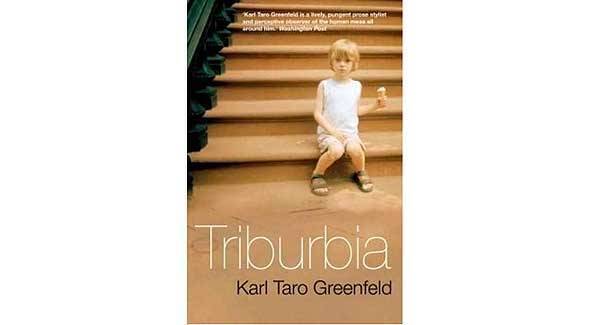
Every so often a novel comes along that redefines New York zeitgeist, from The Great Gatsby to Bright Lights, Big City and American Psycho. Triburbia is the latest, more Gatsby then Psycho, a satirical but also affectionate portrait of the Tribeca district circa 2008.
Tribeca (the triangle below Canal Street), at the southernmost tip of Manhattan, is in the second phase of gentrification as the story opens: the lofts and abandoned factory spaces colonised by artists in the 1970s, have been taken over by far-sighted, wealthy members of the artistic professions, who bought their lofts before prices rocketed. Now bankers and lawyers are paying top dollar to move into the neighbourhood.
Tribeca is seen from the viewpoint of a group of fathers in their late 30s who meet for coffee after leaving their children at elementary school — “the drop-off guys”. They are either self-employed or do not need to work fixed hours, and are identified by their occupations: the sound engineer, the photographer, the sculptor, the gangster, the chef, the memoirist. Instead of a contents page there is a map of Tribeca.
The drop-off guys resent and pity the bankers and lawyers now moving in. The sound engineer who narrates the opening section sums it up: “We are a prosperous community. Our lofts and apartments are worth millions. Our wives vestigially beautiful. Our renovations as vast and grand in scale as the construction of ocean liners, yet we regularly assure ourselves that our affluence does not define us. We are better than that. Measure us by the books on our shelves, the paintings on our walls, the songs on our iTunes playlists...”.
He labels his peers “faux Bohemians”, and points out that for all its reputation for edgy, urban living, Tribeca is safer than the wealthy suburbs where the rich chose to live in previous generations. Initial doubts as to whether the musings of a gang of ageing rich kids — their ambitions, marital and child-rearing problems — could hold the interest were quickly dispelled. And not only because of natural curiosity about how the rich live. These people’s stories have a ring of authenticity, which, combined with a sharp and satirical point of view makes them riveting.
Not all the characters are wealthy: one of them is a survivor of the original wave of artists, who has hung on to his rent-controlled loft, which started at $280 a month. And there is a Jewish gangster, the all-powerful Rankin, whose ‘guys’ can fix any problem, rendered helpless by an eight-year-old girl’s cruelty to his daughter in the playground. The women of Tribeca are the ones with sensible jobs — literary agent, magazine editor — or family trust funds. Money is key to the loft-dwellers’ life style, which demands a summer house and an SUV, as well as private school fees.
Triburbia is a series of interconnected stories, told from different characters’ points of view. It begins and ends with the sound engineer’s story — he and his family end up in California in a large beachside home bought from the proceeds of their loft. He sums this up as “every American’s middle-aged destiny — a lawn, a swimming pool, the morning sun in their faces”.
Karl Taro Greenfeld is the author of six non-fiction books, including the bestselling Boy Alone, about his autistic brother. His first work of fiction is very funny, brilliantly crafted, and compelling in its content.

CONNECT WITH US TODAY



Be the first to know the latest news and updates

















