Giving a platform to New Music in Dublin
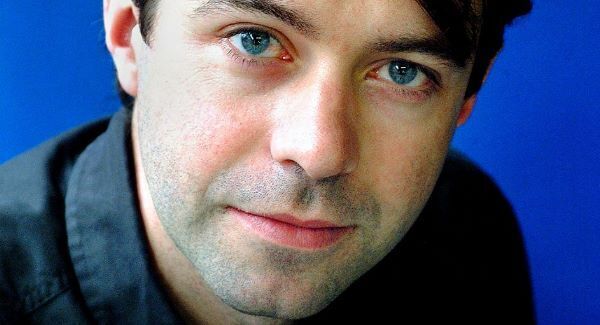
One of the leading lights of Ireland’s contemporary music scene, Donnacha Dennehy of the Crash Ensemble, takes the reins as festival director this year, and is presenting a menu of composers not often heard in the concert halls of this country: Georg Friedrich Haas, Hans Abrahamsen, Claude Vivier and Harrison Birtwistle.
The featured work from Abrahamsen, Schnee (Snow), will be played by Dennehy’s Crash Ensemble. It’s an hour-long work that grows from opening strings worthy of Bernard Herrmann, overlaid by percussive piano notes, through five sections, or canons, that evoke icy minimalism, flights of colour and occasional dissonant moments. Eleven in the evening seems the perfect time to hear this mesmeric, trance-like piece.
Abrahamsen also features in a concert by those contemporary music veterans the Arditti Quartet. The highlight of their show will be a piece specially composed for them by Iannis Xenakis. His Tetras puts a string quartet through its paces in ways you’re unlikely to have heard before. It’s a virtuoso piece requiring virtuoso players.
The Arditti will have a second outing in the old Engineering Library of the Concert Hall at 11pm on March 6. Then, they will play GF Haas’s In iij Noct, a piece that comes with some unusual strictures: it’s played in darkness. The musicians cannot see their music, or their fellow players, and are seated as far apart as the stage will allow.
Night owls are again catered for with a performance of Oktophonie, Stockhausen’s synthesizer-led electronic work. In performance, the audience is intended to sit in the midst of eight speakers, which form an “octophonic” cube around them. How the old Medical Library at the Concert Hall accommodates this should be interesting to see, and hear.
Counting down: just 9 days till @newmusicdublin at @nch_music #dublin #festival #music
— New Music Dublin (@NewMusicDublin) February 25, 2014
New Music Dublin fills the hole in the music calendar left by RTÉ’s Living Music Festival, which brought such eminent composers as Steve Reich and Arvo Part to Dublin. It’s good, then, to see New Music Dublin keep that emphasis on the lives behind the music with the visit to Dublin of Harrison Birtwistle. The English composer will present an analysis of his Earth Dances before its performance by the National Symphony Orchestra.
The RTÉ Contempo String Quartet will perform Birtwistle’s Clarinet Quintet, an arrangement for strings and the first instrument Birtwistle learned to play, as a seven-year-old in 1940s Accrington.
The final Etude of Ligeti that we will perform at this year's @NewMusicDublin festival on March 7th. http://t.co/Mooktlllze
— CRASH ENSEMBLE (@crashensemble) February 22, 2014
Two very distinctive local voices will be heard. Jennifer Walshe will present a work about the 1920s Irish avant garde, and a work entitled ‘All the Many Peopls’, showcasing her magpie aesthetic. Therese Fahy, meanwhile, will perform ‘Handprint’, a series of solo piano pieces written with the small-handed player in mind.
The UK 12-piece Icebreaker will be charting the career of Kraftwerk through J Peter Schwalm’s live reworking of their back catalogue. The piece will be performed along with an accompanying film shot in the German group’s native Ruhr valley.
The festival ends with the National Symphony Orchestra playing Michael Gordon’s deconstruction of Beethoven’s Seventh Symphony, grappling with the walls of sound in Gerald Barry’s Chevaux de Frise, and serving a solo soprano in Claude Vivier’s haunting Lonely Child.
* www.newmusicdublin.ie














