A Cat, A Hat and a Piece of String
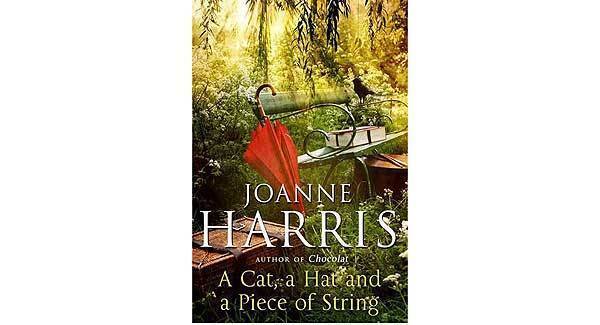
Joanne Harris is best known as the author of Chocolat, a novel that became an Oscar-nominated film.
Harris has published more than a dozen books in 50 countries, making her a massive best-seller.
She began her career by publishing two Gothic fantasies, before the success of Chocolat, and continues to demonstrate a lively imagination.
Born in Yorkshire to an English father and a French mother, Harris’s works combine a love of food — cooking, and growing and eating it — village life, and rural traditions with strong story-telling and a lingering fondness for the supernatural/fantasy. This is her second collection of stories.
The strange title, A Cat, A Hat and a Piece of String, was her answer to the question ‘what three items would you take if stranded on a desert island’? It seems to indicate her belief that you can make a story out of anything. The stories range from simple yarn-spinning, based on her observation of children at play in the Congo, to personifications of the gods of fire, water and sunshine wreaking havoc in New York.
Each story has a reassuring little introduction by the author, explaining its origin. Harris’s story-telling skills are so soundly honed that it seems she can get away with anything thematically — a woman who eats herself pregnant, or a man whose love of Christmas has led him to live everyday as if it were.
Even a relatively commonplace idea — a blind woman falling for the radio voice of a physically disfigured man — becomes compelling.
‘Muse’ is a delightful fantasy in which the people running a station café — and their cat — are revealed as genuine muses.
There are two ‘Faith and Hope’ stories set in a care home. Hope is blind, but was once a Cambridge professor.
Faith, who is wheelchair-bound, tells the stories in a gung-ho voice that recalls school stories of fourth-form escapades, as she and Hope get the better of their patronising carers.
There must be a novel in this lively pair of schemers.
One story has a deeper imaginative engagement, leading to an unresolved ending, and possible unpleasant consequences. ‘Dee Eye Why’ concerns an actor-singer who retires when he loses his nerve, leaves his wife and children, and buys a huge, almost derelict Victorian house and garden. The house and its ghosts take over his life and become more compelling than the contemporary world.
Chocolat had a dangerous darkness and an outspoken, anti-clerical stance.
These qualities have been replaced by a warmer, safer ambience — more Maeve Binchy than Mary Shelley.
For all her imaginative flights, Harris is not going to leave her readers disturbed or upset, making her the perfect author for a certain kind of book club.














