Dealing with a cat's bad breath
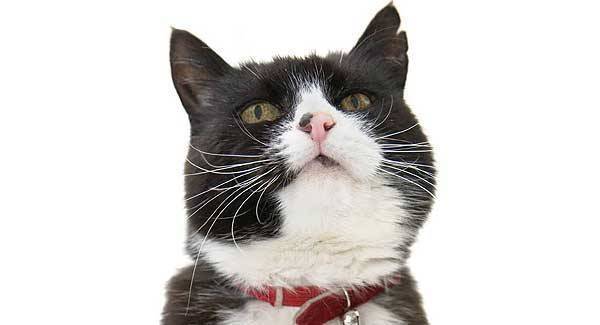
>>It helps to bring your cat to the vet for a yearly dental check up — often a complete clean under sedation is necessary to ensure your feline friend keeps its teeth in good health.
Dogs and cats have a reputation for foul breath and yellowing teeth, and their diet is often a key factor. Raw bones are an important addition, since they act as a natural toothbrush for carnivorous animals, so include raw meaty bones alongside your pet’s regular food.
For clean white teeth and healthy gums, your cat will usually need access to raw bones as well as their regular food at least four days a week.
Cooked bone is not a suitable replacement for raw, since it is not easily digestible for carnivores and can cause problems. Cats and small breeds of dogs do well with raw chicken necks, with small whole fish being another good choice for cats (but not dogs).
Medium to large dogs should be provided with raw chicken wings, raw lamb shanks, ox tails, or whole raw chicken carcasses (your butcher will sell these for next to nothing).
Some pets are not used to chewing bones, so may need to be introduced to this practice gradually over the course of a month or more (cats are notoriously fussy and don’t take well to changes!) so that they can adjust to this new addition to their diet.
>> This is a problem that I can relate to — as someone who spends a lot of time in my garden, and rarely wears footwear, I found myself searching for a solution to this very problem a few years back and found a couple of remedies that made a huge difference to the state of my heels.
To begin, make a footbath of warm water, adding a cup of apple cider vinegar. Soak your feet in this solution for at least 30 minutes (anything up to an hour or two) every night. This takes dedication, but it’s also very relaxing.
Paw paw (Papaya) salve applied to the affected area, making sure that you get it right into the deep cracks of your foot, will help to heal and soften the skin. This is a tried-and-true remedy for cuts, rashes, burns, grazes, inflammation, bites and stings, chapped lips, nappy rash, cracked nipples during breastfeeding, and of course cracked heels.
Once the cracks start to heal, soak a gauze pad in straight apple cider vinegar and apply this to the heel. Pop a pair of socks on over the top and leave this to soak overnight. The hardened skin will begin to shed very easily, leaving soft smooth skin in its place.
Make sure you choose organic unpasteurised apple cider vinegar with the ‘mother’ present, since this is the one with the health benefits. I often choose Braggs.
Paw paw/Papaya salve is available from health food stores where 25g costs €12.99.
CONNECT WITH US TODAY



Be the first to know the latest news and updates