Planet of the apps
THE alarm starts bleating wearingly at 7:30am. It sounds like a bunch of canaries let loose in a nightclub, so I swipe my smartphone and check my ‘sleep time’ app. I was awake until 1:10am, slept lightly for half an hour, before deep REM sleep until 3am, at which point the graph flatlines. I pinch myself. Still alive. Either the phone’s accelerometer stopped working or I had an out-of-body experience. Either way, I didn’t get my recommended eight hours of kip.
In the kitchen, I shovel a bowl of Weetabix with blueberries down my gullet, swig a coffee, then plug the details into ‘carbs and cals’. I floss, and tell the world about this momentous event on the ‘lift’ app.
I’ve reached the jumbo milestone of flossing three days in a row, but feel like Shane McGowan when I read that someone in my group is on 363 days. I hop into the car to take my daughter to the crèche. Don’t need to log the mileage. The car does that.
Back home, I check my to-do list on ‘remember the milk’. “Get some exercise, lazy waster,” reads today’s note, alongside reminders of looming deadlines and mental images of angry editors.
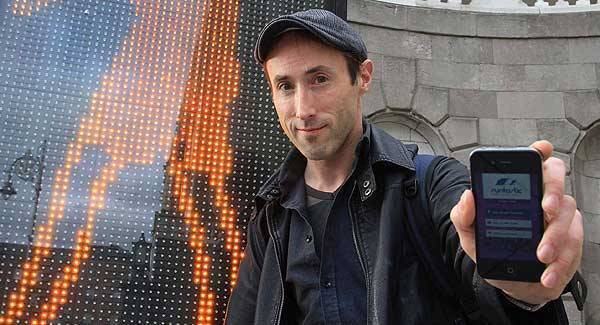
I go for a walk, using the disturbingly titled ‘runtastic pedometer’. I take 2,010 steps, according to the app — a step for every year since Jesus was born, but nowhere near my recommended, daily dose of 10,000. Before work, I check ‘billminder’ to see how much money is disappearing from my account today. And so it continues...
Life-logging reminds me of the time I sailed a yacht from Majorca to Ireland, in the 1990s, with a GPS machine the size of a toaster.
Every half-hour, day and night, we logged our progress on a chart and made notes about the weather, and other observations, in a log book. At sea, you log events to chart your course, detect navigation patterns, and retrace your steps if anything goes badly wrong. Good advice on land, too.
We’ve logged our lives for decades, whether on maps or graphs, calendars or diaries.
People make lists in their heads. A decent app can focus the mind. It can be used for self-improvement, achieving goals, losing pounds, or practicing kung fu.
“Back in the 19th century, Benjamin Franklin, one of the founding fathers of the US, recorded in his diary how he was tracking 13 different metrics about himself,” says Niall Fennell, from the Dublin ‘quantified self ’ group. “He was surprised to find himself so much fuller of fault than he imagined before he quantified data about himself. It’s not a new idea, but technology has made it easier. We have smartphones, tablets, the UP device, by Jawbone, that can track our movements. Cameras to record our activities, GPS navigation...”
Personal trainer, James Murphy, who runs the Zest Fitness centre in Dublin, says life-logging has always been common in fitness circles. Before smartphones, he wrote his performance and achievements in a book, or on an Excel spreadsheet. The instructor recommends Nike+ Running app, ‘map my run’, and ‘pump one’. “If your goal is to go to the gym, lose fat and feel better about yourself, life-logging helps you with goal-setting,” he says.
After writing for a few hours, I pop down to the local swimming pool, put on my Speedos (not really) and take a dip. Afterwards, I log the results into ‘fitocracy’, an app that includes every activity from jujitsu to jump squats, ping pong to pole dancing. Forty laps of a 20m pool in 40 minutes, including a sauna break.
“Congratulations. You earned 398 points,” reads the screen. I click a button that says “I’m awesome” and the app tries to sell me a personalised mug for €5.99. An hour later, some bloke called DaddyNacho gives me props for my swimming achievement and asks me to “come by and feel the love”. No thanks, mate. This is getting weird.
Paula Mee, a food-industry consultant who runs a private nutrition clinic in Dublin, says life-logging can improve our lives, not to mention our digestive systems.
“One of the biggest things I see in the clinic is people who understand what healthy foods they should eat, but are unaware of their patterns of intake,” says Paula, who recommends the ‘carbs and cals’ and ‘superfood’ apps.
“These are busy people juggling careers, studies, friends. They’re on auto-pilot. They’re not mapping, tracking, keeping logs of what they are eating. There’s a perception they eat well, because they put fruit and veg into the trolley each week, but there’s no real accountability as to what they’re doing on a daily basis.”
In the afternoon, I phone Sarah Reynolds, from organisedchaos.ie. I’m half an hour late for a chat with a professional organiser, which says it all. Sarah talks about apps that organise to-do lists, help with finances and family, and even rearrange your closet. Her personal favourites include ‘evernote’ and ‘cozi’.
“Choose the apps wisely,” says Sarah, unwittingly channelling ‘yoda’. “Decide what area of your life you need help with. Whether it’s time, organising your home or organising your family, so you are not downloading a load of different apps, never using them properly or efficiently, or not getting the benefits in your daily life.” Some apps are one-stop life-logging shops, like ‘saga’, which browses your habits, makes notes from your social networks, and tracks your behaviour like a nosy little robot. Some peripheral devices log your physical progress throughout the day: the UP band, by Jawbone, sold in Ireland through Three Mobile, for example.
“It’s like a really cool bracelet,” says Three Mobile’s Shane O’Brien. “There a 3.5ml jack to plug into your phone. It downloads all the information you’ve acquired, over the day and night, onto an application. The UP band tracks your movements throughout the whole day and while you’re asleep: the longest resting period, the longest active period. If you’re sitting for 45 minutes, it will buzz to make sure you get up and move around.”
With the impending arrival of ‘Google glass,’ and peripheral devices like ‘memoto’ that take snapshots every 30 seconds, life-logging raises questions of privacy. In an Orwellian nightmare, every aspect of our lives can now be uploaded for public consumption. Best read the small print, then. “By using the services, you consent to the collection and use of certain information about you,” says the contract for ‘myfitnesspal’. What is this? The NSA?
Despite the inevitable death of privacy, life-logging has potential societal benefits. In the future, personal data “will be almost like a light on the dashboard of your car to tell you your oil is low,” says Fennell. “You’ll have a warning to tell you something is going wrong, rather than learning when it’s too late. That has massive implications for healthcare. Instead of treating symptoms, it will be about addressing the causes.”
I’m wondering if there are any societal benefits in being part of the ‘work on a secret project’ group on the ‘lift’ app. It’s not a secret if you tell people about it.
So I announce that I’m working on a plan to overthrow the Government by using armed force. Then, I delete the app and wait for the police to kick down the door.
If I’ve learned anything from life-logging, it’s that you should collect your data with an end goal in mind. Otherwise, it’s less about productive research and more like a compulsive disorder.
Four of the best life-logging applications on the market
Remember the Milk
We’ve all gawped at an empty shopping trolley trying to remember what we’ve forgotten. Remember the Milk fills in the gaps your brain leaves behind, assigning tasks, priorities, due dates, time estimates, and more. The app syncs across devices and online, streamlining efficiency and murdering procrastination. A Filofax for the 21st Century.
Free. $25 for Pro features.
Whether you’ve got moves like Jagger or a geriatric tortoise, this free pedometer keeps a tally of your movement throughout the day. It not only counts footsteps but uses technological witchcraft to figure out whether you’re walking, running, biking, driving or even flying: all the benefits of a Fitbit or Nike Fuelband peripheral, squeezed into a smartphone or tablet.
As is the case with most life-logging apps, though, beware of serious battery drainage. Free
Fitocracy turns exercise into a role-playing game, only instead of smacking orcs with a magical sword of wisdom, you’re running marathons and doing push-ups. Finish achievements to win points and level up. Featuring a vast array of sports and exercises, this life-logging app is a shared experience. Each group has a comments section for feedback and encouragement. Arnold Schwarzenegger has even teamed up with Fitocracy, although at his age he’s more likely to say, “Ooh, me back” than “I’ll be back”.
Free
With three million foods in its calorie counter database, MyFitness Pal is a great app for anyone hoping to lose some junk in the trunk. Here’s the science. The app counts the calories from the food you eat and subtracts this from your daily calorie allowance. Calories burned during exercise are added to the daily allowance. We can eat donuts on the treadmill, so.
Free














