Mick Mackey: A scientist's career on ice
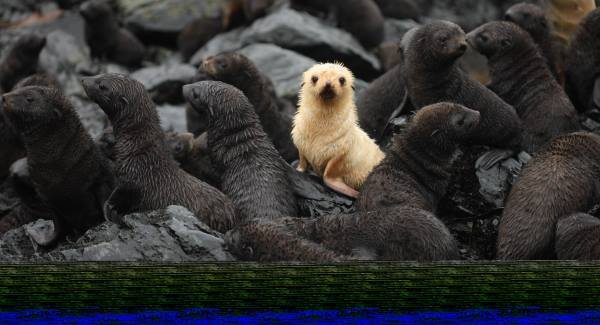
Over 80 of these photographs can be seen at the ‘Shots from a Dark Light’ exhibition, which runs at Cork Vision Centre until Dec 13.
Mackey’s trip was not for the fainthearted. In winter, temperatures drop to -10C, and the small team of biologists are completely isolated from the outside world for long periods. However, this is one of the most biologically dense areas on earth; it is estimated that there is a bird or seal for every 1.5m² of the 400 hectare island.
“My day job was as a seal biologist, but I also specifically went to take photographs,” says Mackey. “It was an opportunity to see all stages of life, from birth to death, at close quarters. Sometimes it felt like you were living in a wildlife documentary. This was nature at its most raw — you would see seal pups being pulled apart by giant petrels, or morbid scenes of starvation, In those first few days you sometimes want to intervene, to save a seal pup, perhaps. But as a biologist your role is to observe the daily and seasonal struggles to survive without interfering. For this exhibition, however, I wanted to focus on the beauty of the island rather than its inherent violence.”
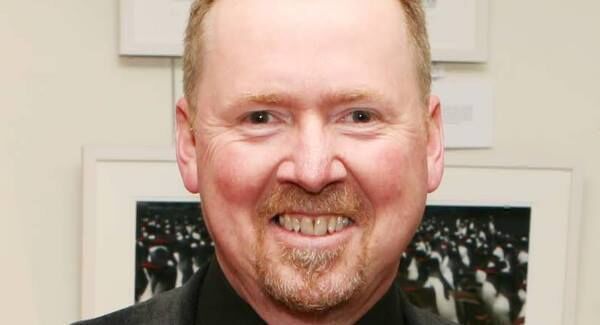
Wildlife photographer Mick Mackey
One of Mackey’s most striking photographs is of a blond seal pup standing out in stark relief to all the black pups that surround him.
“The ‘Blondie’ picture is lovely to look at, but it was a chance photograph that I managed to frame quickly,” he says.
“Everything just fell into place. Perhaps my own favourite is ‘The Relieved Mother’, which shows a swaying seal not long after giving birth; she is one of hundreds who gather at that time. Her expression may be of pain or of relief. To get the shot I had to lie down amongst very aggressive, testosterone driven male seals and almost choreograph the scene. I suppose it is the shots which were taken under really difficult conditions, where the light is low and the subject in continual motion, that are most satisfying for me.”
So how dangerous was life on the island? “It was important not to become blasé about the risks,” Mackey says. “I was swept off the rocks whilst filming penguins and I did have to kick and run to escape aggressive seals. Psychologically it was hard at times. You spend a lot of time on your own working on the beaches. During the winter there were only four of us. We learned to recognise when someone was at a low point and helped to get them through it. You do form strong bonds under those circumstances that will last a lifetime.”
“Looking back on it, I suppose it was an adventure and a unique opportunity to learn about the natural world, but also about myself and what my values and motivations are,” he says. “These are some of the toughest animals on the face of the planet and it was a real privilege to share their world for a short period. I am considering a book next; somehow I feel that there are other aspects of the island that I haven’t covered. I am not sure that Antarctica is finished with me just yet.”

CONNECT WITH US TODAY



Be the first to know the latest news and updates

















