Shows of emotion at the Fringe
Dylan Coburn Gray’s monologue play, Boys and Girls, about four college students enjoying a night of abandon in the city, won the Fishamble new writing award. The coveted Spirit of the Fringe award went to Louise White, for her slice of contemporary theatre, Way Back Home, which used multiple formal practices to express the waywardness of Ireland post-boom.
Another winner was Lippy. A piece of post-dramatic theatre penned by Bush Moukarzel and Mark O’Halloran, it won best production and best design. Lippy was the real-life story of the suicide pact of four women in Leixlip. Rather than dramatise the psychological narrative ‘behind’ the women’s actions, the play emphasised the impossibility of ever knowing. Moukarzel and his co-director, Ben Kidd, suggest that ‘truth’ is merely a projection. The latter is a familiar refrain in modern art, but its delivery in Lippy was impressive. Lippy created a delirious, fever-dream aesthetic midway through.

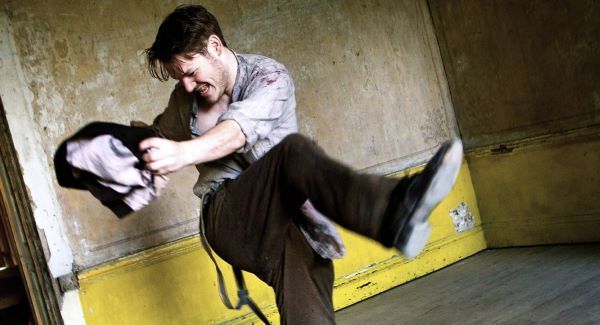
Lippy, based on a real-life suicide pact by four women
The flagship of the festival was Thirteen, by Anu Productions, the country’s most feted company in immersive theatre. Anu’s director, Louise Lowe, devised 13 vignettes at different locations in the city, each of them alluding to the 1913 Lockout.
Between the 13 pieces, the theme of citizenship — the leitmotif for the Fringe this year — was examined. The most lauded of the productions was Citizen X, in which the audience eavesdropped on a girl in a red coat as she rode the Luas to Spencer Dock, a stone’s throw from the abandoned concrete shell of what was once set to be the imperious new HQ of Anglo Irish Bank. An affecting soundtrack emphasised lost agency, even while the piece signalled the possibility of its renewal.
Another of the vignettes, Suasion, whisked us back to a 1913 worker’s rally in Liberty Hall. Jim Larkin (Jed Murray) laid out what’s at stake for us, even while the audience laid out chairs for the meeting itself. Engaging her audience is Lowe’s mission, but — contrary to the show’s objective — you leave Liberty Hall feeling that the ideological strife of the Lockout has little relevance now and is remote to us. Something similar happened in Porous, which invited us into the world of a charming trainee hairdresser (Catriona Ennis) who has just lost her job, and is struggling to care for her grandmother. It was enchanting and full of clever conceits, but Lowe’s rhetoric at the finish — Ennis asks the audience members to join her in a sit-in protest — is too facile.
Whether it mistakes a gesture of banal conformity for unity, or else wishes to ensnare its audience, proving their hypocrisy, the move squanders the affective charge of the piece and flattens ideas of difference and individuality.
Ironically, a much less successful piece of theatre — Melanie Wilson’s rather wearisome Landscape II — better conveyed the urgency of asserting human rights and social values, but it foregrounded the fact that such concepts are tenuous and endangered, however desperately we need them. Wilson’s message was nicely nuanced. Alas, her play, with its dense lyricism and formal overkill, was not.
Dealing with similar themes, but in a much more vibrant way, was Fit/Misfit, a glorious piece of contemporary dance from Mexico. Playing with colour and costume, and working wonderfully with facial gesture, the four performers demonstrated the tensions between the individual and the group and the power structures underscoring society. It was zippy and fun, dealing with heavy themes with consummate levity.
Having won at Fringe last year, much was expected of contemporary circus outfit, PaperDolls. They didn’t disappoint. Bunk — set upon the frame of a suitably nightmarish bed — boasted a beautifully dark and discordant score, and the show’s three female performers explored the limits of the body with tremendous energy. Positivity is something invariably championed in the arts, but there was a rare and giddy negativity in Bunk that was surprising and joyous, exemplified by the cast tying up an audience member at the end and then abandoning her.

Small Plastic Wars, about the joys and dangers of escapism
Other enjoyable shows included Small Plastic Wars (Pat McGrath’s unassuming, but extremely funny tour-de-force about the joys and the dangers of escapism) and Scottish live artist, Nic Green’s Fatherland, which poignantly closed with the audience (playing her estranged father) sharing a shot of whiskey with her on his behalf. Of the more disappointing shows, Amy Conroy’s highly anticipated play, Break, had plenty of charm, but was too long and a little unfocused. Setting a play in a school staff-room was full of potential, but Break failed to explore this world with the nuance it merits.
Gavin Kostick’s The Games People Play, staged by Rise Productions, was also a little underwhelming. Filtering the recession through the Oisín myth, it mixed devices — realism, allegory, and metaphor — where just the one might have done. Finally, Fair Balls’ T’Yis proved a missed opportunity Pitched as a ‘football opera’ featuring 50 ‘true’ Dublin GAA fans, it captured a small flavour of the Gaelic football community, yes, but overall was contrived and reductive.















