A rebellious son of the ascendency who found his voice in Connemara
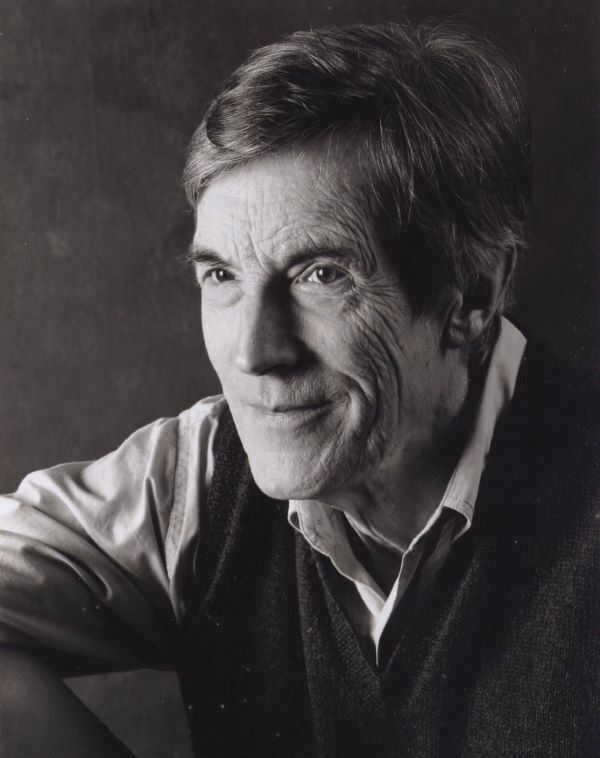
Our initial point of contact was last March. Murphy phoned me from his home in Sri Lanka after I emailed him expressing my admiration for a collection ofpoems he had just published called The Pleasure Ground. This book covers a career that spans from 1952 to 2012.
When we finally catch up, the 86-year-old poet apologises for his lack of contact. He puts this down to a damaged nerve that leads to severe losses of concentration over long periods of time.
He begins our conversation by describing — in vivid detail — the breathtaking scenery from his window.
“I’m looking across a paddy field cultivated by buffaloes. A hill of jungle and palm trees rises steeply to a Buddhist temple on the summit. The warmth, exotic birdcalls, and the smell of new rain on a road of dust, remind me of my early, strict and pampered childhood in Ceylon, when this country, before gaining independence in 1948, was a resplendent jewel in the crown of the British Empire.”
Officially Murphy is an Irish poet. But the culture he was raised in was light years away from his contemporaries, like John Montague and Thomas Kinsella. The country these poets emerged from in the early 1950s was a homogenous state, where most writers were from peasant, working- class, and Catholic backgrounds. Anyone outside of that description was treated as a suspicious foreigner: or to put it bluntly, a West Brit. The Anglo-Irish colonial world that Murphy was born into on the Mayo and Galway border in 1927 was one where wealth was accumulated from outside of the newly formed free state.
He spent part of his childhood in Ceylon, (now Sri Lanka) where his father was the last British mayor of Colombo. The young boy from an ascendency background was loyal to King George V: this allegiance is one Murphy seemed unable to escape from for the rest of his life.
From the age of eight he attended boarding schools in Ireland and England, eventually winning a scholarship to go to Oxford. But the aspiring 19-year-old artist had more pressing concerns on his mind.
“At Oxford I rebelled in my second year, when a frenzy caused me to go to Ireland and live alone in a cottage by a waterfall at the foot of a mountain. I was seething with ambition to write a tragedy in Shakespearean blank verse.
“My subject was a legendary judge called Lynch in medieval Galway, who condemned his own son to death for murder and, when no Irishman could be persuaded to carry out the cruel sentence, he hanged the boy from an upstairs window of his house himself.
“My frenzy ended in failure. I had no money and had to return to Oxford the following term to complete my degree. The shame of this prevented me thinking of myself as a poet until I felt I had produced a number of verses that a critic of authority judged to be poetry.”
It was a stroke of fortune in 1951 that allowed Murphy the time and space to become a full-time writer: he won the AE Memorial Award in Dublin, beating the highly tipped favourite Anthony Cronin. With his prize money of £100 he went back to Connemara. The sea soon became a muse from which the poet quickly learned he could not escape.
This is reflected in poems he published early in his career, which document tragic tales of seafarers and the fishing community that he surrounded himself with for the next two decades. These include: Sailing to an Island; The Last Galway Hooker, The Cleggan Disaster, and Pat Cloherty’s Version of The Maisie. The latter poem was inspired by a conversation that Murphy had with the man who features in the title.
“Pateen Cloherty came to my house in Cleggan and talked at length about his hard life as a helmsman on the Inishbofin mailboat, sailing without an engine, but with two oars, between Bofin and Cleggan. He also told me the story of the sinking of a Bofin hooker called the Maisie, with two men and a woman on board, in the year 1900. They had sailed out of Westport on a Sunday, missing mass to catch the tide, with the added danger from the stormy sea.”
Murphy’s poetry has often been concerned with how his own family history connects him into a grander narrative. In his collection The Battle of Aughrim he explored a landmark conflict in Irish history, where his ancestors fought on both sides.
“Writing a sequence of poems that arose from a long meditation on a war that focused on the Battle of Aughrim in 1691 was a way of making sense of the complexities of my origin, and divided loyalties to Britain and to Ireland, to my family and to my friends.
“When I finished writing those poems I hoped the entrenched divisions in Ireland between north and south, Protestant and Catholic, could be resolved in a general reconciliation, going beyond and rising above the wretched nationalisms that had destroyed Europe and millions of lives in my lifetime.”
At many stages of his career, Murphy has intertwined myth with reality, to try and get a firmer understanding of his own consciousness, and complicated sense of identity. It could also be argued that all of his poems converge towards one single issue: that Murphy has struggled to fit into the homogenous culture that he has longed to be a part of for his entire life.
There are few poets who speak as candidly and honestly about a lack of acceptance, in both their work, and in their personal lives, as Murphy does.
“I was often criticised for my forlorn attempt to shed my colonial past and implant myself in the 99% republican west of Ireland. But because I was unalterably Anglo-Irish it seemed I was doomed to fail.”
Buy this book
CONNECT WITH US TODAY



Be the first to know the latest news and updates

















