Into the wild: crime writer’s beat is Alaska
Dana Stabenow swapped a subsistence life style with a rifle and an axe for a keyboard — 29 novels later, she told Caroline O’Doherty about the journey

Into the wild: crime writer’s beat is Alaska

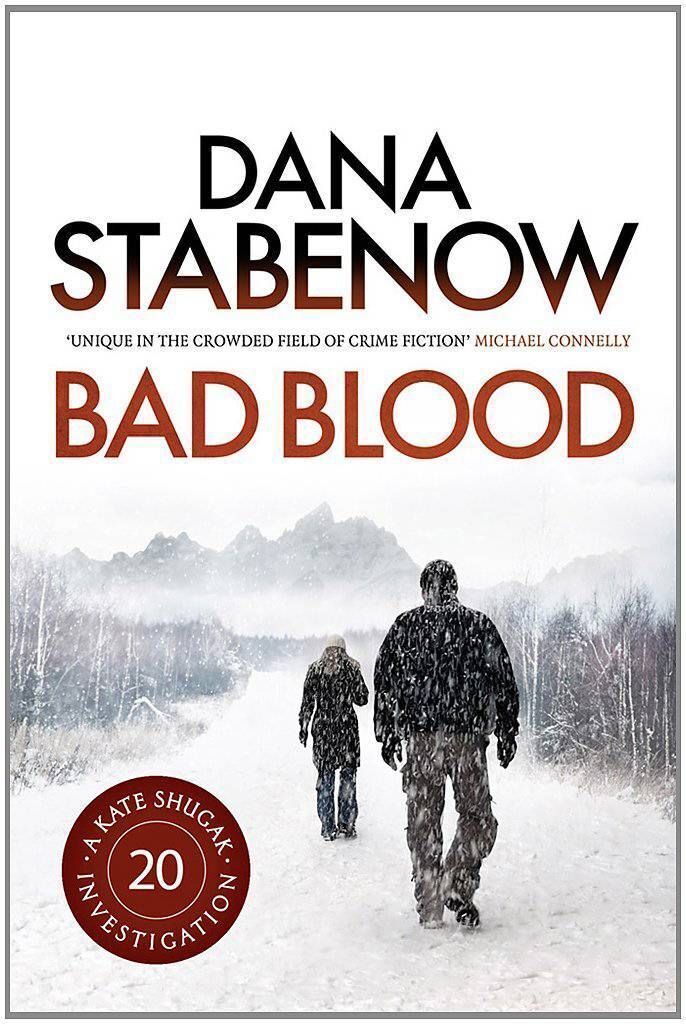
Bad Blood

Dana Stabenow

Head of Zeus; £12.99

BOOK reviewers should be wary of Dana Stabenow — the author can skin a moose and slay a grizzly bear.

These days, she’s more likely to subdue an adversary with her killer charm, which, like everything else in her home state of Alaska, is vast.

But knife and gun skills were essential when she was growing up and had to learn how to stock a larder with one beast, while avoiding becoming dinner for the other.

Stabenow was an only child, raised on her parents’ 75ft fishing boat, which, in summer, travelled up and down the salmon-fishing grounds, collecting the trawlers’ catches for the cannery, and returning with parts and supplies for the crews.

In winter, they tied up, trekked inland, hunted moose for food and trapped mink, marten and beaver to sell the furs.

“It was a subsistence lifestyle. We were all broke,” says Stabenow, who was born before Alaska was granted statehood, in 1959, so US federal funds had yet to flow into the territory to any great extent.

“I was born in a frontier and nobody has money in a frontier. If we didn’t get our moose that year, we didn’t eat meat — period. I have vivid memories of how difficult that was.

“You would have to bushwhack through dense undergrowth and clouds of mosquitoes and swamp, and camp out until you found your damn moose.

“And, then, you’d shoot him and then cut him up — you’d skin him, gut him, cut him — and then you have to pack him back out, all the way home.

“The best year ever was when we got a moose on the beach. I mean, right there on the beach — how great was that.”

She chuckles at the memory — and probably at the relief that it’s only a memory. “That’s a hard, hard lifestyle and, yes, it’s rewarding and it’s amazing and it leads to great stories afterwards, but I’m really, really glad not to be living that lifestyle now.”

Her life now, on the outskirts of the picturesque coastal town of Homer, Alaska, is more genteel than her early years, although with a writing pace that produces more than a book a year, it requires her to be no less resourceful.

That’s the other remarkable thing about Stabenow: as a crime and suspense writer, she has presented readers with many mysteries, but none greater than the riddle of where she’s been hiding out for the past two decades.

Bad Blood, the title her publishers have chosen to introduce the Alaskan author to bookshelves this side of the Atlantic, is her 29th novel and the 20th in her established series featuring private investigator, Kate Shugak, leaving new followers here with a lot of catching up to do.

Stabenow says she is as baffled as anyone as to why no-one thought her books would travel well. “The minds of publishers work in mysterious ways,” she says.

All the titles can be bought as ebooks and they are being released in paper format over the next year, but for those who want to read number 20, without the benefit of 19 previous escapades, to become acquainted with the heroine, here’s the low-down on her.

Kate Shugak is a native Alaskan Aleut who has an office in Anchorage, a home in the wilderness, and a job that reminds her, daily, that the grizzlies aren’t the only deadly creatures in the 49th state.

In recent adventures, she’s shared the limelight — and her bed — with state trooper, Jim Chopin, who isn’t above admitting that the pint-sized PI has an instinctive understanding of Alaska’s distinctive ways that no amount of time in the academy could bestow on him.

In Bad Blood, they probe a series of tit-for-tat killings in two isolated villages.

The villages are separated by a deep river, and even deeper divisions over whether to abandon traditional ways to take the mining industry’s easy money and easier lifestyle.

At the heart of the story is a love affair that bridges the river and the other divides, allowing Stabenow to fulfil a long-time ambition to transport Romeo and Juliet from the courtyards and balconies of Verona to the forests and mountains of Alaska.

Alaska is a leading character in Stabenow’s books, its mountain ranges, rivers, and forests majestic but merciless, toughening up some folk, wearing others down, and forcing just about everyone to rely on their wits, alcohol or a rifle.

A stereotype, surely? Not necessarily so, says Stabenow, offering a simple geography lesson by way of explanation.

The state is enormous — one-sixth the size of the ‘lower 48’ states, and with more coastline than all those other states combined, yet there are just 240 state troopers to keep law and order.

“You’ve got these isolated little communities where, if the weather is bad, it can be days after a crime is committed before a trooper can even get in there to start investigating. Alaska can be lawless and wild,” Stabenow says.

Another Alaskan stereotype — that it is an earthly eden where refugees from the rat race can live in peace and harmony with nature — is easier to debunk.

“Sure, it’s beautiful, but people generally tend to view it through rose-tinted glasses. We get a lot of people who come up and they say they’ve always wanted to live in a cabin in the wilderness and you just look at them and you think, ‘if you get through one winter, you’re showing me something’.

“The manager of the local book store would have a pool whenever they got a new employee from ‘outside’ and they would bet on how long this person would last.”

Yet some ‘outsiders’ do last. One of Stabenow’s closest friends is Limerick man, Donal ‘Don’ Ryan, a Homer-based marine pilot whom the author met when she was a guest writer on a mystery cruise he was captaining.

His parents, Josie and Gerry Ryan, are used to Stabenow turning up on their Rhebogue, Limerick doorstep and delight in visits from their adopted daughter.

“They’re my family,” she says. “I’m an only child, my parents are dead, so I have to make my own family and they are definitely part of it now.”

Her other family is the writing community and Stabenow is working towards setting up a writers’ retreat — for women only, she says, without apology — on her land in Homer.

The Storyknife retreat, which she has set up as a trust to benefit from all her intellectual property in perpetuity, will enable writers to get away from all distractions and focus on their work.

That’s if they don’t look out the window.

“It’s beautiful. I can see four volcanoes from my house,” she says, “so, yeah, I guess if you’re not used to that, you mightn’t get a lot of work done.

“Don says he’s gonna come over some night and paint my windows black. I have to watch him.”

Buy this book

x

More in this section

Cookie Policy Privacy Policy Brand Safety FAQ Help Contact Us Terms and Conditions

© Examiner Echo Group Limited













