Like a fish out of water...
THE ladybird idled along a leaf in a suburban garden, oblivious to the human peering down at it. Hang on a second. This ladybird is too dark, too metallic red, and too rectangular to be a ladybird. After being placed in a jar, a photographic comparison on the internet revealed the ‘ladybird’ to be a scarlet lily beetle. This was later confirmed by Colette O’Flynn, of the National Biodiversity Data Centre, in Waterford.
The scarlet lily beetle, or red lily beetle, so named because it has a fondness for lilies, was found on a lily purchased in a supermarket in Cork.
There have been only a few sightings of this insect in Ireland. One of the pathways of invasive species is horticulture. Invasive species can threaten indigenous flora and fauna.
Ms O’Flynn says the National Biodiversity Data Centre is a centralised source of information on the distribution of invasive species in Ireland. It is an early-warning system for invasive-species alerts and encourages recording of such species through training.
According to the National Biodiversity Data Centre, invasive species are a huge threat and economic burden for Ireland, so new national policy and legislation relating to invasive species has been produced.
The number of priority invasive, and potentially invasive, species in Ireland is 86. This is divided into plant (59 species) and non-plant (27) species lists. The top-five unwanted, non-plant species are the brown bullhead catfish, the New Zealand flatworm, the didemnum species, the zebra mussel and the Chinese mitten crab. Other, better-known species are the feral ferret, brown rat, grey squirrel and American mink.
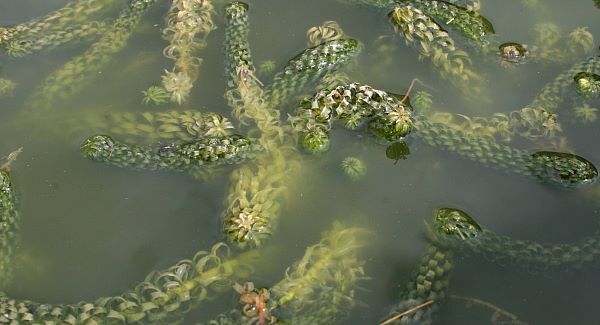
The top-five plant species on the invasive species database are the water fern, the hottentot fig, the New Zealand pigmyweed, Nuttall’s waterweed and Japanese knotweed.
The majority of non-native species do not establish themselves in the wild and would not have a significant negative impact on Ireland’s biodiversity, economy, or on human health. Those that do are the invasives. If we fail to prevent their arrival, we must detect and report their presence as soon as possible, so they can be eradicated before given a chance to establish. Once established, it can be more difficult and costly to eradicate them, Ms O’Flynn says.
So what are the main routes into the country for these flora and fauna?
“For the past 100 years, it has been largely through the horticulture and ornamental plant trade. The pet and aquaria trade, and the game/wildfowl stocking sectors, are also some of the main pathways,” she says.
There is a minimum set of details required for wildlife records to be accepted as valid by the data centre: recorder’s name, species name, date of sighting, location name, co-ordinates of location.
For an uncommon, recent, or new sighting to Ireland, the level of checking for verification of the sighting is greater again.
An example of this is Muntjac deer. It wasn’t recorded in the country when the first risk assessment was undertaken. From the 2012 risk assessment, it ranked in the top scoring category, so will be listed as a high-impact invasive species, or potentially high-impact invasive species.
The biodiversity centre encourages vigilance and reporting of invasive species. “The majority of the sightings resulting in the issuing of species alerts have been reports from the general public. They have a valuable role in being the eyes for reporting sightings early on, which can help trigger a species alert and a rapid response which would, hopefully, reduce/remove the threat of the species establishing and spreading,” she says.
At least 31,000 species have been identified in Ireland, but it is estimated that at least a quarter of Ireland’s biodiversity remains to be identified. The species familiar to us — birds, plants and mammals — account for just 10% of the biodiversity resource. Invertebrates account for 60% of all species. Lichens and fungi account for 20%. Many of Ireland’s species are threatened with extinction, yet there has been a formal conservation assessment of less than 13% of species.
CONNECT WITH US TODAY



Be the first to know the latest news and updates

















