FEATURE: Women must take charge in fight for workplace equality
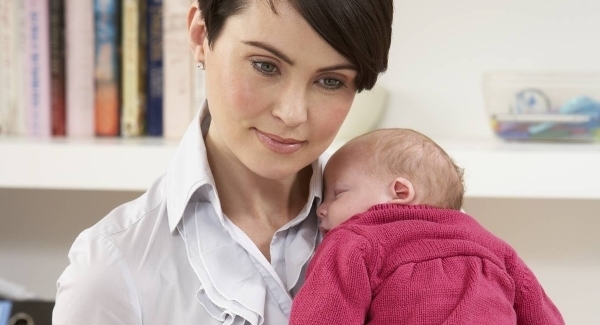
FACEBOOK COO Sheryl Sandberg is a powerful woman. But is she powerful enough to change women’s role in the workplace?

FEATURE: Women must take charge in fight for workplace equality

In her new book Lean In: Women, Work and the Will to Lead, Sandberg challenges women and employers to rethink the way they do business. She encourages women to put themselves forward at work and grab opportunities, and urges employers to them seriously when they do so.

“Think of it like a marathon,” she said last month at the World Economic Forum in Davos, Switzerland. “Everyone is cheering on the men but messages are different for women. Are you sure you want to run? Don’t you have kids at home? We need to talk about this.”

A mother of two, she believes bosses should quiz female employees about their plans to start a family and that female employees should be open in their responses. She thinks a failure to do this is what causes discrimination in the workplace as well as a lack of flexibility in work practices.

“We need to have a much more open conversation,” she says.

Under the Employment Equality Acts, such a conversation is illegal in Ireland. Employers cannot pry into employees’ private lives.

But does Sandberg have a point? Or is it unrealistic to take advice from a woman who calls the shots at work and can afford the best childcare at home? Should we be asking working mothers here in Ireland what maternity leave means for them, their families and careers?

In 2011, there were 871,300 women in the workplace, 57% of all women of working age. “We’ve got a high proportion of women in the workplace in Ireland — 56% against 63% of men — so it’s hard to assume there is discrimination,” says Mary Connaughton, head of HR development with IBEC.

This is hard to square with other statistics. Although men and women enter the workforce in roughly equal numbers, they do not make equal progress.

The Grant Thornton International Business Report 2012 found that women account for 27% of chief financial officers and financial directors in Ireland, 21% of senior management teams and 5% of CEOs in the country.

Where does this inequality stem from?

“We need to be realistic and recognise there will be a consequence for taking time out of the workplace, for whatever reason, maternity leave included,” says Sophie Rowan, a psychologist with 15 years of experience in career development and author of Brilliant Career Coach.

“But things are changing for women. More men are caring for the children in the home while women are becoming the main breadwinners. And this is equalising the opportunity gap.”

However, discrimination has a part to play too. 57.9% of requests for help and information received by the Equality Authority in 2009 were about maternity rights and paternal leave.

“Our case work clearly indicates that some employers still do discriminate against pregnant employees or those who have recently given birth,” says Brian Merriman, head of communications and legal services with the Equality Authority.

The Pregnancy at Work Survey looked at the experiences of 2,300 Irish women who had babies between July 2007 and June 2008. Some 71% felt their employers had been supportive during pregnancy, but 29% felt unfairly treated. 10% lost salary, a bonus or a promotion. 21% felt opportunities for training had decreased. And 5% were dismissed, made redundant or treated so badly they had little choice but to leave.

“These figures offer a clear insight into the pressure under which some employees work as a result of their pregnancy,” says Brian Merriman.

“We’re finding less flexibility in the workplace with austerity,” says Orla O’Connor, director of the National Women’s Council of Ireland (NWCI). “Women are being contacted about work when they are on leave. They are not being replaced, which means they are under pressure to come back early, and there seems to be a high incidence of colleagues resenting those on maternity leave because they are carrying an extra workload.”

Since March 2007, Irish women have 26 weeks maternity leave which is paid by the State. (Some employers choose to provide a top-up fee to bring the woman’s income in line with the level she receives while working.) Additional unpaid leave of up to 16 weeks can be taken. And there is also unpaid parental leave (available to both parents) of up to 70 days. In Britain mothers get a full year off work, with 40 weeks paid, while in Greece they get 43 weeks on full pay.

However, good law does not always mean good practice. Sarah (too afraid to reveal her real name) works for a large company. She is expecting her third child and her experience juggling work and family has been difficult. Due to complications in childbirth with both her children, she had to take extended periods off work. She has just returned from a combination of paid maternity leave, unpaid leave and sick leave and is pregnant with her third child.

“It’s hard to leave a permanent, pensionable job in this economy,” says Sarah. “I’m not going to be having babies forever and I want and need a career.”

She feels sidelined at work. “Temporary workers have more responsibilities than me,” she says. “I’m not being trained up in new systems either. I’m being left behind.” She can understand their rationale. “I see their point in that I’ll be gone in a few months, but that doesn’t mean I don’t feel angry. ”

Not everyone has such a negative experience. Julie O’Neill, 46, is the vice president of operations and Irish general manager of Gilead Sciences, an American multinational in Cork. She also has three boys aged between 10 and 14.

“Back in 1999 and 2000, when my first two sons were born, the entitlement was 14 weeks maternity leave,” says Julie. “I took most of it but stayed in contact with work by email. I routinely visited for an hour or two at a time too — a personal choice I made to support my team. When my youngest son was born, the entitlement had risen to 18 weeks and again, I took most of it, but continued to remain in contact by email and attending occasional meetings.”

Returning to the workplace was challenging but Julie doesn’t feel she faced changing expectations as a result of having children. “The main challenges were the usual lack of sleep and exhaustion faced by all families trying to balance so many conflicting priorities. There were times it was a struggle but perseverance and ambition kept me focussed.”

So did the support of her husband. “The critical factor for me is that my husband and I work together in all aspects of rearing the boys,” she says. “After the birth of my first son, my husband restructured his timetable to begin earlier so he could be home by 6pm. ”

Julie was also lucky to be able to afford childcare and have parents who stepped in when needed. “For many of my friends, lack of stable childcare during the early years was the death knell for their career aspirations,” she says.

Based on their personal experiences, Sarah and Julie have different responses to Sandberg’s advice about open communication at work.

“I don’t see it working in Ireland,” says Sarah. “I previously worked in a place where several women took maternity leave and after that, the only people hired were men. That’s what would happen if you were open. And what if you decided to go for number three after having told your employer you’d only have two? It wouldn’t work.”

Julie thinks Sandberg might be on to something regarding women’s attitudes. “We need to adjust our expectations,” she says. “I focus on work during the week and on the boys in the evenings and weekends. I’ve also learned not to sweat the small stuff but to focus on what matters.”!

Career coach Sophie Rowan goes even further when advising women to change their attitude. “Most women returning to work need to re-build their work confidence,” she says.

“Typically, while on leave, they’ve been exercising a different set of muscles to do with caring and running the home, for example. Now they need to relearn to flex their work muscles.

“Women need to put themselves out there and be more direct about what they want while companies need to take responsibility and offer as much flexibility in the workplace as possible.”

“It is possible to create a balance between work and family. If other countries can do it, so can we,” says Orla O’Connor.

Paternity leave, where fathers are entitled to share paid leave with mothers, is central to the Scandinavian model. “Women still play the predominant role in caring for children in Ireland and it’s a huge struggle,” says Orla O’Connor. “The culture in the workplace doesn’t support men who want to play more of a role in parenting either. Bringing in paid paternity leave would send out a new message about equal responsibility and could bring real change.”

IBEC offers a 75-page toolkit for employers, a document that covers a variety of ways in which workplaces can be made more family friendly. One of its key messages is also one of Sandberg’s — open communication.

“We’re seeing women informing employers of pregnancy earlier than before,” says Mary Connaughton. “This gives employers time to put in place the supports women need while pregnant, during maternity leave and after the return to work.”

The toolkit also advises flexible working arrangements for new employers such as part-time work, a condensed working week, e-working or term-time working.

Sheryl Sandberg may not be powerful enough to solve the problems faced by mothers working in the Irish workplace, but she deserves to be thanked for having started this conversation.

More in this section

Cookie Policy Privacy Policy Brand Safety FAQ Help Contact Us Terms and Conditions

© Examiner Echo Group Limited













