Career women before women had careers
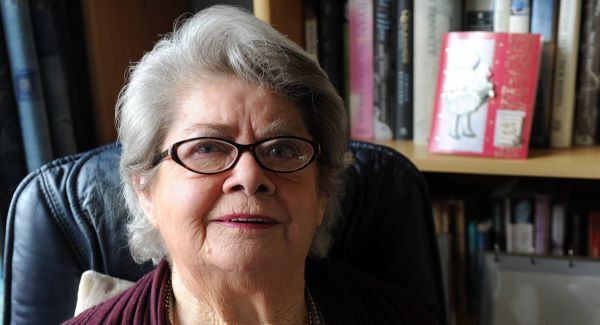
A new book tells of workplace pioneers like Catherine Walshe, an engineer of many firsts, says Colette Sheridan

Career women before women had careers

CATHERINE Walshe, a Cork great-grandmother in her 80s, always knew she would study engineering. One of the case studies in a new book, Irish Women at Work: 1930-1960, Catherine says her father wanted her to be an engineer. It was fortuitous that Catherine had a profession: her husband died suddenly, leaving her with a young family.

Raised in Macroom, the eldest of four children, Catherine says her mother didn’t want her studying engineering. She feared for her daughter’s morals and wanted her to join the civil service.

“There was no question of convincing my mother. You didn’t argue with her. My father had the dream for me. I loved maths, and, for me, doing engineering, because of father’s attitude that it was quite a normal thing to do, was as natural to me, at that time, as being Catholic. There was no question of doing anything else,” she says.

Catherine graduated as a civil engineer from UCC in 1949. She was the only female but was treated well by her classmates. “I was terribly innocent, coming from Macroom. I had never been out with a fellow. There were about 60 males in the class; the first-years and second-years were all together. As the students came into the class, they would look at me, in the corner. After the first couple of days, they just absorbed me. I was treated like a sister. I never expected trouble. I didn’t go into lectures in an aggressive manner, expecting trouble,” she says.

Catherine wasn’t ambitious. She was “easy going.” She never saw being a woman as an obstacle in the workplace. “I was weaned on my father’s attitude, which saw no barriers,” she says. After her graduation, Catherine’s father secured a job for her, as a site engineer on a hospital construction project in Waterford. She wasn’t intimidated, and there was no sexual harassment. She talks of “pleasant camaraderie and teasing. There was an atmosphere of brotherly concern and affection, both at college and at work.”

Catherine was only living in Waterford a fortnight when she met her husband, Nicky, at a dance. He was the love of her life — “my first and last line.” Catherine gave up her job in 1953 when she married. “When girls got married then, they didn’t work. I was delighted to give up my job. Walking up the Honan Chapel (at UCC), all I wanted was to be with Nicky for the rest of my life,” she says. The couple moved around: Nicky’s job as a sales representative took them to Ballymena, Leeds and Dublin, where he started a business in partnership. In 1961, at the age of just 33, Nicky died from a brain haemorrhage. Catherine had four young children and was pregnant. “When I look back on it now, it is in horror. Nicky had no agreement drawn up with his business partner. So there wasn’t a penny,” she says. Many of the engineers who had been at UCC with Catherine were living in Dublin. They rallied around her, tutoring her and giving her the confidence to apply for a job with the Office of Public Works. Catherine started working there just eight weeks after Nicky died. She was three months’ pregnant and had to hire a housekeeper.

There was no paid maternity leave.

At the discretion of her bosses, she got four weeks’ sick pay but had to return to work on Christmas Eve. Earning 80% of her male colleagues’ wages and with no prospect of promotion, Catherine applied for work with Dublin County Council, where there was no gender pay differential. From then on, she viewed her work as a career, not a job. She was inspired by a boss who was “totally devoted to roads.”

Her job included taking responsibility for preparing the documentation for contracts to build sections of the Naas dual carriageway.

She went on-site when she replaced engineers on holiday leave. Catherine’s background in road design and building enabled her to secure a job as assistant county engineer with Cork County Council. She held this post until her early retirement, in 1982.

Catherine was the third female to study engineering at UCC.

She was the first female engineer to be employed by the Office of Public Works and to work in the Dublin and Cork local authorities. She was the first woman to be honoured with the Fellowship of the Institute of Civil Engineers.

Despite her career success, Catherine’s “proudest achievement” are her children, her ten grandchildren and five great grandchildren. Two more great grandchildren are due in the new year. Looking back, Catherine remembers her mother “being horrified when she discovered that I had thrown away my corset. She actually checked that I was not wearing one. ‘What if those men at work bump into you?’ she wanted to know. I just ignored it. In the 1940s, we were such simple creatures,” she says.

* Irish Women at Work: 1930-1960, by Elizabeth Kiely and Máire Leane, is published by Irish Academic Press at €24.95.

x

More in this section

Cookie Policy Privacy Policy Brand Safety FAQ Help Contact Us Terms and Conditions

© Examiner Echo Group Limited













