It’s a real grey area
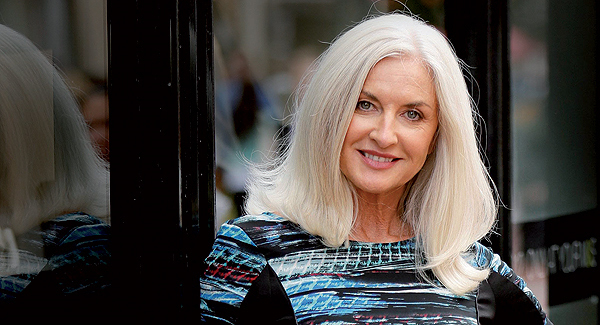
ONE of the happiest days of Mary Banotti’s life was the day she decided to go grey.
Spending years in the public eye meant hair-care was a constant, time-consuming niggle.
“For me hair was one of the nightmares of public life. I don’t have good hair — it’s thin and it always needed to be coloured and set,” recalls the former MEP.
It was such an issue for dark-haired Banotti that she successfully campaigned to get a salon established in the European parliament for MEPs.
It was a popular decision, recalls Banotti, now in her early 70s, and one which, she says, made life easier for her and for her colleagues.
The time finally came when she was free from the constant pressure to colour – and she gladly embraced the change.
“The day I left parliament, I cut my hair short and started to let it go grey. It had always been dark brown and I’d coloured it because I felt I had to, being in the public eye. My life changed when I let it go grey,” she says.
“The pressure eased — I didn’t have to go looking for hair salons. Now I just go to my local hair salon for a snip every four to six weeks.
“I was 65 when I made that decision and I’ve never looked back. I only wish I’d thought of doing it earlier.”
Banotti is, however, one of the few. Hair dye has been around since the ancient Egyptians began using henna to camouflage their grey, and to this day many women spend hundreds of euro and untold hours every year at the hairdresser, topping up their colour.
Figures show that last year the home hair colouring market alone was worth around €400 million — no doubt due to a recession-fuelled reduction in salon visits, but also an indicator of our desire to quietly cover the grey.
Very few, it seems, are actually prepared to take the plunge and bare greying locks.
Partly it’s because women often feel coloured hair simply looks better that way, but in our ageist society, there’s also a reluctance to openly signal advancing years.
While using hair colour is not a big decision for most women, going grey is a major change of direction.
“I think people generally cover up grey hair because it tends to be seen as a sign of age. It’s the rare person who says ‘please let me look older’,” says stylist Cathy O’Connor, who sports an eye-catching white streak herself.
Deciding to bare the grey, however, is a very different thing.
“Going grey is a bigger decision than deciding to colour your hair and women tend to put a lot of thought into it,” says Bronwyn Conroy, principal of the Bronwyn Conroy Beauty School.
“It’s a very significant decision because traditionally people associate grey hair with being old and no woman wants to be thought of as old.”
According to O’Connor, going grey is a clear statement of age, particularly in a society which places such emphasis on looking young.
“You need to know whether you’re happy to make that statement. We age all the time and grey hair is not the only sign of age — but with grey hair you are making a definitive statement,” she says.
She points to Helen Mirren.
“She’s in her 60s, is now a grey/blonde and looks fantastic.”
In O’Connor’s case, the streak of white appeared more than two decades ago. “I just got one sprig of white hair and decided to keep it — if I was to dye my hair brown this streak would go red because it’s very porous and doesn’t respond to colour very well. It’s hard to match it up with the rest of the hair so I may as well just leave it the way it is.”
For others, however, colour is and always will be, a fact of life. Every now and again, multi award-winning author of Room, red-haired Emma Donoghue considers making the leap into the twilight zone.
“About once a month I glance at my roots in the mirror and I think about going grey and saving myself all the trouble, but I always say no.”
Emma, 41, whose natural colour is dark brown, is addicted to her red hair.
“I’ve been going grey since my mid-20s. I’d feel colourless without colour.”
Now in her 70s, Former Fianna Fáil politician Mary O’Rourke began covering the grey when she was in her late 40s.
At one stage, she says, she got fed up of the constant time-consuming trips to the hair-dresser’s and told her late husband Enda that she was thinking of letting it go.
“Enda said, ‘No, don’t, don’t let it go!’ I was originally dark brown, so that is the way I continue to go.”
However, she finds it “an awful drag,” she says, pointing to “the time involved, the expense, and the sitting around dripping in the hairdresser.”
That doesn’t mean she’ll never go grey, says O’Rourke, whose memoir Just Mary was published this month.
“There are some super role models out there. Look at Christine Lagarde. She’s a good looking dame. I admire her. Her hair is beautifully styled.
“You never know, I might let my hair go grey sometime. But then how would you go about going grey? I could end up frightening the horses!
“For the moment, though, I’m sticking with what Enda O’Rourke said many years ago.”
Presenter of RTE Radio One’s hugely popular current affairs show Drivetime, Mary Wilson happily admits she hasn’t seen her hair in its natural state since she was 16.
“I’ve got a standing appointment every three or four weeks for what I call essential maintenance. I’m ash blonde now – I used to be dark brown but over the years I have had variations on the theme of blonde. I don’t know how grey I am now and I don’t want to know.”
She can’t see herself ever baring the grey, she says. She enjoys having her hair coloured far too much.
“For me looking after my hair involves colouring and highlighting it. Also being on TV for years meant I got into the habit of always making sure my hair was well groomed.
“When you’re presenting a report your hair should not be a distraction.”
And she doesn’t feel under pressure from anyone to cover up.
“To me colouring my hair is like buying make up; it’s something I like to do.
“I like going to the hairdresser - you get two hours with just you and your magazine and it’s bliss.
“Getting my hair coloured is just one of those things like getting your eyebrows done or going to the dentist.”
For those who do decide to go grey however, it’s not always a smooth transition - some enjoy a naturally beautiful silver shade, but for others going au naturel simply doesn’t work.
“It’s got to do with the shade of grey in your hair - some people will go a silvery grey naturally, whereas others will have a salt-and-pepper grey in their hair. Whether you look well with grey is often determined by your complexion,” says O’Connor.
“When you get older you tend to lose colour from your face and if you add white hair on top of that you can look very drained.
“However if you have a more sallow complexion you’ll generally be able to take the grey hair.”
For model and actress Olivia Treacy, now in her early 50s, the decision, nine years ago, to stop colouring her hair was a professional one.
“I’d just finished shooting a film Red Roses and Petrol in which I had to age for the role. They used a spray-on grey colourant to cover my blonde,” she recalls.
“Once the film was shot, I washed out the spray colour with a special shampoo which also somewhat washed out my blonde highlights.
“The result was my natural silver platinum colour which I actually preferred, as the colour enhanced my skin tone and eye colour.
“I think I had been colouring my hair as a matter of course, simply because there was an expectation to colour and cover the grey.
“I get many more compliments on my hair now than when I was colouring it.
“A lot of women find it inspirational and love the idea that I am a woman living on my terms rather than by social expectation.
“Many men also like it too as they appreciate the sense of confidence and a sort of natural free spirit.
“The ‘silver fox’ is also a look that is much more in vogue today and almost has its own cool vibe. So I choose to embrace rather than fight it.”
Going grey may also have health benefits, given the ongoing debate about the safety of hair dye. Although there have been anecdotal reports of people developing nerve damage or neuropathy following the use of some chemicals found in hair dyes, research has not produced any conclusive evidence supporting the contention that hair dye can be harmful.
Another benefit, for those who may want to take that leap, is that far from making you feel frowsty, the snowy look is highly fashionable at the moment.
Hairdresser John Geaney, of John Geaney for Hair, believes that going grey is a new trend:
“I’ve been changing more and more clients from colour to natural grey in the last year — there’s a huge surge in the number of women embracing this style,” he says.
He’s right. Kelly Osbourne, Lady Gaga, Ellie Goulding; Pixie Geldof and Pink all went statement grey at one time or another — but they had to pay for it, unlike natural silver foxes.















