A nod and 40 winks
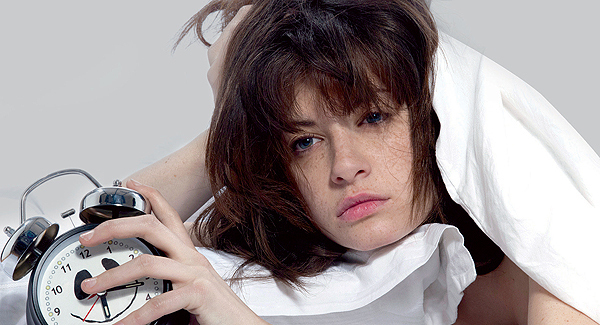
WHO doesn’t have trouble falling asleep at times? It must be one of the most confounding experiences in life. You’re in bed. You’re tired. You want to sleep. You can’t sleep.
According to The Irish Sleep Apnoea Trust, insomnia affects between six and 15% of the Irish population, while every night, says David K Randall, author of Dreamland: Adventures in the Strange Science of Sleep, one in three adults around the world have trouble falling asleep.
Insomnia has been on the rise in Ireland since the onset of recession. “There’s no doubt it has, going from reportage, although there are no exact figures available,” says Deirdre McSwiney, chief technologist, Mater Private Sleep Disorder Clinic, one of several practices which treat insomnia by means of cognitive behavioural therapy (CBT) in Ireland.
Prescriptions written under government schemes for Zopiclone, for example, the leading drug administered for sleep disorders in Ireland, went up by more than 240,000 in 2010 from 2005 figures, according to the Primary Care Reimbursement Service’s most recent data. There were 641,734 prescriptions written in 2010, which doesn’t take into account sleeping pills taken by people outside these schemes.
“There are so many reasons for insomnia,” says Randall. “One of the big ones is that people get sleep anxiety. They’ve heard from their doctors or from other people that sleep is so important, that you need your eight hours sleep. Then they psyche themselves out. They try to fall asleep but they can’t because they want it so badly. It’s why researchers now think of insomnia as an ironic mental condition — you want it so bad, you can’t get it.”
It’s this exhausting paradox that is at the heart of sleeplessness. Harvard professor, Daniel M Wegner, found that the brain just won’t give up its ability to think about itself. It’s like, notes Randall, when someone asks you to relax, your immediate reaction is to do the opposite — to tense up.
The effects of insomnia can be debilitating, with direct links to depression and anxiety. A report by the US National Institute of Mental Health discovered that depression rates were 40 times higher for patients with insomnia compared to those who slept normally.
Some of the roots of insomnia may lie in wiring. Our DNA was built for survival on the savannahs, when we were at the mercy of unknown dangers lurking in the shadows. It could explain, for instance, why elderly people have trouble sleeping. Carol Worthman, an anthropologist at Emory University, Atlanta, Georgia, USA, argues our brains expect us to live and sleep in groups.
There are three adult age categories. Each has a different sleep drive. Teenagers resist sleep before midnight, yet will happily sleep on after 10 in the morning.
Elderly people tend to fall asleep early, but then wake at around three or four o’clock in the morning.
Middle-aged people are somewhere in the middle — able to sleep long if the chance presents itself or stay up all night if work or a crisis demands it.
As primates, we evolved to sleep in groups, with an onus on individuals to sleep in shifts for defensive purposes. Somebody always had to be on guard, with the elderly, who are less agile, being the most fretful among the ranks.
“Our sleep changes throughout our lifetime, which is perfectly natural,” says McSwiney. “Elderly people, for example, wake too early. They’re often the ones who are knocked out with a lot of sleeping tablets. The knock-on effect for the morning is that they end up being quite sleep drunk.”
A sleeping tablet called Ambien, introduced by French company Sanofi in 1993, cornered the market, shifting eight out of 10 sleeping pills to Americans at one stage, a monopoly all but unrivalled in the history of drug sales. (It’s also known as Zolpidem, a Z-drug like Zopiclone, the topselling sleeping tablet in Ireland.)
Do the drugs work? Randall’s book cites a study by the National Institutes of Health in which people taking popular prescription sleeping pills fell asleep 12 minutes faster than those given a sugar pill and remained sleeping for 11 minutes longer. It seems they’re consumed as much for psychological comfort — the placebo effect — as much as anything.
“What they do is give you short-term amnesia,” says Randall. “You take a tablet at night, wake up at six and don’t remember anything. You think, Oh, I was sleeping perfectly the whole time, while what happens is that you could have been tossing and turning just as much, but your brain wasn’t capturing those moments in memory.
“That’s why you hear tales of people waking up after taking a sleeping pill and walking into a kitchen and eating all this food or making text messages or phone calls, which they don’t remember. What happens when you go the sleeping pill route is that it’s useful for three or four days but when you do it chronically, it creates a mental dependence, a crutch.”
“You should look at drugs as a rescue when you can’t sleep,” adds Charles Morin, a professor of psychology at Université Laval in Quebec, Canada. “We know that when we compare drugs and CBT for insomnia, drugs may work quicker but behavioural therapy produces much longerlasting effects.”
CBT requires insomniacs to change their sleeping habits — keeping a sleep diary, which helps to identify the causes of insomnia, is crucial — and to lower their expectations about sleep.
“The worst thing a person can do when he has insomnia is to try to sleep,” says Morin.
“You can only create some circumstances that might be conducive to sleep but you cannot force sleep. It’s important for people who have insomnia to allow some time to unwind at night before they go to bed and instead of increasing the time they spend in bed — when they cannot sleep — they should do the contrary and that is to restrict the amount of time they spend in bed, by doing so they will increase what we call the sleep drive — the need to sleep. In a way, you use a form of sleep deprivation to treat insomnia. That’s quite contrary to what most people do.”
Morin is one of the pioneers of CBT, having orchestrated a landmark study in 1999 which compared the effectiveness of CBT techniques with drug-taking for tackling the underlying causes of insomnia.
He found that insomnia returned to subjects once they stopped taking sleeping pills while most of those on CBT maintained improvements.
“There are different relaxation exercises in behavioural therapy, he says. “You need to stick with the one that best suits your personality — whether it’s meditation, breathing exercises or muscle relaxation, which involves tensing and releasing the tension in 16 different muscle groups of your body; it requires training. You just need to practice your choice of method on a regular basis, and never expect that it’s going to work overnight.”
Robert Stickgold, a Harvard professor of psychiatry, argues that deep sleep is when the brain gets to work out ideas and sifts through the morass of information absorbed during a typical day. Our minds are particularly good at making connections in those moments when we just wake.
It might be that the brain is better suited to a split cycle of sleep rather than the revered eight-hour block — where we sleep a while, wake up and ruminate or have sex, and then fall back to sleep again — which explains why siestas are in vogue.
The companies Google and Nike, for example, provide staff with a chance to nap during the day, as they believe it helps productivity. Winston Churchill, who lived into his 90s, would have approved.
“You must sleep sometime between lunch and dinner, and no halfway measures,” he advised. “You will be able to accomplish more. You get two days in one — well, at least one and a half, I’m sure. When the war started, I had to sleep during the day because that was the only way I could cope with my responsibilities.”
¦ Dreamland: Adventures in the Strange Science of Sleep by David K Randall is published by WW Norton & Co €25.75.
Here are some tips on how to get a good night’s sleep, naturally.
1. Set a regular bedtime.
2. Wake up at the same time every day — even at weekends.
3. If you need to make up for a few lost hours, opt for a daytime nap rather than sleeping late.
4. A warm bath (or cold shower) is good because it spikes your body temperature, which makes one naturally sleepy.
5. Switch off TV and computer about an hour before going to bed.
6. Make sure the room is dark.
7. Mask noise made by street traffic, barking dogs, loud neighbours or flat mates with white noise by setting your radio between stations.
8. Use a flashlight to go to the bathroom at night.
9. Keep your room cool (around 65F or 18 C).
10. Use your bed only for sleep and sex so your body gets a powerful cue when your head hits the pillow.

CONNECT WITH US TODAY



Be the first to know the latest news and updates

















