Able rewrite of Cain’s life
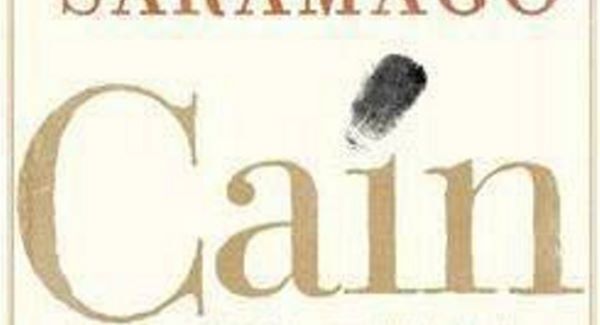
Cain is the brilliant final novel by acclaimed Portuguese author, Jose Saramago, who died in 2010 at the age of 87. Winner of the 1998 Nobel Prize for Literature, his political and philosophical views frequently challenged the status quo.
Having been expelled from the Garden of Eden, Adam and his wife settle down as farmers and raise a family. Cain raises seed, Abel livestock. As they approach adulthood, the siblings make their respective offerings to God, the first of their individual harvests.
God likes what Abel has produced, but has no interest in Cain’s gift. Brotherly teasing leads to anger and jealousy, and Cain kills Abel.
But, Cain reasons, when confronted, he is only partly to blame.
His offering had been just as honest and hard-won as Abel’s; God’s casual dismissal was wrong, and deeply unfair. It is a compelling argument, one that even the Almighty has to acknowledge.
So Cain is spared death and, instead, condemned to wander the earth, not in linear fashion, but slipping backward and forward through Old Testament time.
What Cain discovers is a world in which the innocent, unprotected by divine justice, have grown accustomed to paying for the sinners.
In the Land of Nod, he falls captive to the advances of Noah’s insatiable wife, Lilith, with whom he fathers a child, Enoch. Out in the desert, he stumbles across Abraham, who is just about to kill his only son, Isaac, in ritual sacrifice. Cain intervenes, saving the blushes of an angel dispatched to do the same, who had been delayed by wing trouble.
Cain is present, too, at the Tower of Babel, and at Sodom, and at Jericho to witness the slaughter of women and children along with the guilty men who have flouted God’s law.
Cain stands alongside Job who, for a bet, is put to insufferable test; he is at the foot of Mount Sinai with a mob that has abandoned Moses for a golden calf.
And, finally, Cain takes his place aboard the Ark, to attend the wives of Noah and his sons, and to help ensure the propagation of the species.
Saramago’s Cain is a delightfully human character, a murderous, lustful, fearless and, above all, compassionate ‘everyman’, blessed or cursed with a clarity of vision that lets him recognise flaws and hypocrisies even at the highest levels of power.
This is the Old Testament re-imagined, not with blind, unquestioning devotion, but with humanistic candour.
The result is a frolicsome fable, the humour of which belies certain ‘truths’.















