My angel went straight to heaven
THEY’RE a welcome sight, those joyous short texts that tell us a child is born and that mother and baby are “doing just fine”.
The feeling is relief. Pregnancy and childbirth can be complicated. For Marion Gabriel, the outcome was tragic. Her son, Robbie, was stillborn in Jul 2010. The text sent by her husband was too shockingly sad for most of us to even contemplate. The text said baby Robbie had “black hair just like his mother”, but he had gone to heaven.
Marion, 27, says she felt there was something wrong from the moment she discovered she was pregnant. “I think that’s why I found out the sex beforehand. I felt he was telling me to find out, that we needed to bond.”
Yet Marion’s pregnancy was straightforward until, with just four weeks to go, gastroschisis, a condition normally evident at the 12-week scan, was spotted. Robbie’s intestine was sticking out of his body. Marion’s consultant was called. “The first question I asked was, ‘Will my baby survive’? My consultant said there were risks, but that, generally, the condition was not fatal. I think the reason I found out so late in my pregnancy is because Robbie was protecting me. If I had known 12 weeks in, I don’t know how I would have kept going,” she says.
During the week after that scan, Marion was regularly monitored. She remembers a scan on the following Monday, when the baby’s heartbeat was normal. By Wednesday, Marion, who lives in Kinsale with husband, Mark Hurley, was convinced something was wrong. She returned to the hospital. One look at the sonographer’s face told her everything. “I’ll never forget the look on her face. There was no heartbeat. To have a child die in the womb is the worst thing that can happen to anyone,” she says.
Cork University Maternity Hospital’s (CUMH) support services for parents who experience pregnancy advised Marion to take time to absorb the heartbreaking news and to return to the hospital within two days, when she would be induced. She went home, but her body, in shock, went into labour that night. She returned to CUMH.
After Robbie was born, Marion and her baby were brought to the hospital’s fourth floor, specifically designed for parents who suffer pregnancy loss, where noone has to share a room or endure the awful contrast of other parents celebrating, nor listen to the cries of the babies who lived.
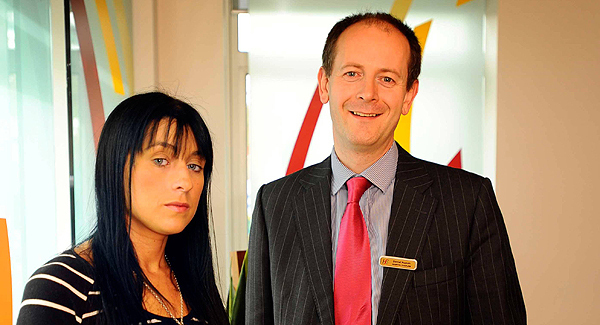
On the fourth floor, says hospital chaplain, Daniel Nuzum, there are no visiting restrictions, husbands or partners can stay over, and compassionate little acts are carried out, such as making sure parents have a lock of baby’s hair, handprints and footprints, hospital tags, cot cards and photographs. These precious memories are stored in a memory box for the parents to take home.
Marion speaks highly of the support at CUMH. The midwives were outstanding, the chaplin a rock and there was counselling. When they were leaving the hospital, with their precious baby in a Moses basket, the security guard brought them out via a route that spared them the trauma of seeing other parents and babies. “It was very traumatic, no parent should have to do that, but I’m glad I brought him home,” she says.
That day, friends and family were invited to meet Robbie. “I was very proud of him and of the fact that I had given birth. I wanted people to know I had a baby,” says Marion.
She and Mark slept with their baby that night. The next day, they carried Robbie’s coffin at the funeral.
Daniel says they encourage parents to do what is right for them. “Mums and dads know their own grief best and know their baby best. People tend to have a gut instinct about what is right for them. We support them in any way we can,” he says.
Babies stillborn are cared for in the same way as any other baby at CUMH. “Even though we can’t change the devastating event, we do whatever we can to help the parents. The baby is measured and weighed and tagged like every other baby. That’s really important.”
Daniel says there is greater recognition nowadays “of the deep, deep impact the death of a baby has”. In the past, he says, people were often told to “get on with it” and that, sometimes, parents didn’t even know where the child was buried.
The world has moved on. In 2004, the Civil Registration Act made provisions for parents to register the stillborn child and to give them a certificate.
Prior to that, there was nothing to prove a stillborn child had ever existed, neither a birth certificate nor a death certificate, because they had neither lived nor died on this Earth.
Three years ago, CUMH held a service of remembrance for parents and families who had experienced pregnancy loss. One in 200 babies is stillborn and one in four pregnancies ends in miscarriage.
Last year, a couple in their 70s, who lost a child 32 years ago, told Daniel it was their first chance to publicly gather to remember their little girl.
This year, the mass takes place on Sunday, Oct 14, at the Sacred Heart Church on the Western Road in Cork. During the ceremony, there will be an opportunity to light a candle in memory of baby and to sign a book of remembrance.
Marion, now proud mother to Joey, welcomes the opportunity to honour the memory of her first son. “Joey is a gift from Robbie, but he doesn’t make the pain of losing Robbie any less. There will always be someone missing from our family and that is not the natural order of things.”
CONNECT WITH US TODAY



Be the first to know the latest news and updates

















