A happy ending for young readers
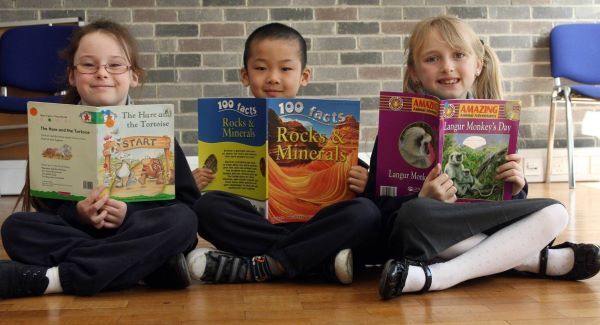
WE can all remember back to our childhood days and feeling caught up in the magical world of a favourite book. That feeling still exists today.
“I wanted to jump into that book and eat the cake,” says one little boy in the documentary Write to Read, which will be broadcast on Newstalk tomorrow.
The youngster attends Darndale Junior School in Dublin. The Write to Read scheme started off in Darndale as a pilot programme aiming to raise the literacy levels amongst schoolchildren. It’s now been rolled out in the Senior School and in seven other schools in Dublin.
The idea was the brainchild of Dr Eithne Kennedy, a lecturer in literacy at St Patrick’s College, Drumcondra, who has previously worked as a teacher in Ireland and the US.
“I undertook some research for my doctoral work. It was aiming to raise children’s achievement in literacy and to see themselves as more engaged readers and writers,” she says. “Schools in disadvantaged areas tend to have lower literacy levels but by working with the children, teachers and parents, I thought that we could change that. I was very lucky to work with Darndale Junior School and we worked closely together for two years.”
The literacy project focused on first and second classes in the school and the children’s literacy levels were tracked over the two years. First Kennedy sat down with the teachers and looked at samples of work from the children.
“We talked about what elements were working well and then discussed some new things we could introduce.”
Breda Murray, who is now principal of Darndale Junior School, was a first-class teacher when the scheme was introduced.
“It’s not like we threw out everything we were doing but we did restructure some things and brought in new ideas. The impact was almost immediate.
“There were three elements — Writing, Reading and Wordwork. The children would have a writing workshop for 30 to 40 minutes every day. The teacher would talk to them and then set them off writing.
“We’d look over their grammar of course but the main thing was that they were expressing themselves and they really enjoyed being able to do that.”
The standard classroom reader was put aside and instead, the students were assessed and given a book appropriate to their level.
“We also have a browsing box of books and the children can dip into it and find a book they want to read or maybe one they want to read to a sibling. And sometimes they’ll find a book they want their parents to read to them.”
Children who previously weren’t big readers were bringing home two or three books a night and getting their parents involved in reading to them.
“I knew it was working when the children were excited coming into school and their parents said they were always talking about reading and writing,” says Kennedy.
“The children saw themselves as readers and writers and worked with other children in putting together stories.”
At the end of the two-year pilot, Kennedy measured the children’s literacy levels again.
“The number of children who had a performance below the 10th percentile, which is very low literacy, was reduced by three-quarters,” she says.
“At the start of the scheme, no children were reading above the 80th percentile but by the end, we had 20 per cent of children at that level.”
The scheme is constantly being worked on and updated.
“It can be customised to a particular school and teachers can reflect on what’s working or what needs to be changed,” says Kennedy.
Breda Murray says a scheme like Write to Read isn’t prohibitively expensive when it comes to funding for books but resources are needed to provide teacher training. She says it was remarkable to see how much the literacy programme affected the children.
“As a teacher, it was really satisfying to see the change in front of your eyes. It was like watching the kids wake up and get interested in literature.”
Brian Gallagher is the documentary maker who thought that Write to Read would make for a good radio programme.
“It was so dramatically successful and I thought more people needed to hear about it,” he says. “As a writer myself, I thought it was wonderful that this love of reading and writing was fostered in the kids. They were so excited and enthused by it.”
* Write to Read is on Newstalk 106-108FM tomorrow at 7am.

CONNECT WITH US TODAY



Be the first to know the latest news and updates

















