Learning Points: How to tackle the academic year ahead as a family

The thought of going back to school can be quite stressful for young people and especially with the challenges brought about by Covid-19 this year.
Last week, I was invited by the Executive Institute to take part in a webinar on how parents can better manage the year ahead.
The talk was designed to give working parents advice on how to prepare for the myriad challenges that may arise over the coming academic year.
Of course, we have all been apprehensive about our children going back to school. We have all worried about their safety and the potential for Covid-19 spreading, and what that would mean for all of us.
I received many emails from parents who attended the talk asking for further advice on the issues that came up, so I thought it would be a good idea to answer some of the more salient questions that were asked here.
If your child is very nervous or anxious about Covid-19 and going back to school what should you do?

I would listen to their concerns carefully. I have noticed that some anxiety is related to normal peer-related issues.
The lockdown, for some children, was a welcome relief from the pain of social interaction, so going back into school might be the issue rather than Covid-19.
Listen to what their concerns are. If it is about contracting the virus, explain to them that the government and the school are doing everything to protect them, and that they will not be in contact with people like they think, they will be in pods so that things are well monitored.
Try to keep the conversation positive and hopeful. Don't tell them they have nothing to worry about: this might make them a little careless about hygiene, but instead tell them to do what they've been doing, and they should be fine.
The difference between a resilient child and a child that lacks resilience is that a resilient child sees things as transient and is hopeful. A child lacking resilience thinks in concrete terms; ‘I’ll never be able to go back into school, Covid-19 will always be here’; ‘life will never be the same’.
Explain to them that it will not always be here and it will pass and they will have managed perfectly fine. This is an opportunity to build your child’s levels of resilience.
If a parent is very anxious at the moment about back to school — what should they do?
I think this is such an important question. A phrase I often use when talking to parents is, ‘be by your child’s side, not on it’.
When you’re on your child’s side you are anxious, you are fighting their fight, you are confronting the bully. But whose needs are you meeting when you do that?
When you’re by their side you are in a listening position, you are supporting them to make the right decision: you are not making the decision for them.
Is my anxiety impacting my child’s ability to be positive about the year ahead? Am I projecting my fear onto my child? Is this going to have a negative impact on him/her? Absolutely.
So, you have to address your own concerns, read the government guidelines, and avoid too much social media and negative information about Covid-19. This will only provoke your anxiety. Worry doesn’t solve the issue, it compounds it.
What new routines do children and parents need to develop for the academic year ahead?
It is vitally important that your child gets back into a healthy sleeping pattern.
Diet and exercise have never been more important than today.
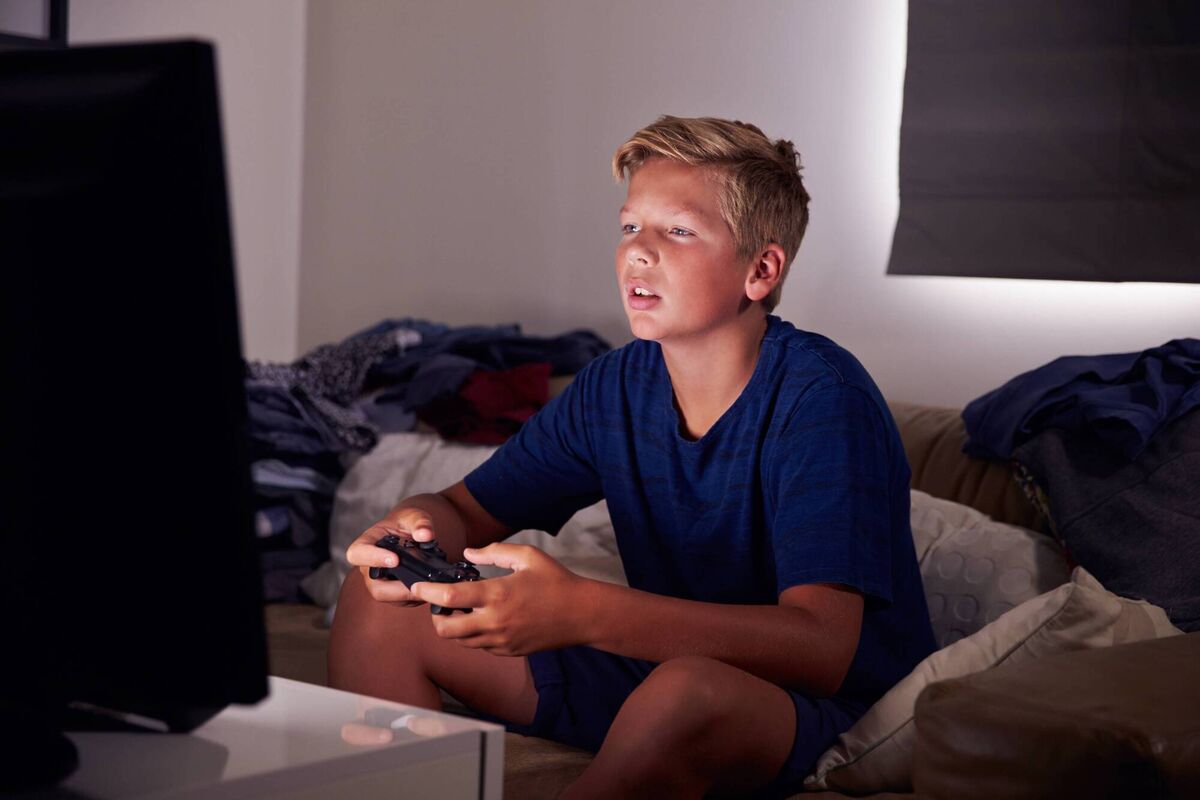
Also, gaming is where they socially congregate at the moment. You might have to allow them to game during the weeknight, but make sure there is a limit on it.
A reasonable time would be 40 minutes, but it might need to be a part of their routine now for this academic year.
So you might have to consider allowing your child to game so that they can communicate with their friends for a limited amount of time during the weeknights — 40/50 minutes would be plenty.
During the lockdown from school many children engaged in an excess of screen-time to keep in contact with their friends or to pass the time because of boredom.
This is such a pressing issue but remember something I always say — ‘too much difference is too much for children.’
They cannot go from excessive gaming to zero gaming because that is too much change. And it will cause huge conflict in the family.
Michel Foucault says ‘where there is power, there is resistance'.
Every house needs a technological policy. Your child cannot dictate how much time they spend on the game.
You cannot live under an inverted hierarchy that will cause huge tension, that will only escalate as they get older.
Try to make your child feel a part of the rules, but there must be rules.
Boundaries are never destructive, but rather constructive, and children crave them.
This will be a different year, but if you manage it successfully, this could be the very year you teach your children how to manage themselves during a crisis.

CONNECT WITH US TODAY



Be the first to know the latest news and updates