Suzanne Harrington: Joining a march is the psychological equivalent of a group hug
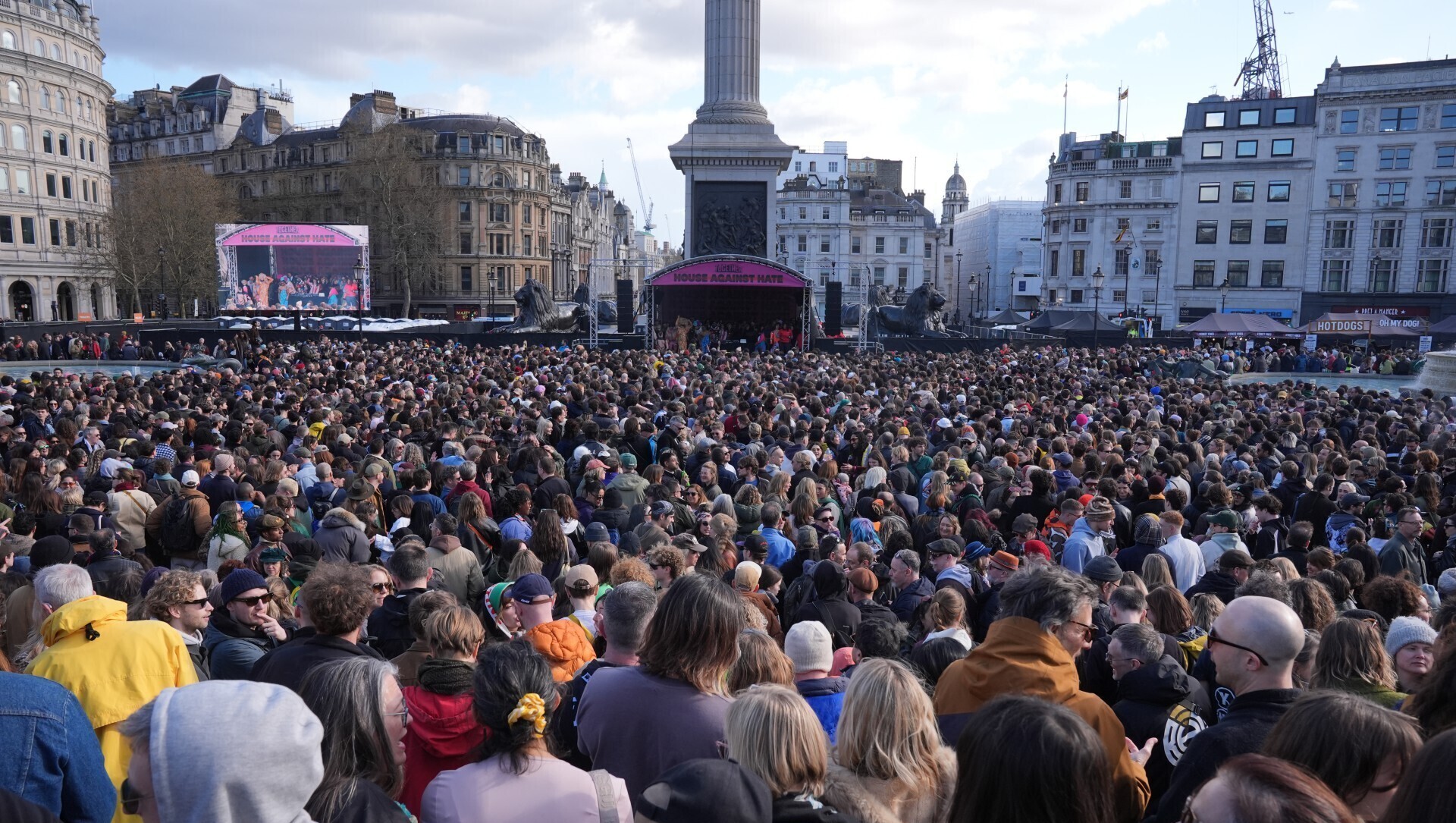
People taking part in a Together Alliance march in Trafalgar Square, London, recently to demonstrate against the far-right. Suzanne Harrington joined the marchers. Picture: Maja Smiejkowska/PA Wire

Imagine then a mental health equivalent: . Marching, as in the act of intentional group walking to express ourselves (rather than the thing soldiers do) as a crucial tool for our mental health. Especially now, in this blue-cheese nightmare that is 2026.
Comedian Alexei Sayle’s next book — — is an examination of this idea; how a specifically focused kind of group walking can help us stave off nervous breakdowns as the lunatic grip continues to tighten around the throat of the asylum. How peacefully taking to the streets to express concern/solidarity/displeasure provides a kind of non-violent pressure valve release, as it becomes increasingly apparent to us that when Orwell wrote that “War is Peace, Freedom is Slavery, Ignorance is Strength”, he just got the year wrong.
Not only does joining a march alleviate that all-pervading sense of impotence so many of us are currently experiencing, it also connects us with all the others who are feeling the same way. Looking around, you realise there are hundreds, thousands, millions, who feel the same, and have taken the trouble to gather in the city centre to walk for a few hours. You are not alone with just doom-scrolling for company. It’s the psychological equivalent of a group hug.
It’s also political expression for people who don’t have the time or energy to be in actual politics. It’s the personal being political for an afternoon. And there’s nothing like a bit of random self-expression — like the person I saw wearing a giant frog costume while carrying a sign saying ‘Frogs Against Fascism’. You can’t argue with that.
People who don’t march always say that if it changed anything, it’d be illegal. And of course they’re right. The blue-cheese nightmare continues, for now, despite all the millions marching against it. Spending the afternoon marching against fascism does not mean fascism will be extinct by teatime.
Hence, the importance of showing up, of being seen and heard. Or, as the sign of one elderly lady I saw read: “Democracy dies when good people stay silent.”
We may not change the world by walking down the street shouting but at least we will have shown up and stayed sane. And it’s a great bit of exercise and fresh air.