Séamas O'Reilly: Everyone born in 1998 is now 26 — the bad news doesn't end there

There are hundreds of thousands of young adults in Ireland who will never hire a plumber or electrician, buy a lawnmower, build a shed
Séamas O'Reilly: Everyone born in 1998 is now 26 — the bad news doesn't end there

A recent report shows 69.9% of 25-year-olds in Ireland live with their parents

The Central Statistics Office released a report on Monday, entitled Growing Up In Ireland. Its parameters were set on the wellbeing, education, employment and economic prospects of Irish people born in 1998. If you’re as thick as I am, you may have read that sentence and wondered, for a few seconds, why the government was so invested in the financial and professional outlook of a bunch of six-year-olds. It therefore falls on me to give you the bad news that everyone born in 1998 is now 26 years old. And, I’m afraid, the bad news does not end there.
There are a few bright spots in the report, which tells us that 59.5% of Ireland’s 25-year-olds have a degree or equivalent qualification, nearly double the EU average. This cohort seem an impressive bunch in other ways, too, with 73% saving on a regular basis, and 58% saying they had been “vigorously exercising” — the report’s own sprightly wording — in the past week. As someone who was neither saving nor exercising very much at all at that age, I can only doff my cap to this generation of fiscally astute athletes fifteen years my junior.

Unfortunately, however, the 3,380 respondents report more sober findings. Some 86% of those surveyed said they were very concerned about access to housing in Ireland, which is unsurprising given the report’s single most shocking statistic: 69.9% of 25-year-olds in Ireland live with their parents.

It’s worth sitting with the sheer enormity of that number for a moment. It is, of course, a function of the ongoing housing crisis, and represents only the most sanitised expression of the problem from which it springs. It sits atop the deeper, more pressing, facts of homelessness in Ireland, not least the unhoused people — families and children included — who now number nearly 15,000 nationwide. And it masks the sad reality that there are many for whom the option of living in safety and security with a parent simply does not exist.

But to take the numbers of those who currently do live at home, be warned that any attempt to place them in context does little good. The UK’s Office of National Statistics released a similarly detailed report for England and Wales in 2023, which found that, among 25-year-olds, 47% of men and 29% of women now live with parents. This was considered, quite reasonably, a worrying number, and a significant increase from 2007 numbers (when 16.7% of 25-year-old Brits lived at home) but it is absolutely dwarfed by Ireland’s current tally. Elsewhere, numbers vary depending on methods, but it seems that Germany and France hover around 28%, and checking in on our Scandinavian cousins, Denmark (4.4%), Finland (5.7%), and Sweden (6.3%) makes for grimmer reading still.

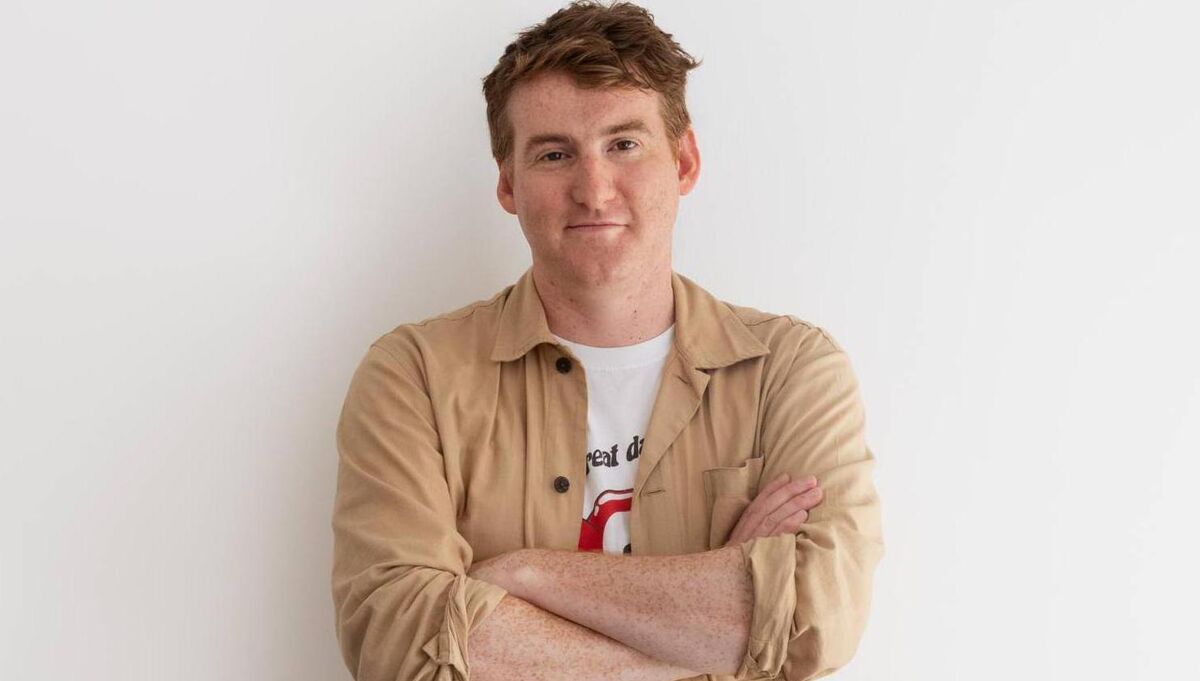
Séamas O'Reilly: In 2011 very few of my jobless friends lived at home. Picture: Orfhlaith Whelan

Ignoring the rest of the world and focusing purely on ourselves, the historical context is no less alarming. According to census figures, only 24% of Irish 25- to 29-year-olds lived with their parents in 2011. Conveniently for my purposes, I turned 25 in November 2010, so that data presents a handy snapshot of my own generation’s tribulations.

In 2011, I was still living in Dublin. We were deep into the worst economic conditions Ireland had seen for decades, with youth unemployment near 30%, and even Grafton Street’s grand avenue of commerce sprinkled with half a dozen ominously shuttered premises.

My now-wife, an archaeologist by trade and training, had been out of work for over a year, and I was picking up a very slender living as a tour guide at the National Leprechaun Museum. You might think that I, a grown man with a degree and pretensions toward literary glory, was the subject of ribbing from friends about the fact I worked in — I repeat — somewhere called the National Leprechaun Museum. What’s striking to me now is that I was not. This was because almost none of my friends had jobs, and the fact that I had one at all meant I might as well have been a surgeon or an architect.

What is also striking is that very few of those jobless friends lived at home. I can think of one, maybe two. The rest, like me, lived in chaotic house shares, and crumbling flats, and appeared to spend every spare penny they had on cheap cans and tobacco, but the dole was just enough for them to live independently, to forge the bonds of adulthood that have been a rite of passage for young people of every generation since time immemorial.


Ireland has, apparently, weathered the storm that sent me over the sea a few months into 2011. We are told it has emerged richer than it was before. Youth unemployment is a third of what it was when I left. GDP has tripled. To think that, despite all this, almost 70% of today’s 25-year-olds do not even have the freedoms that my generation enjoyed, is mind-boggling.

Sometimes I imagine myself making this point to people who don’t care about any of the above, to convey the smaller ramifications in a way that even the most committed capitalist might take them to heart: why not consider that there are, effectively, hundreds of thousands of young adults in Ireland who’ve never bought a plate, a lamp, or a bedsheet in their lives? Will never hire a plumber or electrician, buy a lawnmower, build a shed. I have to believe, even for the money men, that there is a downside to locking young people out of all of the things you need them to be doing in order for a high street, or an economy, to exist.

But we should be clear that the primary problem with the current state of things is not in any set of numbers on any balance sheet. To be locked out of housing by obscene rents, a vulturous short-term-let economy, and catatonic house prices is simply no way to enter life as a young adult. It’s no way to forge relationships or start a family. And it’s no way to build a country for a generation who deserve so much better.

x

More in this section

Lifestyle

Newsletter

The best food, health, entertainment and lifestyle content from the Irish Examiner, direct to your inbox.

Cookie Policy Privacy Policy Brand Safety FAQ Help Contact Us Terms and Conditions

© Examiner Echo Group Limited