Colm O'Regan: Solving a minor family mystery thanks to a Ballyhoura writer

A small word links a book about Ballyhoura, broth bits in Croom, and a scribble on the inside cover of a 70-year-old dictionary — and I couldn't be more pleased to find this connection
Colm O'Regan: Solving a minor family mystery thanks to a Ballyhoura writer

A small word that links a book about Ballyhoura, broth bits in Croom, and a scribble on the inside cover of a 70-year-old dictionary — a scribble made by a man who would have been 95 last Thursday — is hardly a Rosetta Stone connection. But I couldn’t be more chuffed...

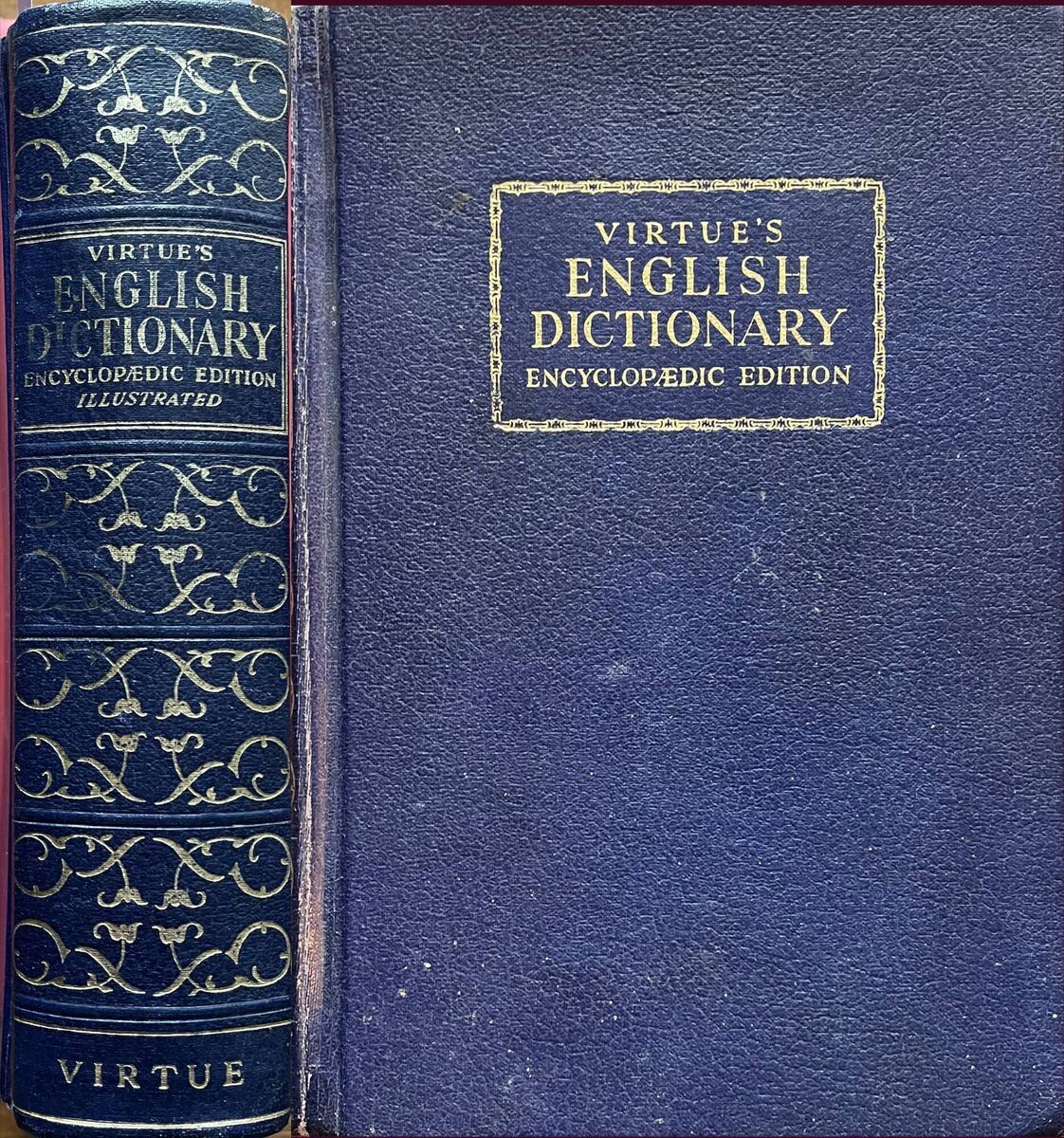
The mysterious sentence was written on the inside cover of my father’s most used book. The blue Virtue’s English Illustrated Dictionary from 1950-something. He would encounter a word on telly or in the paper and say: “I must look that word up now” — and come back newly armed.
I’m not like that at all. Looking up words. Pfft. What a nerd! (Nerd either comes from a word made up by Dr Seuss, or backwards slang for drunk 'knurd', or from 'nert' meaning stupid).

The dictionary is still around. Like a lot of things from the 20th century era of Getting the Use Out of Things it’s a lot more battered than I remember it. It could be legitimately replaced. It doesn’t have a lot of words that are current. 'Computing' is mostly calculating. A 'browser' reads or eats leaves. There is no 'wifi'. Or even 'hi-fi'.

The handwritten phrase on the inside says “Groods the other night” . A sort of stream of consciousness doodle meaning we had groods (or nice treats) to eat, some other night in the past week.


I think if he was born 50 years later, more skate-boardy and lived in the city, my father would definitely have been a graffiti artist whose enigmatic phrases would have got people wondering. 

Because as well as writing children’s and dogs’ names into fresh concrete around the place, he would also put an obscure message on wall with leftover whitewash. A bored farmer with leftover whitewash — or even a penknife for metal signs — is a loose cannon.

A scribble in a dictionary was very much on-brand. Groods was his word for treats. I always thought it was just a name he made up. A pet-name.

I’m not going to go into his petnames. That would just lead it to being shouted at me from passing cars.

I couldn’t find groods in any dictionaries. It’s a mystery, like 'pibus' — a word meaning a large forehead that seems to have only existed in Deerpark CBS in the class of 1995/1996 among a few classmates. (I’m putting in the sidebar an appeal for anyone who might know why 'pibus' meant 'a big forehead'.)

Back to 'groods'... a woman called Evelyn Fennessy heard me on the telly and emailed me out of the blue last month. ('out of the blue' is short for a bolt out of the blue, meaning lightning in a clear blue sky).

She heard me on the telly, flogging my new book Gallivanting with Words. (I do that a lot) I was talking about how every family has a collection of family phrases that that are collected like fridge magnets across generations. But often the original context has been forgotten. Like groods.

Two years ago Evelyn published a book called The Lost Language of the Ballyhouras which collected the Irish words used in that part of Ireland. And on my father’s birthday it arrived in the post. In it there's an Irish word 'grúideal' meaning fancy treats.

Armed with the new spelling I went looking again and it turns up in the Dúchas Schools Collection meaning "the solid particle left in the bottom of a vessel that contained 'broth'." So while its probably some nice meaty bits, it’s not quite as attractive as Taytos and opal fruits.

A reference to 'grúideal' in the Dúchas Schools Collection — it is said to mean Grudal (nú b'fhearra) or Grúideal — the solid particles left in the bottom of a vessel that contained 'broth'. (Tiob. Ár.) = grúdle and grúdles

A small word that links a book about Ballyhoura, broth bits in Croom, and a scribble on the inside cover of a 70-year-old dictionary — a scribble made by a man who would have been 95 last Thursday — is hardly a Rosetta Stone connection. But I couldn’t be more chuffed... the good kind (apparently chuffed once meant both pleased and displeased).

It’s a small story. There are more interesting stories behind the weird words in your house – past and present that mark keep the memory. Write them down!

Now.. pibus?

  • Colm’s book Gallivanting With Words is in all bookish places this Christmas

More in this section

Lifestyle

Newsletter

The best food, health, entertainment and lifestyle content from the Irish Examiner, direct to your inbox.

Cookie Policy Privacy Policy Brand Safety FAQ Help Contact Us Terms and Conditions

© Examiner Echo Group Limited