Séamas O'Reilly: Bluesky's lack of ads and algorithmic meddling feels heavenly
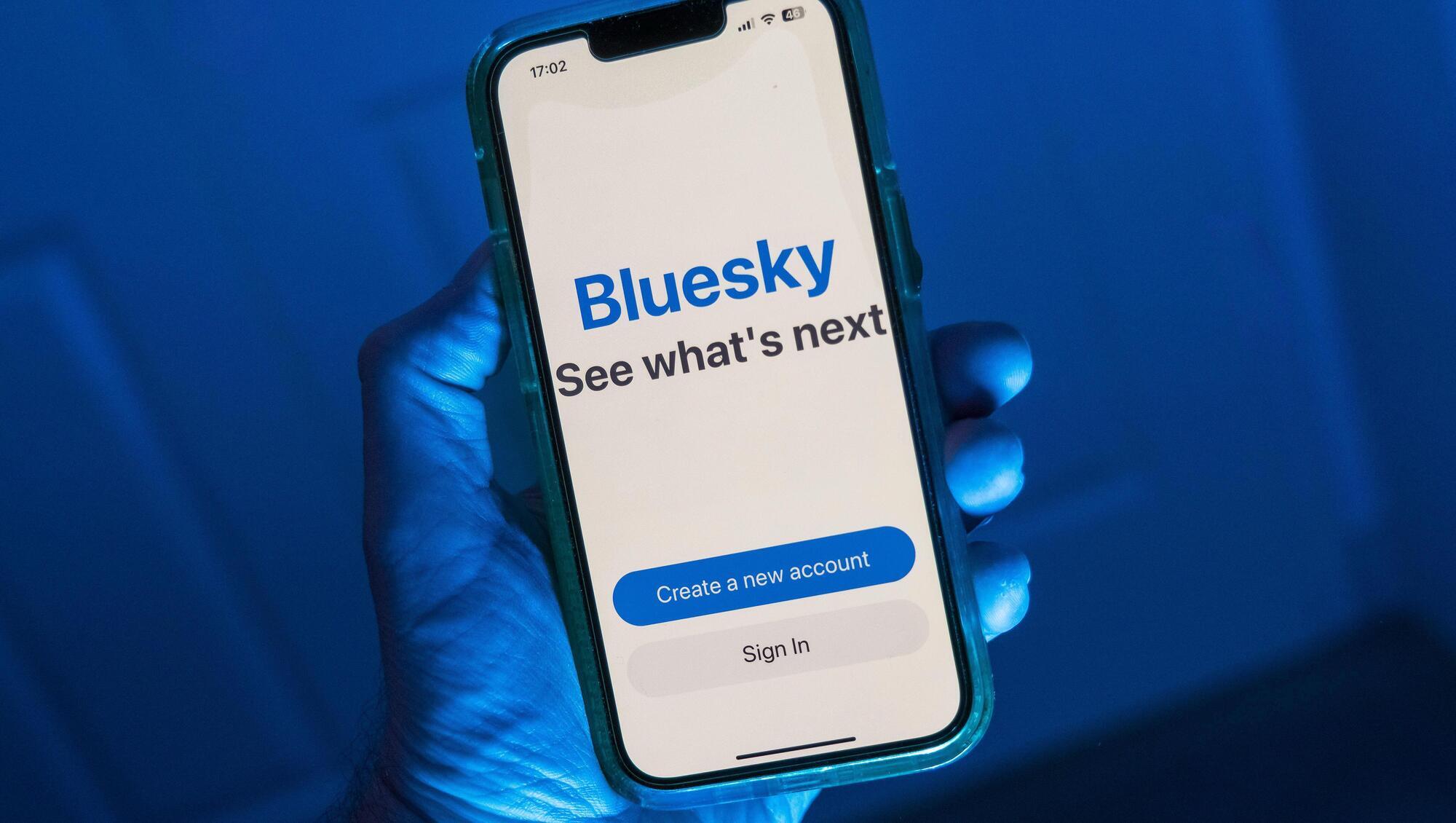
Bluesky: Not just an Electric Light Orchestra song anymore.

For the past year, I’ve been maintaining a presence on Bluesky, a Twitter clone with no ads and excellent moderation tools which has spent much of the past 12 months being scrappy and stimulating but very, very small.
This has changed drastically in the past few weeks after the so-called ‘Xodus’ — the flight of millions of users from the social media platform formerly known as Twitter.
Some 115,000 users are said to have deleted their X accounts the morning after the US election, and last week The Guardian took the step of rescinding their presence on the platform entirely, the first major news organisation to do so.
After a massive surge in usership over the past week, it’s clear that many of these émigrés have now ended up on Bluesky, and I find it easy to see why.
Its complete lack of ads feels positively heavenly, a sweet relief from the deadening trudge of selling on all other social media platforms, as does its lack of algorithmic meddling.
For example, I had 98,000 Twitter followers when I joined Bluesky last year.
By the time I had 5,000 Bluesky followers, my engagement rates on both sites were broadly similar. That is to say, I was getting as many responses and interactions with just 6% of the following I had built up over 15 years on Twitter.
This was a very clear sign that X’s heavy-handed algorithm was throttling non-premium users (like me) and restricting visibility of weblinks, articles, and posts as a carrot to get me to become a Premium user, the posts of whom are artificially boosted.
For someone who primarily uses social media to publicise my work and make stupid jokes, this was an almost comically miserable chokehold to be placed in, with the additional — worse
— side effect that the replies and interactions I was getting were getting weirder and weirder by the day.
Enough has been said about the constant spam visible on all strata of X right now, the ubiquity of crypto scammers and porn, and the dizzying depths of outward, unabashed bigotry.
So much has been said about all this, in fact, that it’s almost been priced in for those of us still using it.
The sheer misery of navigating the site, of wading through a miasma of dreck to find usable information, has become so commonplace as to be almost invisible — like a bad smell in a rented flat to which you’ve become so accustomed that you only clock it when you go to a friend’s house and realise it doesn’t reek of damp bin juice.
Bluesky, for many new adoptees, is that friend’s house: a space that has all the actual functions Twitter once had but without the nostril-burning excremental odour we’ve all trained ourselves to ignore.
And those new adoptees are growing exponentially. As recently as late August, Bluesky had only 6m users.
It now has over 20m and it’s finally beginning to look like the competitor it’s long promised to be.
With that, of course, has come criticism, most notably the argument that Bluesky is a retreat from the frontlines of discourse by cowed elites, into a closed-off cell of liberal pleasantness; in short, an echo chamber.
For decades now, the idea of media echo chambers has been passed around anywhere that online spaces have existed.
As the term suggests, it describes rigidly homogenous communities of similarly-minded people in which their own opinions are repeated back to them in a feedback loop that distorts their awareness of the wider world.
It has since become a catch-all descriptor for the intellectually incurious, those who seek refuge in cloistered spheres of self-satisfied ignorance.
It is more usually now ascribed to those on the putative left and frequently cited as a contributing factor to their inability to counter — or even predict — rightward societal shifts such as Brexit, the rise of Trump, or the steady march of authoritarian nationalism throughout the western world.
My counterpoint would be this: I’ve no idea what’s next for Bluesky and I’ve long since learned to never place my faith in a tech platform to stay permanently usable.
But, for the moment, it’s a much better place for me to tell silly jokes and promote my work to people who might actually read it.
More importantly, it’s a much more sane and enjoyable place for me to spend my time, full stop.
We’re not even two decades into the social media age and yet it feels like some need to be reminded that this is what communities are actually for, and have been for millennia, before it was decided that the only honest way of communicating with people online was in a public square densely packed with freaks you hate, in a manner which nobody but a masochist would do in real life.
(When Monty Python wrote the ‘Judean People’s Front’ sketch, it is unlikely they were satirising the fractious disagreements of Daily Mail readers, after all.)
Moreover, it’s evident that the term homogeneity is, itself, being bafflingly and cynically misused.
My Bluesky feed currently has Irish comic book artists, Palestinian doctors, Korean physicists, and Ghanaian teachers, and every day I see posts from — and arguments between — people of nearly every imaginable interest, profession, religion, sexual orientation, and gender expression.
The only way I can conceive of this as a homogenous clique is by accepting a definition of echo chamber that amounts to “when there’s no bigots or crypto scammers allowed in”.
And if that is the definition of an echo chamber, then so be it. Seal me in.