Louise O'Neill: 'It’s hard to challenge the part of me that wants to lock myself away from the outside world'
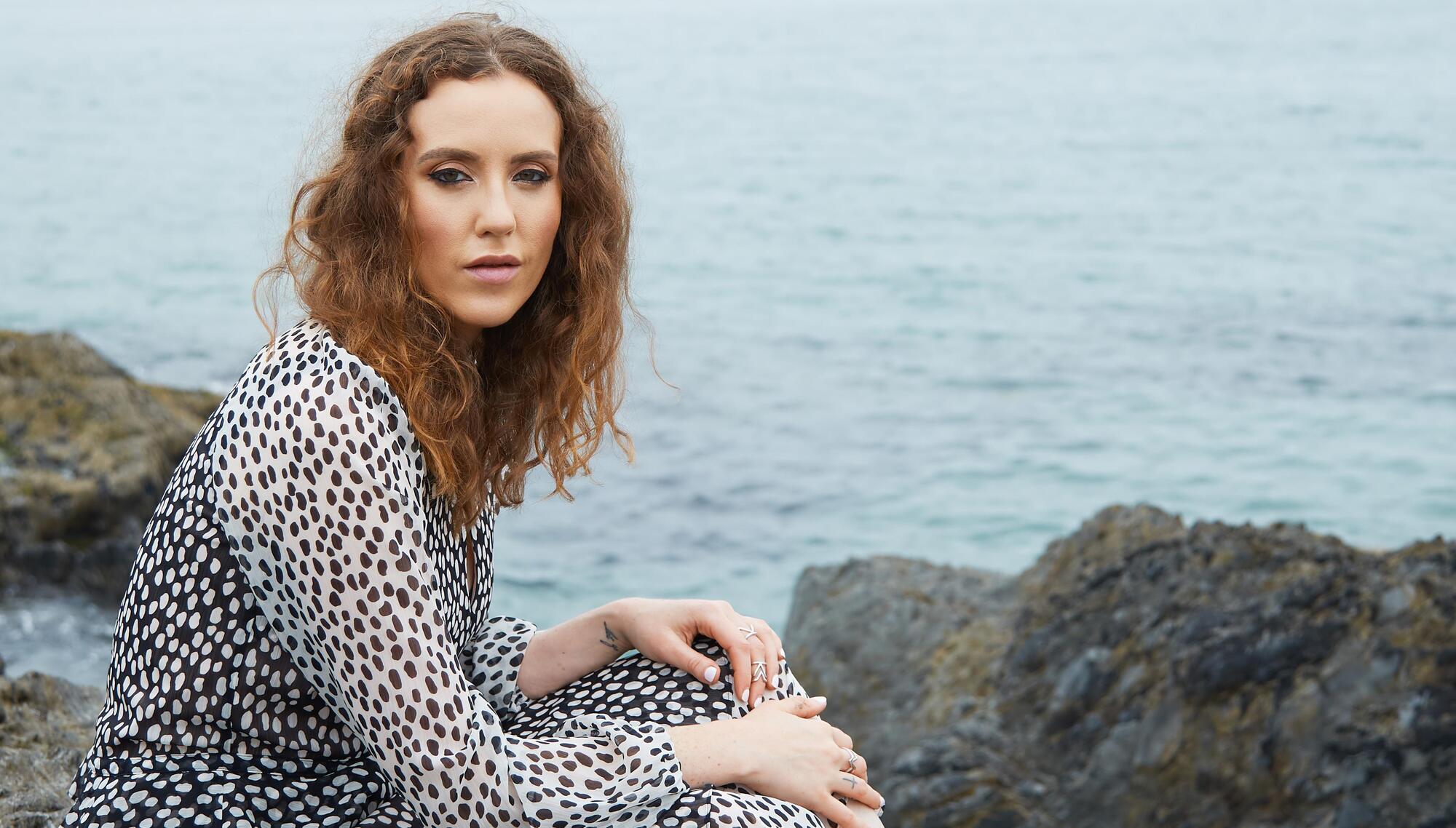
Picture: Miki Barlok

My new novel came out this week, I’m not sure if you heard? (After the Silence, available now!)
I was led by the publicist – another Cork woman, naturally – to bookshops and TV studios and radio stations, where she pretended like she wasn’t bored of me giving the same spiel every time. “Yes, it’s a psychological thriller about a True Crime documentary,” I said again and again.
“It’s like The Virgin Suicides meets Making A Murderer with Big Little Lies thrown in for good measure,” I added with a smile, hoping my elevator pitch was polished enough.
In my interview with Brendan O’Connor on RTÉ Radio 1, which covered everything from eating disorders to the reasons why women adore True Crime, I went on a slight tangent.
I started talking about a model of healing called the Internal Family Systems Model and the impact something as seemingly innocuous as colic may have on a child’s psychological development.
After the interview, I turned on my phone and I was surprised to see that out of everything we talked about in that wide-ranging chat, the majority of people in my DMs were looking for more information on Internal Family Systems.
Read More
IFS was developed by Richard C. Schwartz in the 1980s and it posits that we all have multiple ‘parts’, underneath which lies our Core or True Self. These parts are often created to protect us, even if they cause us to act in dysfunctional ways. As far as I understand it, there are three types of parts.
- 1. Exiles, which represent psychological trauma, often from childhood.
- 2. Managers, which attempt to control our lives and environments to protect us from harm.
- 3. Firefighters, which act as a diversion when the Exiles start to act out but often encourage us to numb out from the pain in ways that are inappropriate; compulsive eating, alcohol abuse, over-medicating ourselves etc.
IFS therapy tries to heal and integrate all wounded parts to restore emotional well-being.
The book I was referring to on Brendan’s show was called Inner Harmony by Beth Rogerson, which is based on the IFS model.
Rogerson wrote that, “we may develop parts even if we view our early lives as unblemished by trauma and tragedy. Think of a colicky baby whose parents care for him or her lovingly and gently but whose experience is still one of fear and pain. No one can stop the pain, and even as a baby he or she comes to view the world as unsafe. The baby may even feel abandoned. To survive, this infant may form a part that wants to be in charge at all times because he or she has experienced the world as unsafe, and from that experience has formed a belief: no one is here to help me.”
This resonated with me because I suffered with colic for the first year of my life. Whenever I meet old friends of my parents, they always ask something along the lines of, “were you the child with white-blonde hair or the one who never stopped crying?” and I sheepishly admit to being the latter.
I don’t remember anything from that time, obviously, but I was an unusually independent child. One of my first memories is from an operation at age three, to insert grommets into my ears, and when the nurse brought me to the surgery room, I told my mother to stay behind.
When I was sick, I couldn’t bear to have anyone near me and I shied away from team sports in adolescence, preferring to focus my energy on swimming or anything else I could do alone.
My tendency to isolate has been something I’ve had to watch this year. Work Zoom calls have made me less inclined to Facetime friends, which was particularly difficult for my relationship given I didn’t see my partner for four months due to the lockdown and we became less connected as a result.
It’s hard to challenge the part of me that wants to lock myself away from the outside world when a global pandemic made it increasingly easy for me to do so. Not even easy, in fact. Necessary.
We had to stay away from one another in order to protect each other, and the most vulnerable in our society. Social distancing is a part of our vocabulary now, and it will continue to be until we find a vaccine.
But despite that, I also believe 2020 has taught us that we are a community and a community can only survive if each member acts for the good of the collective rather than the individual. It has taught us that we need one another, and asking for help is not a sign of weakness, but rather an act of trust.
As John Donne wrote in his Meditation 17, “No man is an island, entire of itself; every man is a piece of the continent, a part of the main.”
Where is George Gibney? This excellent podcast is about a famous Olympic coach who was charged with child sexual abuse but never stood trial.
I Am Not Your Baby Mother by Candice Brathwaite. Examining the unconscious bias faced by Black mothers, this is urgent, important, and eye-opening.