A clearer Christmas: How to survive the festive season sober
Ireland and alcohol: a pairing so familiar it’s become a global stereotype. But the social landscape is changing, and with it, our drinking habits. Sarah Finnan explores how to survive the festive season sober 
A clearer Christmas: How to survive the festive season sober

Ireland and alcohol: a pairing so familiar it’s become a global stereotype. But the social landscape is changing, and with it, our drinking habits. Sarah Finnan explores how to survive the festive season sober 

“Go on, go on, go on…” A line immortalised by Mrs Doyle in Father Ted, and one that now neatly captures the Irish approach to persuasion – especially where alcohol is involved. In those instances, “No,” is rarely considered a full sentence. A bit of gentle arm-twisting is not only acceptable but appreciated. It’s all part of the fun, right? I disagree.

Our bond with the bottle — and no, not the milk one — starts young. If you went to a Catholic primary school, alcohol was framed as strictly off-limits; something God Himself would want you to abstain from. The thought of burning in hell over a sip of blue WKD hardly seemed worth it to me, so at twelve, I swore off drink – delivering my pledge with the solemnity of a man under oath. My commitment remained steadfast… until I got to secondary school. There, I quickly learned that drinking was a kind of social currency, and refraining set you apart.


By college, most of us had graduated to stronger stuff, with local club nights pushing deals that encouraged bingeing. From personal experience, this is when bad habits really started taking root, and alcohol became a coping strategy. As an introvert, I often struggled in social situations, and with so many outings requiring me to be on top form, I leaned on Dutch courage more than I should have. Self-control isn’t exactly the hallmark of youth, and, admittedly, many of those nights remain a blur. I wish I’d recognised my limits sooner, and actually kept to them, because the two-day hangxiety almost always undid the fun.

Unfortunately, it took me several years to learn my lesson, and those same habits trailed me well into my mid-twenties before I finally took a step back to reevaluate. In the last few years, I’ve massively cut back. I still drink, just not like I used to. These days, it’s usually a glass of wine (or two) with dinner, a couple of pints with friends, or a ceremonial Baileys in front of the Christmas tree (my favourite). Hangovers are not something I’m willing to endure anymore, and I’m glad to say The Fear has become a much less frequent presence in my life.

My experience doesn't seem to be unique. In fact, it mirrors something happening nationwide. Drinking patterns are changing across the country – not just socially, but statistically too. According to research by the Drinks Industry Group of Ireland, there is a growing consumer trend toward moderation or the reduction of alcohol consumption in Ireland.

A study they conducted on Irish adult drinking habits in 2024 shows that per-adult alcohol consumption continues to fall, with every major category (beer, wine, spirits, cider) recording volume declines last year. Ireland’s per-capita consumption is no longer an outlier by European standards; it now sits much closer to the average.

When I first started cutting back, I realised how hard it was to find truly adult-feeling non-alcoholic options. Most were overly sweet, childish, or felt like an afterthought; hardly the kind of thing you’d actually want to order while everyone else sipped cocktails. But that’s changing. What once felt like swimming against the tide now feels like part of a larger cultural pivot, and the rise of NoLo options is proof in point.

Chef Aisling Larkin, Co. Waterford. Picture Denis Minihane.

The mature option

MoWell, chef Aisling Larkin’s non-alcoholic cocktail bar designed specifically to give non-drinkers a seat at the table, is a perfect example of how far things have come. 

“For so long, it's felt like if you’re not drinking alcohol, you’re not catered for. I want to feel valued when I go out. I've worked in the hospitality industry for so long – making everybody feel welcome and included is so important to me.” 

In its physical sense, MoWell is a handcrafted pop-up bar. Larkin had to have it custom-made to ensure it would be mobile. Award-winning mixologists turn up wherever the bar is stationed for the day and make specially curated drinks using premium ingredients. 

“The whole thing is meant to feel like luxury,” she tells me, admitting that she’s on a mission to “reinvent the whole non-alcoholic experience”. But on a deeper level, MoWell is there to enable people to make a conscious choice. 

“I want people to feel good – not numbed out, not wired, but grounded. It’s about the simplicity of being fully present and having/creating meaningful, authentic connections.” 

The MoWell pop-up alcohol-free bar

After months of sourcing best-in-class ingredients, finessing recipes, and collaborating with other experts, Larkin is happy with what they’ve created. Part of that is a focus on functional ingredients like adaptogens. The term has become something of a buzzword in the drinks world recently, but Larkin—ever ahead of the curve—has already woven them into the MoWell menu. 

“Adaptogens are things like Lion’s Mane, Ashwagandha, Ginseng. They adapt your body and your mind to the situation. So in some instances, they can help with resilience and stress reduction. In others, they can be energising. There's so much that goes into the drinks we serve. It's not as simple as just giving you a non-alcoholic gin and tonic.” 

But beautiful drinks are only the start; mindset is what really carries you through, especially at Christmas, when old habits and expectations run deep. Like many people, my relationship with alcohol is still a work in progress. It shifts with age, context, and whatever season of life I’m in. The biggest lesson has been accepting that it’s allowed to evolve – and that we can redraw our own boundaries as often as we please.

Ireland’s connection to alcohol will probably always be complex, but it’s no longer the monolith it once was. The social scripts around drinking are loosening, making more room for choice – even at Christmas.

A step-by-step guide to drinking less 

Poachers' fizzy drinks

For those looking to cut out alcohol this festive season, psychotherapist and addiction counsellor Orlagh Reid shares some practical advice on how to make the process more manageable.

Start early 

“A lot of people who are grey area drinkers or who are slowly giving up and don’t want to drink for Christmas, start the work well ahead of time, so it’s a softer transition,” she explains. “That’s the best way to do it.” She advises gradually reducing your drinking in the weeks leading up to December so that it’s easier to say no during the holidays.

Identify your drinking pattern

Understanding why you drink is crucial to changing the behaviour. “A lot of our drink culture here is just ritual or routine, what people have always done on a Friday or Saturday night,” she tells me. “Self-awareness is really important because that helps you understand what keeps bringing you out.” Be honest about the people, places and events that push you beyond your limits. Control what you can and remove yourself from situations that might be triggering early on.

Have a clear purpose

If you want to be successful, you have to know exactly why you’re cutting back. Is it for health reasons? To save money? To avoid multi-day hangovers? Your ‘why’ is your anchor when social pressure rises. “Don’t try to be the hero for everyone else and white-knuckle your sobriety in the pub. Listen to what your recovered self needs,” notes Reid. Sustainable change requires new ways of socialising and creating a support system outside drinking culture. “Sacrifice has to come, but the benefits outweigh the cons.”

Set boundaries

Cutting out alcohol requires you to prioritise your own needs. “Give yourself permission to make difficult decisions,” says Reid. “Forget about disappointing other people. You need to be confident in the decisions you make and set really clear boundaries. Troubleshoot all of the events you know will be difficult and give yourself permission to do what you need to do.”

Have an explanation ready

You don’t owe anyone an explanation, but having a line prepared that doesn’t invite pushback can be a lifesaver. “If we're trying to create new attitudes around not drinking, the best answer is the most honest answer,” says Reid. “You do not have to explain, but you can give any reason you want, just plan it in your own head and practise saying it beforehand so you’re not caught off guard.”

Make drinks you actually look forward to

Not drinking doesn’t mean you should miss out. “Thinking about giving up alcohol as a deficit or something that you're missing out on is the wrong mindset to have,” agrees Reid. It’s about creating experiences that don’t make you feel excluded. 

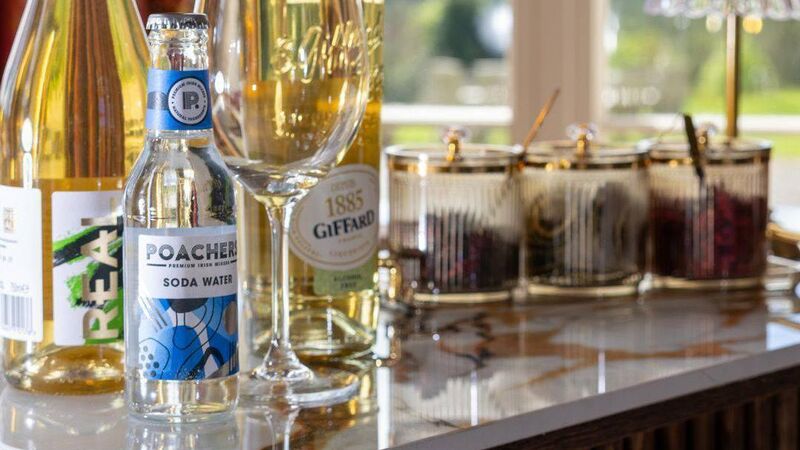
Brands like Crossips, Three Spirits, Sentia and Irish company Fire and 5th create bold, punchy alternatives that command attention. They don’t perform like spirits, so pay attention to flavour pairings. Glassware and ritual matter too: big clinking ice cubes, a slice of orange, quality mixers. Poachers recently launched three of its award-winning sodas— Grapefruit Soda, Lemon Soda, and Ginger Beer — in their first-ever can. For garnishes, look no further than Drink Botanicals.

More in this section

ieFood

Newsletter

Feast on delicious recipes and eat your way across the island with the best reviews from our award-winning food writers.

Cookie Policy Privacy Policy Brand Safety FAQ Help Contact Us Terms and Conditions

© Examiner Echo Group Limited