Lorge on the changing face of chocolate: 'Treat it like a good wine’
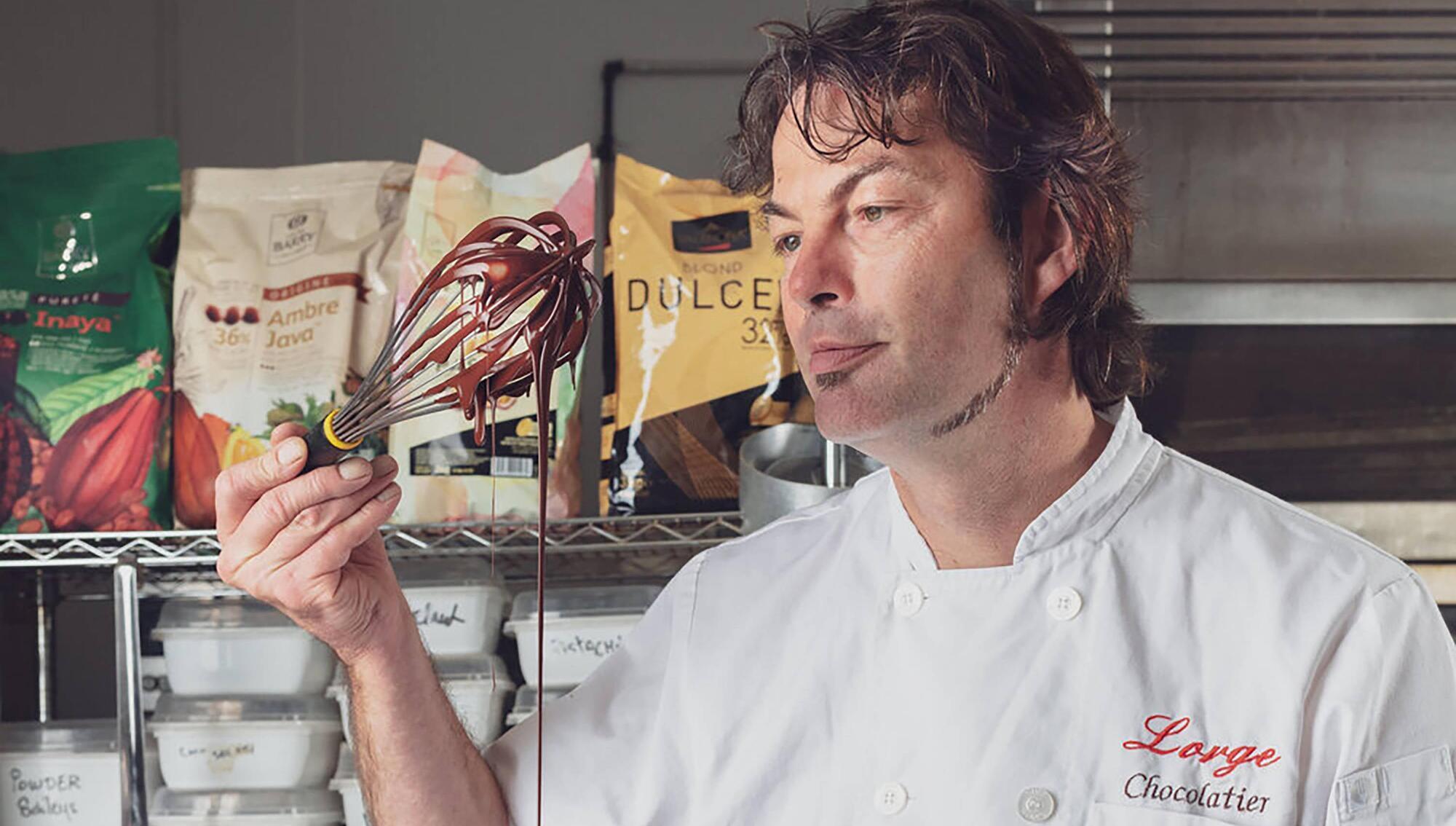
With the price of cocoa increasing by 140% in the space of a year, is it time we looked at chocolate as a luxury item? Benoit Lorge reflects on two decades in the business of chocolate and tells Kate Ryan why 2025 could be the toughest yet for Ireland’s independent chocolatiers
Lorge on the changing face of chocolate: 'Treat it like a good wine’

Benoit Lorge: “I encourage people to go for quality rather than quantity. If the price of chocolate goes up, it does not affect the mass-produced chocolate as much because manufacturers substitute expensive cocoa with other cheaper ingredients that are not as healthy."

In the tiny village of Bonane just outside Kenmare on the Beara Peninsula, Benoit Lorge has been handcrafting chocolates for two decades.
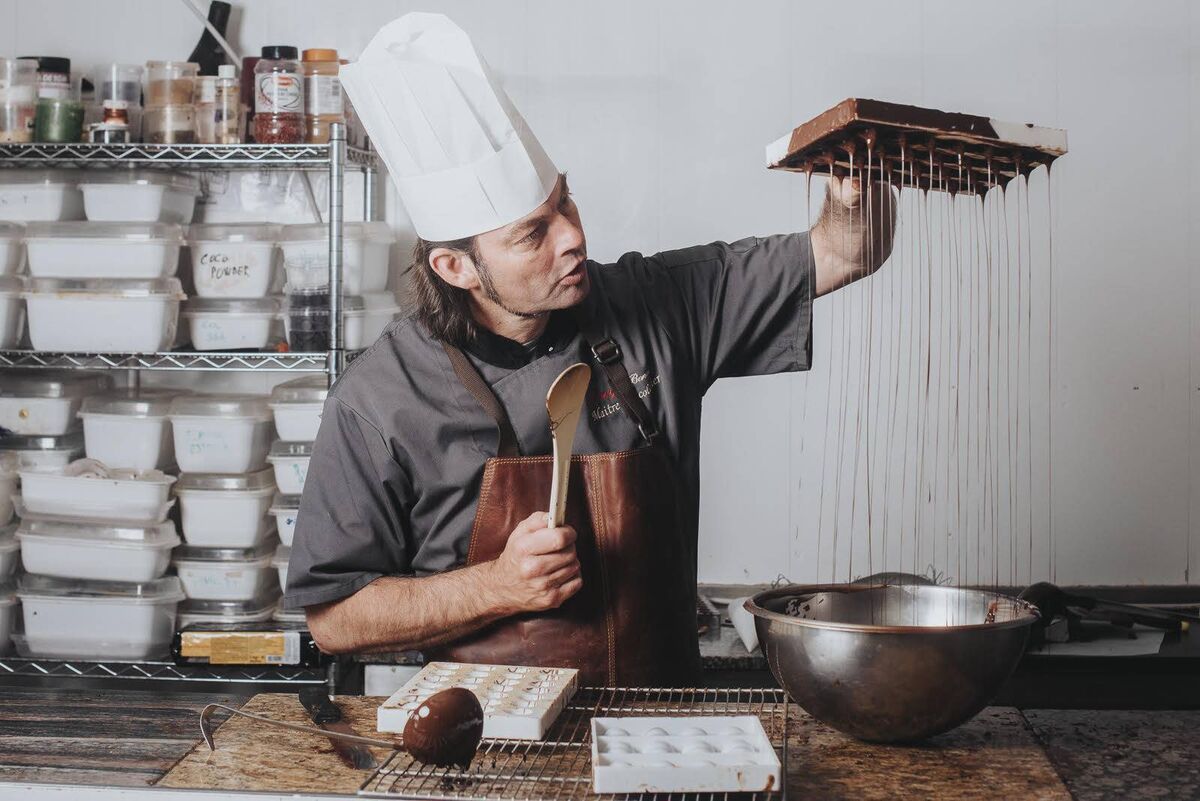
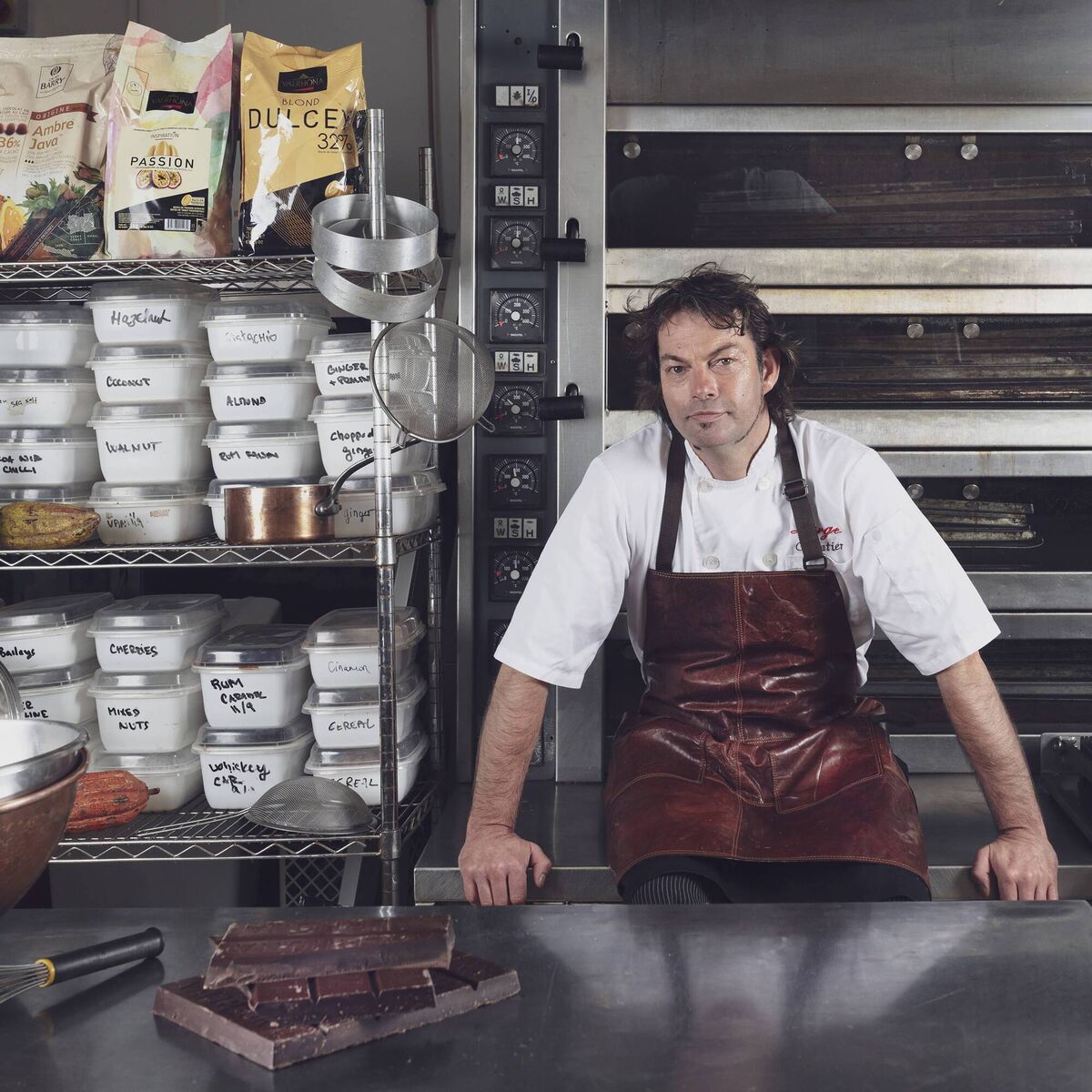
Originally from Lorraine in north-eastern France, Lorge trained as a pastry chef — a skill that paired well with his love of travel. 

However, the rugged beauty of Beara has a way of taming even the most determined of wanderlusts. Lorge fell deeply in love with this corner of Ireland, eventually putting down roots in Kenmare and working in Sheen Falls Lodge in the early 00’s.

The discovery of a skill and passion for working with chocolate came by an equally unexpected route.

Asked by a local charity event to help raise funds for a playground, Lorge made his first batch of handmade chocolates.

“The reaction was very good,” recalls Lorge, “and, the following year, I made some chocolate from the old post office in Bonane, outside my shifts at Sheen Falls, selling them to a few local restaurants and hotels.”

By 2004, Lorge had packed in the day job and launched his business, Lorge Chocolatier.

Taking over the old post office in Bonane completely, it established itself as a must-see stop on the picturesque N71 that winds its way through the Wild Atlantic Way.

This October, Lorge Chocolatier will turn 21 years young. In that time, customers tastes have changed and grown as they explore the variety, complexity and versatility of chocolate.

“Twenty years ago, 75-80% of my sales were milk chocolate. Now, I am selling as much dark chocolate, sometimes more, than milk chocolate. Of course, dark chocolate is the real chocolate, and I find people are eating less but better quality.

“Where once popular flavours were plain caramels, now people go for more exotic flavours like chocolate with chili or lemongrass. They are more adventurous.”

With Valentine’s Day fast approaching, a box of beautifully crafted chocolates is a favourite way to show love and appreciation for that someone special in our lives — and, in Ireland, we love to indulge.

THE CHANGING FACE OF CHOCCIES

In 2023, 8.3kg of chocolate was consumed per capita in Ireland, third in the world behind Germany and Switzerland.

Last year, according to Kantar, 58% of Irish households purchased boxed and gifting chocolates over the 12 weeks to February 2024. We saw volumes of boxed and gifting chocolates up 3.7%, with shoppers spending an additional €1.7m year-on-year.

This year, Lorge’s handcrafted chocolates will be a little more expensive because of a global shortage of cocoa, the essential ingredient for making chocolate.

“The price of cocoa went up 140% in 12 months,” says Lorge. “We were hoping 2025 would get better, but it’s still increasing. To counter that, I am buying in much bigger quantities — which is possible because chocolate has a good shelf life.

“That has helped to reduce costs a bit, but not enough and, unfortunately, we had to put our price up by 12% last August.”

While other chocolatiers have embraced shrinkflation to hold their prices, as a small business, the cost of redesigning their signature packaging is too great. Better to enjoy the same amount of chocolate at a marginally higher price, is the justification.

So, what’s causing chocolate prices to rise?

Benoit Lorge: “I encourage people to go for quality rather than quantity. If the price of chocolate goes up, it does not affect the mass-produced chocolate as much because manufacturers substitute expensive cocoa with other cheaper ingredients that are not as healthy."

It all begins with a small tree — the cacao tree — that grows in tropical climates and only in countries located 10 degrees north and south of the equator: Mexico, Brazil, Venezuela, Ecuador in South America; Ghana and Ivory Coast in West Africa; Indonesia, etc.

“The trees need a lot of heat and humidity to grow well,” explains Lorge, “and those countries are where we find lots of that.” 

Lorge sources cocoa for his dark chocolate from South America (mainly Brazil and Mexico), and from Ghana and Ivory Coast in West Africa for his milk chocolate. Here lies the problem.

“Ivory Coast and Ghana make 75% of the world’s chocolate, but there has been a crop failure there for the past three years due to heavy rain, mostly, but also because the cacao trees are being attacked by a virus which happens when they aren’t fertilised properly. Each crop failure compounds the problem, and that impacts other producer countries like Mexico and Brazil. Then the price goes up due to global demand.”

In ancient Mesoamerican culture, cacao was revered and exchanged as currency. It has always been a luxury, but, says Lorge, mass production of cheap chocolate has fooled us into thinking it’s an everyday snack with a price to match.

High-quality handcrafted chocolates cannot be compared like for like, says Lorge.

“I encourage people to go for quality rather than quantity. If the price of chocolate goes up, it does not affect the mass-produced chocolate as much because manufacturers substitute expensive cocoa with other cheaper ingredients that are not as healthy.

“We should remember that chocolate can be good for you; treat it like a good wine. Rather drink one glass of good quality wine than a whole bottle of bad wine.

“Where we worry more is with our Easter eggs, because they’re just chocolate. A box of chocolates are fillings covered with chocolate making it easier to manage costs, but it takes 300g of chocolate to make a 200g Easter egg. That’s a big challenge for us artisans who value quality.”

The solution, says Lorge, is to buy chocolate in bulk, cut out the middleman — buy direct from source, and work faster, harder, longer.

“My challenge is keeping the same quality; we will not drop quality to be more competitive. 

We are two decades in business; we have seen off two economic crises and two years of covid, but we never compromised on quality, and I think that is why we are still in business.

“People appreciate quality and there will always be a demand for it, even if that chocolate has become more of a treat than an everyday item.” Yet, one man’s challenge is another’s livelihood.

“For us it’s a challenge, but for those living in Ghana or Ivory Coast, this is their only source of income. This situation is much more of a worry for those farming cacao trees, dependent on chocolate.

“If climate change continues to impact cacao farming, these countries will be in big trouble.

“My supplier participates in Cocoa Horizon, where a proportion of money goes into teaching farmers to grow cocoa in better conditions, increase production, and to work in a safer environment.

“The money goes into training, infrastructure, and services for providing their children with education. In Colombia, a scheme encourages farmers to move away from growing coca [for cocaine] to growing cacao. Where that has been done, criminality has reduced by 25%. That shows how much we need cacao — for a better world, we need cacao.”

Benoit Lorge: “I am so lucky to have a fantastic team working with me that are really committed and interested in what they do. Some have been with us for 10, 15 years. I have built a team that puts in the effort to keep our quality high. That’s really important in our business where everything is handmade.”

DIVERSE INTERESTS

While there is little Lorge can do regarding the dynamics of global supply and demand, there are ways to diversify.

“We cannot grow cacao trees in Ireland so if one-day chocolate disappears, we will do something else — make ice cream, boiled sweets, confectionary, nougat. 

"We make our own jam, chutney, praline spread, and our salted caramel spread — which is very popular. It won a gold at Blas na hÉireann in 2024. 

"As a Frenchman, I was born with salted caramel, but in the last few years it has become very trendy. We use Irish Atlantic Sea Salt from the Beara Peninsula to make the caramel savoury and bring out the flavour of vanilla.”

Whatever happens, says Lorge, pleasurable things will adorn the shelves of Lorge shops in Bonane and Kenmare, “but maybe not always with chocolate.”

Hosting experiences, courses, and masterclasses in Bonane has proved popular and this year the offering has expanded, helping to push through the challenges “until things get brighter”.

“We run classes privately, rather than as mixed groups, and respond to what people would like to do.

“I could have a couple, a birthday party of eight, or a class of 40 depending on the demand. Sometimes people want a hands-on experience, other times just a demonstration and tasting,” explains Lorge.

Masterclasses are for chefs looking to increase their knowledge and those wanting to start their own chocolate business.

“We have three masterclasses with four places each for a more hands-on focused class — like chocolate school. The one-day class is for beginners; the two-day is more professional and technical, and the four-day is for people who want to start their own business.”

These masterclasses routinely sell out, showing that, despite the challenges, there is no shortage of interest in learning the craft of chocolatiering.

“I am so lucky to have a fantastic team working with me that are really committed and interested in what they do. Some have been with us for 10, 15 years. I have built a team that puts in the effort to keep our quality high. That’s really important in our business where everything is handmade.”

So, what does the future hold for Lorge Chocolatier? “It’s working hard; keep giving pleasure to people and sharing our passion in workshops and classes. And, if the price of cacao keeps increasing, we will just make pastries instead.”

More in this section

ieFood

Newsletter

Feast on delicious recipes and eat your way across the island with the best reviews from our award-winning food writers.

Cookie Policy Privacy Policy Brand Safety FAQ Help Contact Us Terms and Conditions

© Examiner Echo Group Limited