Where the buffalo roam — in Macroom
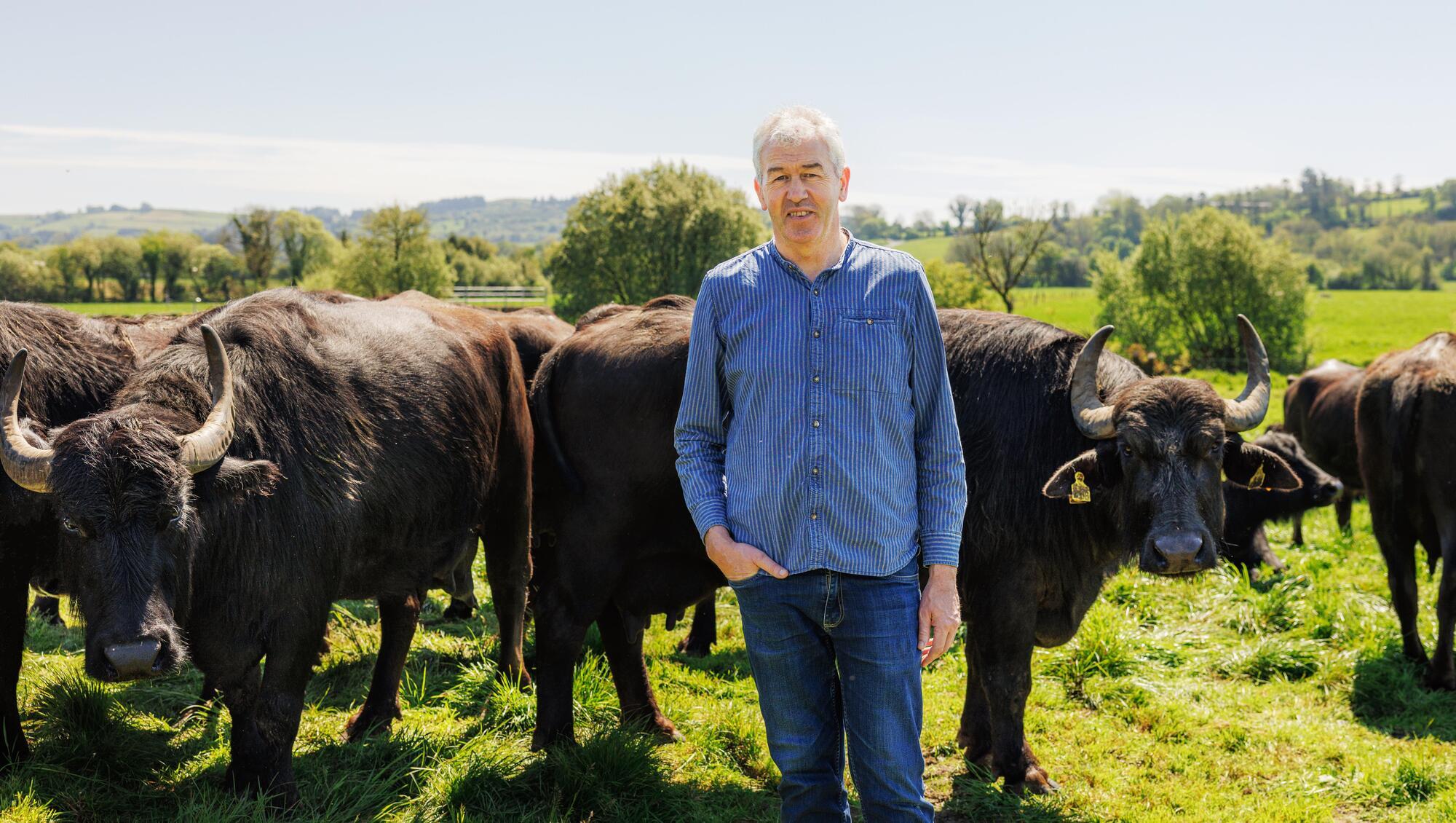
Johnny Lynch, of Macroom Buffalo Cheese
Did you know that buffalo milk is the second-most consumed milk in the world? From India to Nepal, Italy to Ireland, water buffalo produce highly nutritious milk used to make dairy products such as cheese and yoghurt.
Irish cow milk has a justifiably high reputation, but the rich pastures and mild temperate climate that work so well for cattle are also ideal for buffalo milk production, something that Johnny Lynch, of Macroom Buffalo Cheese, has been working on proving in north Cork since 2009.
That was the year he brought 31 water buffalo from Italy to his dairy farm in the lush countryside of Kilnamartyra, near Macroom. Now 840 large, gentle, shaggy animals spread across four farms in the area.
Faced with falling milk prices at the time, Lynch decided to go all in. “It didn’t seem like a risk at all, switching over,” he says.
The land had been in his family for five generations, and with three children, Lynch was looking for a way of making it sustainable for the future “because a farm isn’t something you just sell on”.
At the time, it was difficult to remain motivated in the dairy sector when there seemed to be little reward for the efforts he was putting in. “The interest had gone. You’d have the alarm set for eight, and you wouldn’t get out of bed until 9am because there was no interest,” he says.
“But now we have the alarm set for seven, and you’d already be out of the bed at half past six. There’s so much to do, and it’s so interesting.”
When deciding to import buffalo, which he sourced from Cremona in northern Italy, Lynch focused on milk production.
He had a background in dairy and a milking parlour ready to go on the farm — it just needed to be reinforced before the more bulky buffalo started leaning too heavily on the bars.
They’re also bigger than cattle and have the intelligence to open gates with their tails, an escape artist’s mentality that initially caused some problems.
Because buffalo milk contains more protein and fat than cow milk, it provides more energy per unit volume, along with higher levels of magnesium and calcium.
It’s also classified as A2 milk, containing A2-type beta-casein protein, which may be easier to digest and absorb for those who find it difficult to digest the proteins in regular A1 milk produced by cows.
Demand for A2 milk is soaring. A Fortune Business Insights report valued the global A2 milk market at $2.24 billion in 2023 and predicts that it will grow to $5.91 billion by 2032.
Although Lynch doesn’t sell buffalo milk commercially, he uses it to make cheese and yoghurt.
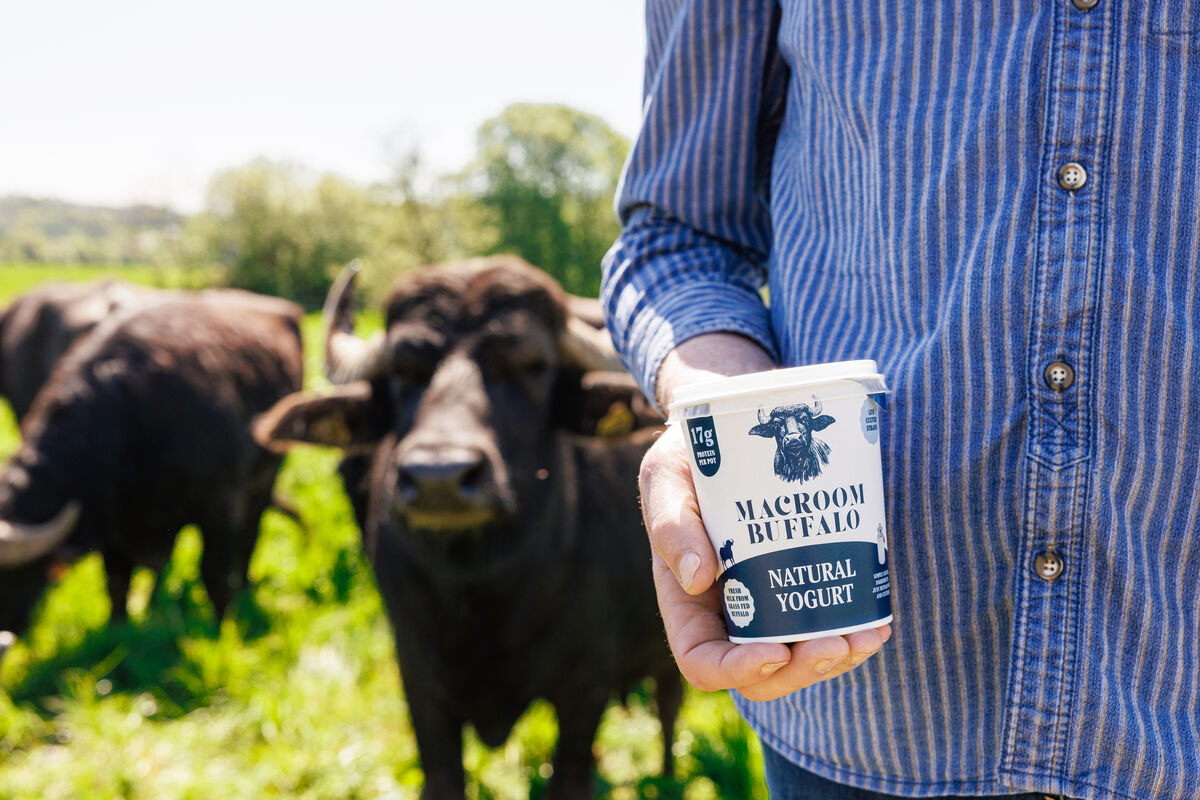
Next to the milking parlour on the farm is a production facility where renowned cheesemaker Sean Ferry — formerly of the West Cork Natural Cheese Company — produces a range of full-flavoured buffalo-milk mozzarella, burrata, bocconcini, a feta-style cheese, ricotta, buffalomi (halloumi-style) cheese, cheddar, and paneer.
The latest innovation is a range of buffalo yoghurts — natural, vanilla, and strawberry — which have a rich flavour and texture due to the milk’s increased protein level.
Unlike Italy, where the buffalo live predominantly indoors, Mr Lynch’s buffalo spend most of the year outdoors, feeding on grass and homegrown crops such as kale for additional nutrition.
‘The Grass-Fed Milk Story’, a paper published by the Fermoy-based Teagasc Food Research Centre in 2019, notes pasture feeding increases “the content of some beneficial nutrients such as omega-3 polyunsaturated fatty acids, vaccenic acid, and conjugated linoleic acid, while reducing the levels of omega-6 fatty acids and palmitic acid”.
While the research paper focused on dairy cows rather than buffalo, it concluded that milk from grass-fed animals had “improved nutritional status”.
Mr Lynch feels strongly about the nutritional content of his milk, and because there is a lack of research into buffalo milk nutrition here, he’s working on ways to analyse it.
When he embarked on his buffalo adventure, he got some strange reactions from fellow farmers, but they didn’t deter him.
“They were saying, ‘What in the name of God is he doing?’ I wouldn’t blame them one bit,” he says, “but it has really taken off. We have 24 people working on site between the farms and the cheesemaking and it is still growing.”
The next generation — his son Kieran — is now involved as well.
Making an Irish family farm sustainable for the future by using the land to bring nutritious buffalo milk into the mainstream is a unique path. These buffalo still have some way to roam.
- Macroom buffalo cheese and yoghurt are available in supermarkets or direct from the farm. For more information, see macroombuffalocheese.com