A German classic: How to make Bake Off star Jurgen Krauss' soft pretzel recipe
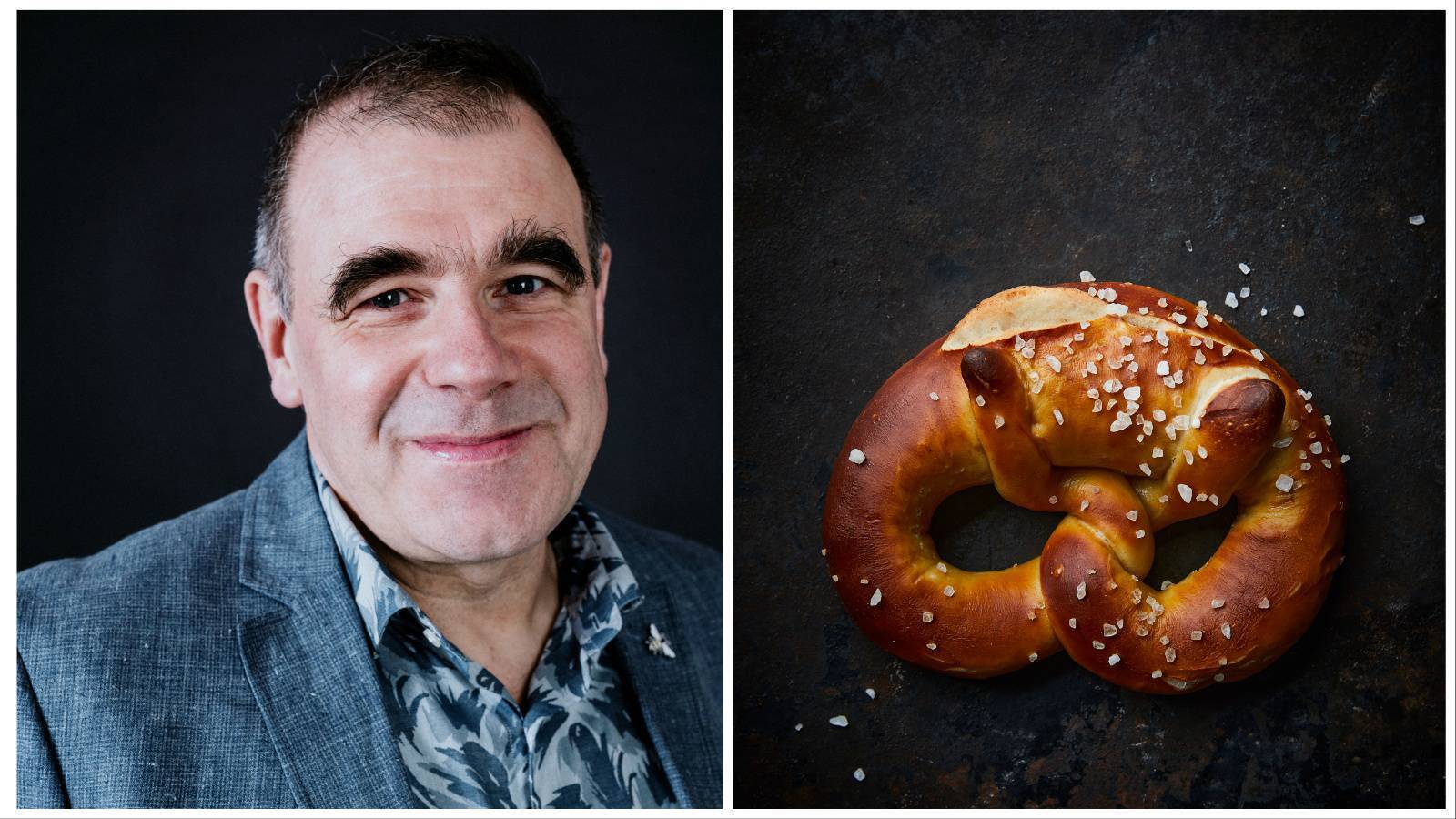
Jurgen's soft pretzel recipe
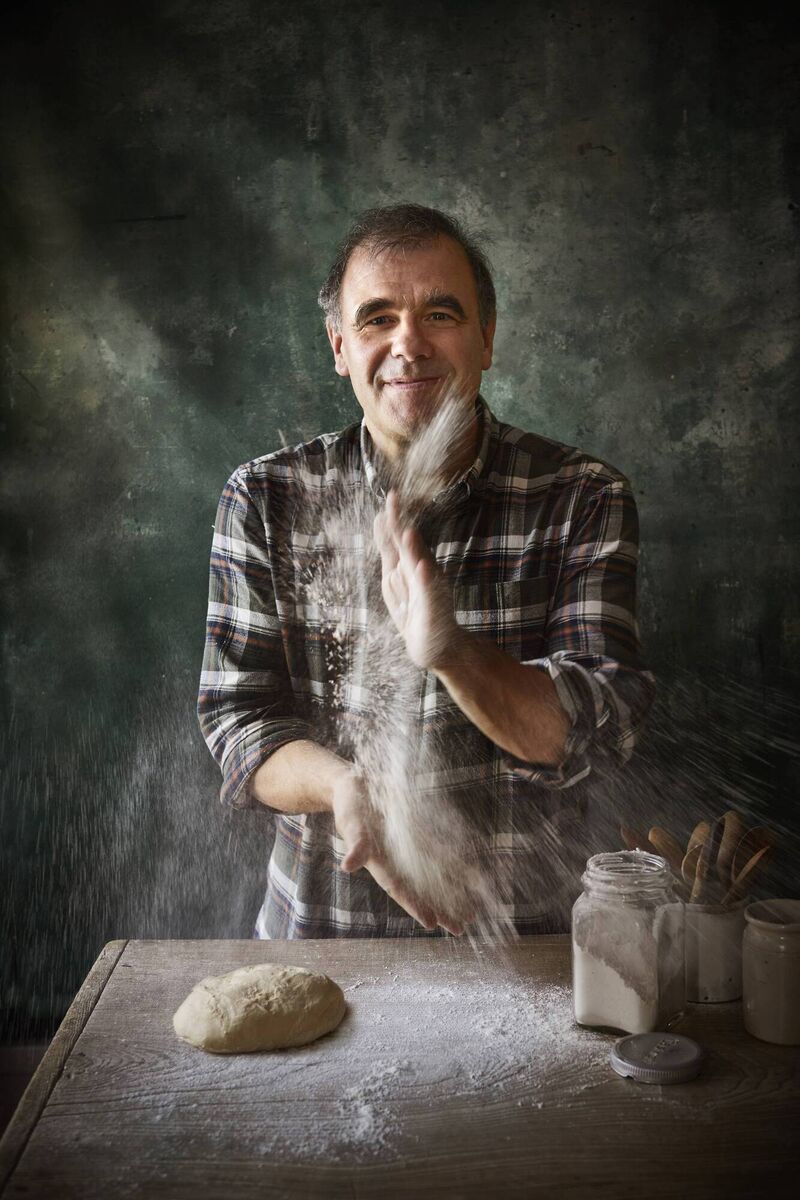
Jurgen Krauss’s elimination from the 2021 Great British Bake Off caused such a scandal, Ofcom received 115 viewer complaints.
The lovable German baker was seen as a top competitor, winning three star baker prizes before being booted off in the semi-finals.
Nearly two years on, Brighton-based Krauss, 58, has no hard feelings – but he did see the uproar coming.
“I had a feeling there would be complaints – a feeling that people would take it very seriously,” he says.
But he still has only good things to say about the show, noting the “overwhelmingly positive reaction was quite amazing”, and crediting the experience with boosting his baking skills massively.
He speaks particularly fondly about the period before the competition started, when the contestants were in a bubble and testing their recipes.
“We had nine weeks to prepare one signature and one showstopper each week and submit the recipe – that was really a huge time for growth,” he says.
He calls this a period of “non-stop new ideas, non-stop new processes”, adding with a wry laugh:
Many of the bakes Krauss made on the show were inspired by his childhood in the Black Forest, Germany. This formed the start of his new cookbook, aptly called German Baking: Cakes, Tarts, Traybakes And Breads From The Black Forest And Beyond.
“During Bake Off, the briefs of all these signature bakes often included references to childhood that really reconnected me to my culinary home, to the Black Forest and the cooking of my parents, the things I liked to eat as a child or teenager, or while I was studying.”
Some of Krauss’ favourite food memories growing up are from the period before Christmas. “My brother and I, we were always in the kitchen with my mother, we were always part of cooking and baking Christmas – the time before Christmas was always amazing,” he remembers.
“It was fun, getting hands sticky in dough and tasting it all, and using ingredients like kirsch [brandy made from cherries]. I didn’t think much of it, being able to make cakes like cheesecakes or Linzer torter [a spiced tart that would kick off the Christmas period in Krauss’ household].
“But then much later, after the move to England [in 2003], I really took a deep dive into making bread. After 10 years or so, I really was craving German bread.”
From apple marzipan tarts to the classic Black Forest gateau, Krauss’ book is an ode to his childhood and where he grew up.
“Black Forest is an interesting region, because it has influences from France and Austria,” Krauss explains.
“It had a varied history. It was Austrian for almost 200 years – you get dark breads, but rye isn’t such a dominant grain as it is in other German areas. That’s the Austrian influence – you get a lot more wheat and you get things like pancakes and dumplings, more than in other German areas, which is clearly inspired by the Austrian kitchen.
“You have also a huge influence from France and Alsace in terms of day-to-day cooking, so it’s a bit of a conglomerate.”
Despite its name, Krauss suggests the Black Forest gateau was actually invented in Dortmund – a city around five hours’ drive away from his home.
“But it has become iconic because on the borders of the Black Forest in the Rhine Valley there are huge orchards and cherries grow very well there. Making kirsch has a long tradition, making fruit brandies has a long tradition in the Black Forest because of that.”
Other recipes in the book include the Flammkuchen, or what Krauss describes as “kind of a Black Forest pizza”.
“It’s an unleavened bread, so you could say it’s a matzah with sour cream on it, and you can put lardons on it, onions, or you can make it sweet with cinnamon sugar and apple slices. It’s really so easy – you can have it ready in 20 minutes, from start to finish. You just need to have an oven that goes really hot.”
While the book is all about traditional German baking, Krauss has added the occasional modern twist.
He says animal products are prominent in German cooking, “And they don’t run very strongly through my bakes in the book, because I wanted to make it appealing to a very wide audience. So I didn’t use lard, where a traditional Black Forest baker would probably use lard or lardons – things like that. I definitely scaled back on that. You would make dumplings or doughnuts in lard, you would fry them in lard – this sort of thing has lost its appeal over the last few years I think.”
While he’s still known to many as ‘Jurgen from Bake Off’, Krauss says he’s come a long way since the show.
“I feel much more in command of things,” he muses.
“It feels a lot easier for me to change things. I got to a stage in bread baking where I can go fancy and know the outcome will be OK. I never had that with sweet things before Bake Off.
“But now I can see how to change ingredients and how recipes work in general – so that’s a huge change.”
Jurgen Krauss’ soft pretzel recipe
It’s a German classic for a reason.
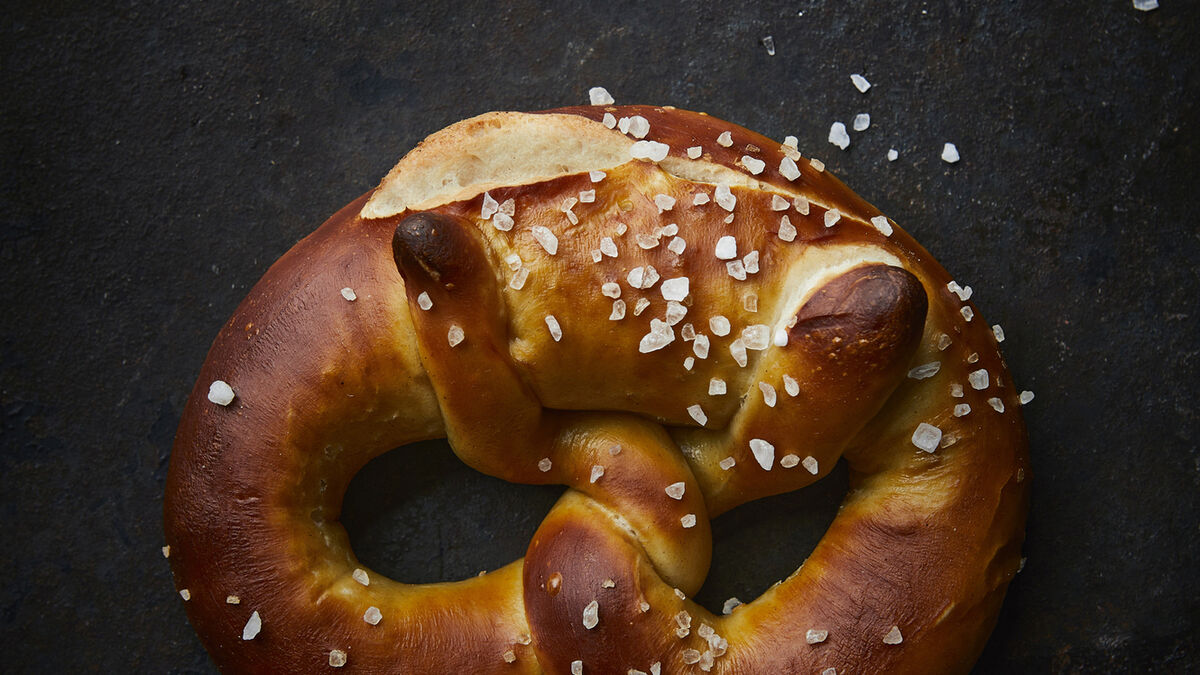
Servings
10Preparation Time
3 hours 0 minsCooking Time
15 minsTotal Time
3 hours 15 minsCourse
BakingIngredients
For the starter:
100g bread flour
2g salt
1⁄8tsp instant yeast
65ml water
For the dough:
400g bread flour
9g salt
20g honey
5g instant yeast
25g unsalted butter, room temperature
180ml water
Coarse salt crystals, for sprinkling
For the lye or bicarb dipping solution:
2L water
8g salt
80g bicarbonate of soda or 80g sodium hydroxide pellets
Method
Prepare the starter the day before baking. Combine all the ingredients in a bowl and mix with your hand or a spatula until all the flour is incorporated. Cover with clingfilm and leave to stand at room temperature for about two hours. Then put the starter in the fridge overnight until you need it – it will be good to use for up to three days.
About one hour before making the main dough, take the starter out of the fridge.
To make the main dough, combine all the ingredients except the salt crystals and the starter in a bowl and mix with your hand or a spatula. The resulting dough will be very stiff. Knead the dough on a work surface for about 10 minutes. Don’t use any additional flour, you won’t need it anyway. The resulting dough should be smooth and a bit elastic. Put the dough into a bowl, cover and prove at room temperature for about two hours. Fold the dough once after one hour.
Meanwhile, prepare the dipping solution. Use a big stainless-steel pan and stainless-steel spoons for dipping. Cover your normal work surfaces in case the lye spills. When dipping, keep the baking sheets very close to the lye pan and the oven. Always wear protective gloves and goggles when working with sodium hydroxide and lye. Never ever touch sodium hydroxide pellets with your skin.
If using bicarbonate of soda, bring the water to boil. Switch off the heat, add the salt and stir. Then add the bicarbonate of soda – there will be a bit of frothing and splashing, so be careful. Leave to cool.
If using sodium hydroxide, put the water in the pan and then add the sodium hydroxide pellets. Sodium hydroxide creates a lot of heat when it dissolves.
Once the dough has proved, divide it into pieces weighing 85 grams each. Roll each piece of dough into a cylinder. Once all the pieces have been rolled, start again with the first piece, to roll it into a long strand with thin ends and a belly in the middle. Aim for a length of 60 centimetres. Make sure you don’t tear your strands – if there is too much resistance in the dough, move on to the next strand. You will need several cycles to reach the length required.
Now shape the pretzels – the bakers use a slinging method, but there is a simpler, slower way to do this. Make sure the ends of the little arms are well attached to the middle bit.
Place the pretzels onto lined baking trays, cover and leave to prove at room temperature for about 45 minutes. Uncover the pretzels and put them in the fridge for 30 minutes, so that a skin can form. Preheat the oven to 230°C fan/gas mark 9.
Take the pretzels out of the fridge. Dip each pretzel in lye or sodium carbonate solution for about five seconds. Transfer the pretzel back onto the lined baking sheet. One sheet will hold four to five pretzels. Once the sheet is full, slash the thickest part of the pretzels with a sharp serrated knife and sprinkle with salt crystals. Transfer to the oven immediately and bake for 12–15 minutes. Leave to cool on a wire rack. Repeat with the remaining pretzels.
Because of the salt, these pretzels are best eaten fresh.
Jurgen Krauss’ babka chocolate braid recipe
Try out your braiding skills with this pretty bake.
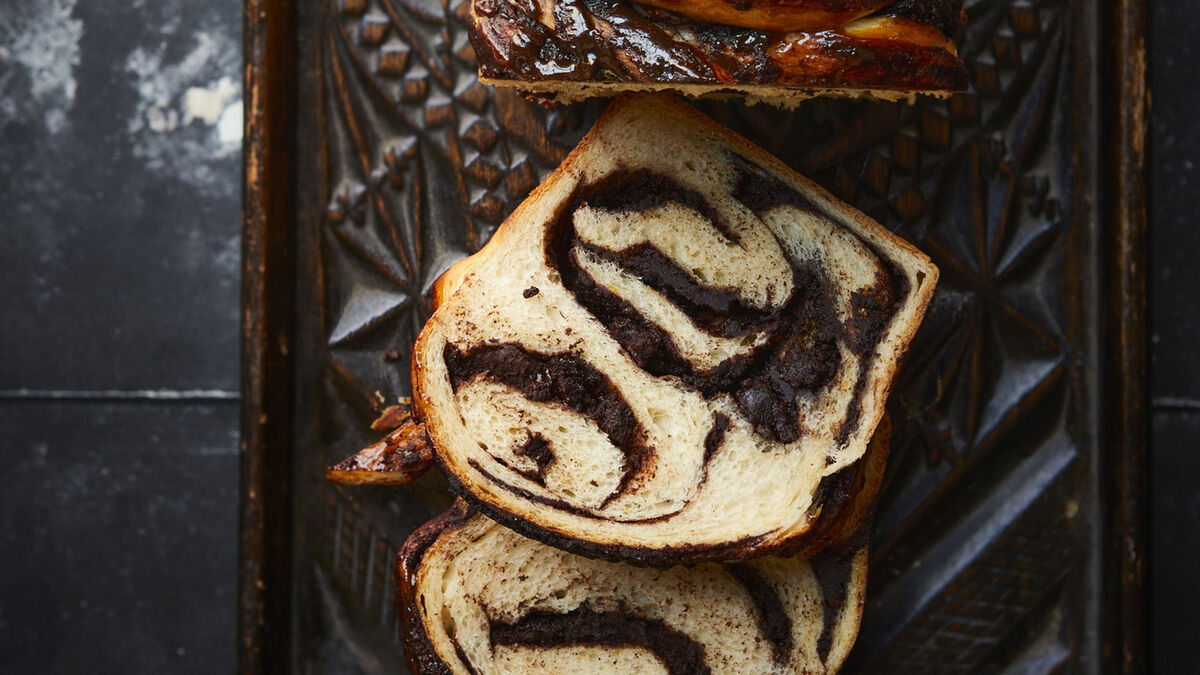
Servings
15Preparation Time
1 hours 40 minsCooking Time
40 minsTotal Time
2 hours 20 minsCourse
InputIngredients
- For the dough:
190g bread flour
140g white spelt flour or plain flour, plus extra for dusting
6g instant yeast
1 pinch salt
40g caster sugar
180ml whole milk
1 medium egg
40g unsalted butter, softened
Zest of 1 lemon
Zest of 1 orange
½tsp ground cardamom
For the filling:
100g dark chocolate (54% or 70% cocoa solids, to taste)
60g unsalted butter
60g soft light brown sugar
2tsp ground cinnamon
½tsp ground cloves
30g cocoa powder
Unsalted butter, melted, or apricot jam for glazing
Method
For the dough, put all the ingredients in a bowl and, using your hands or a stand mixer fitted with the dough hook, mix the ingredients until evenly distributed. Then knead the dough for several minutes until it has a smooth and silky texture. Cover with a tea towel or a plastic bag and leave to prove at room temperature for about one hour. Check with the poke test that the dough is ready.
Meanwhile, prepare the filling. Put the chocolate, butter and sugar into a pan and melt over low heat. Once liquid, take the pan off the heat and add the cinnamon, cloves and cocoa powder. It’s OK if the filling looks grainy.
Line a 950g loaf tin with baking paper.
On a lightly floured surface, roll out the dough to a rectangle measuring about 50 x 30cm. Spread the chocolate filling over the dough rectangle, leaving 2cms of the far short edge uncovered. Roll up the dough rectangle, starting at the near short edge. Seal the seam by pinching it.
Place the roll on a work surface with the seam facing down and, with a sharp knife, cut the roll lengthwise into halves. Twist the halves together to form a rope. You can do this starting at one end and twist this half of the roll, and then do the same for the other half; this way you don’t have to manipulate the whole length at once.
Place your hands palm down on the ends and, with a scooping movement, bring the ends to meet underneath the middle of your rope. Transfer this into the lined tin, and cover with a tea towel or a plastic bag. Leave to prove for 30 minutes to one hour until the Babka is well risen and the dough starts to feel fragile; a gentle touch with a finger will leave a dent that only slowly recovers.
Preheat the oven to 170°C fan/gas mark 5.
Bake the babka for 30-40 minutes.
Melt the butter for glazing or heat the apricot jam with a teaspoon of water. Brush the babka with melted butter or jam as soon as it is out of the oven. Leave to cool for about 15 minutes, then carefully remove from the tin and baking paper.
Let the babka cool completely before eating. Stored in an airtight container it will last for three days.
- German Baking: Cakes, Tarts, Traybakes And Breads From The Black Forest And Beyond by Jurgen Krauss is published by Kyle Books on August 31. Photography by Maja Smend.