Bittersweet Symphony: Ireland's new generation of ethical chocolate-makers
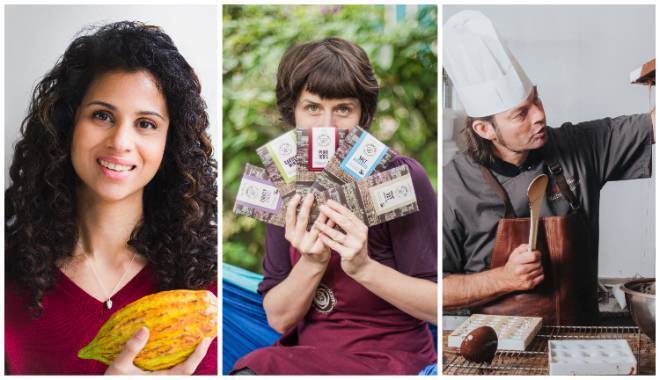
Some of Ireland's new chocolatiers: Shobitha Ramadasan; Allison Roberts; Benoit Lorge
While lambs won’t be relishing the prospect of Easter, it is at least the one time of year when egg-laying hens take a breather as the nation’s egg consumption switches almost entirely to the foil-wrapped, and sweet chocolate variety, the time of year when the Irish love affair with the cocoa bean reaches its zenith.
According to Euromonitor, we are the third highest consumer of chocolate in the world, at a staggering 7.4kg per person each year. But it might well be argued that we are consuming an awful lot of chocolate-flavoured confectionery and far less actual chocolate, an argument the only two nations to top our consumption—Germany (7.9kg pp) and Switzerland (9kg pp)—would agree with, taking the opposing side in an EU battle at the turn of the century as to whether ‘chocolate’ produced in Ireland and Britain could even be called ‘chocolate’.
This was only settled in 2003 by a special EU derogation allowing the Irish and British versions to continue to be sold in continental Europe as ‘chocolate’ though it contains significantly lower cocoa mass than the EU minimum of 25% and also substitutes cocoa butter with vegetable oils and other lesser fats.
In other words, we were raised on something that had little connection with real chocolate but over the last couple of decades that has started to change. We have begun to learn to appreciate the real deal, beginning with the opening in 2000 of The Chocolate Shop, in the English Market, Ireland’s best chocolate shop, not least for its superb range of premium international speciality bean-to-bar (BTB) chocolate.
For nine-tenths of its long history, chocolate was drunk rather than eaten. Ironically, considering the above-mentioned contretemps with the EU, a British firm, JS Fry & Sons, was the first to produce chocolate as an edible bar, in 1847. The BTB phenomenon, where a producer carries out the entire process themselves, turning raw beans sourced from a single area, sometimes even a single plantation, into finished bars of premium quality chocolate, is still a mere chronological blip in chocolate’s history but they are very much here to stay.
A MOOD-BOOSTER
If you’ve grown up only eating traditional Irish chocolate confectionery, the initial complexity of taste can almost overwhelm the novice palate. But once you come to appreciate the astonishing and delightful complexities of flavour — unlike industrially produced chocolate, which is all about consistently delivering an identical flavour every time — all other lesser confectionaries pale into insignificance; and the difference between industrial ‘chocolate’ and proper chocolate is akin to the difference between wine gums and fine wine.
In his 1990 book, Les Vertus Thérapeutiques du Chocolat, French doctor Hervé Robert stated that chocolate’s alkaloidal cocktail of caffeine, theobromine, serotonin and phenylethylamine made it quite the tonic, an anti-depressive and enhancer of pleasures, including sex. Indeed, it is claimed Montezuma drank chocolate all day long, to better to service his concubines.
Whether purported aphrodisiacal powers are real or not, there is no doubt alkaloids (complex organic plant compounds found in just 10% of the world’s plants) have physical consequences and benefits when ingested and only became available to Europeans in the 17th century with the arrival of tea, coffee and, yes, chocolate.
It is believed chocolate was first produced some 3,000 years ago by Mexico’s earliest civilisation, the ‘Olmec’. It is a complex and laborious procedure—both husbandry of the notoriously fickle cacao tree and the process of turning its beans into chocolate—suggesting an extremely advanced society possessed of time and wherewithal to produce such a premium product.
The cacao tree produces fruiting pods containing the beans and can only be grown under specific conditions—wet, humid, hot and solely in a band 20 degrees above and below the equator. The bitter beans are first fermented to develop flavour after which they are dried and roasted. The beans are then ground, removing the shell to leave cacao nibs, which yield cocoa solids or cocoa mass and cocoa butter.
Pure chocolate is made up of cocoa mass, cocoa butter and sugar and nothing more; proper milk chocolate, made with 50% cocoa (butter and solids) also contains milk, either powdered or condensed. Irish ‘milk chocolate’ (Dairy Milk etc) usually contains more milk again, up to 20% vegetable oil and 20% cocoa solids at most.
Before the advent of the BTB chocolatier, professional high-end chocolatiers and pastry chefs worked with (dark, milk or white) couverture chocolate, usually, large slabs with extra cocoa butter which is then ‘tempered’, a process of heating then cooling the couverture to form a specific crystal structure which gives a good quality bar of chocolate its high sheen and deeply satisfying ‘snap’ when broken, and ensures a smoother mouth feel.
Indeed, several of the chocolatiers featured here still work with premium couverture. Gráinne Mullins, whose Grá chocolates are delicious handmade chocolates incorporating her self-created fillings with ingredients sourced from the Irish ‘larder’, uses couverture from French company Valrhona, founded in 1922, now one of the most respected and renowned chocolate producers in the world. Benoit Lorge, one of the pioneering chocolatiers in Ireland travels each year to another of the chocolate aristocrats, Cacao Barry, to create his own personal couverture, a 73% cocoa blend combining beans from Tanzania, Venezuela and Mexico.
BUILDING UP A PALATE
It was actually Valrhona who broke the ground for the BTB revolution by acknowledging the importance of terroir and the origin of individual beans and creating their own single-origin bars. The Chocolate Shop began selling them soon after they opened but bars often grew stale on the shelves as it took almost five years for the local audience to build up a palate for these infinitely more sophisticated and complex flavour profiles.
Then came the second wave of smaller artisan BTB makers, beginning with Willie’s Cacao, brainchild of Willie Harcourt-Cooze, raised in West Cork, schooled in Cork city, who captured the public imagination with his 2008 Channel 4 TV series, Willie’s Wonky Chocolate Factory.
The first Irish BTB chocolatier was Shana Wilkie, who began experimenting in the 2000s in her tiny urban cottage in Dublin, and when she finally brought her bars to market they were quite superb, of international standard. Wilkie is now retired from chocolate making, but the mantle has been assumed in very fine fashion by a number of BTB makers around Ireland, including NearyNógs, in Co Down, Allison Roberts’ Exploding Tree, in Clonakilty and the excellent Dublin-based Proper Chocolate Company amongst others.
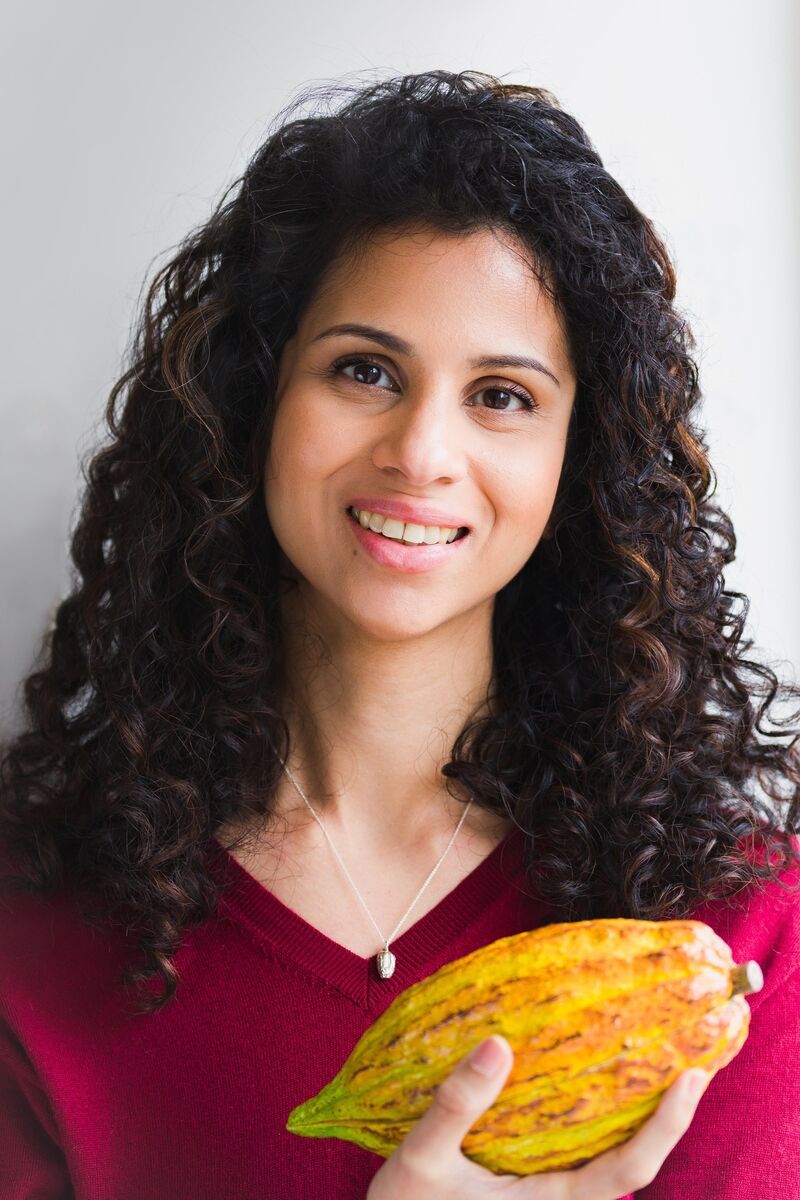
And now, as we find ourselves appreciating the flavours of real chocolate, the universe conspired to send Shobitha Ramadasan to Ireland, her French husband relocating to Dublin for work. But if her arrival contained an element of chance, it was entirely by design that Shobitha ditched her high-flying job as a successful French corporate lawyer several years ago to train under internationally renowned chocolate and cacao specialist, Chloe Doutre-Roussel, and is now the first ‘chocolate sommelier’ in Ireland, delighted to be here and very intrigued by all things chocolate in Ireland, especially impressed with Rose Daly’s Chocolate Shop.
THE EFFECTS OF CLIMATE CHANGE
If we are only slowly coming to terms with the meteorological impact of climate change on our surrounding environment in Ireland, that specific equatorial part of the world where cacao beans are grown is dealing with a much starker reality, with deforestation, high temperatures and droughts meaning many areas will no longer be suitable for cacao production in 30 years if something isn’t done — and these cacao farmers have traditionally always been the very worst remunerated in the international chain of middlemen, manufacturers and retailers that delivers our beloved treat.
It will be ironic indeed in years ahead if some of the climate change ostriches finally see the light because they have to pay over the odds for a bar of chocolate or perhaps can’t get any at all but there is no escaping the fact that one of humanity’s greatest shared epicurean pleasures, that of eating good chocolate, has now taken on a distinctly ethical consideration.
“Chocolate is not a priority,” says Shobitha, “but at the end of the day we are all still human — if we are going to indulge, let’s indulge with some awareness.”
Bizarrely, it is the industrial food sector that is responsible for almost all the iniquities of the food production system, yet always the consumer who is berated for not being more mindful of their purchases when it comes to sustainability and fair trade, more difficult again when that same industrial food sector puts billions each year into marketing campaigns to further blur the lines. When it comes to chocolate, though, there is a rather simple way to cut through the fog: almost invariably, ethically produced chocolate will retail at a higher price.
“Truly ethical and sustainable chocolate is not going to cost you one or two euro,” says Shobitha, “because when you look at the breakdown of the costs to make a good bar of chocolate, and what it takes to pay the cacao farmers a living wage in their own countries, if you pay one euro for a bar then that means someone else, in the chain — and that is invariably the farmer, the very first person in that chain and without whom there would be no chocolate — has had to ‘pay’ the four or five euro that it costs.
It is pure logic that the primary producer’s cut has to be the smallest because in between there are all the middle men who have to have their cut. And therein lies the difference with BTB because its about keeping the supply chain as short as possible and keeping a fair wage for their labour and craftsmanship, but also realising we have to find ways to put more value back in cacao’s origin, in cacao growing countries.
“What’s really great in Ireland in particular is there is already so much awareness about sustainability and sourcing, a real concern about the foods that we put on our table, and this must extend to chocolate as well.”
Meet the chocolatiers
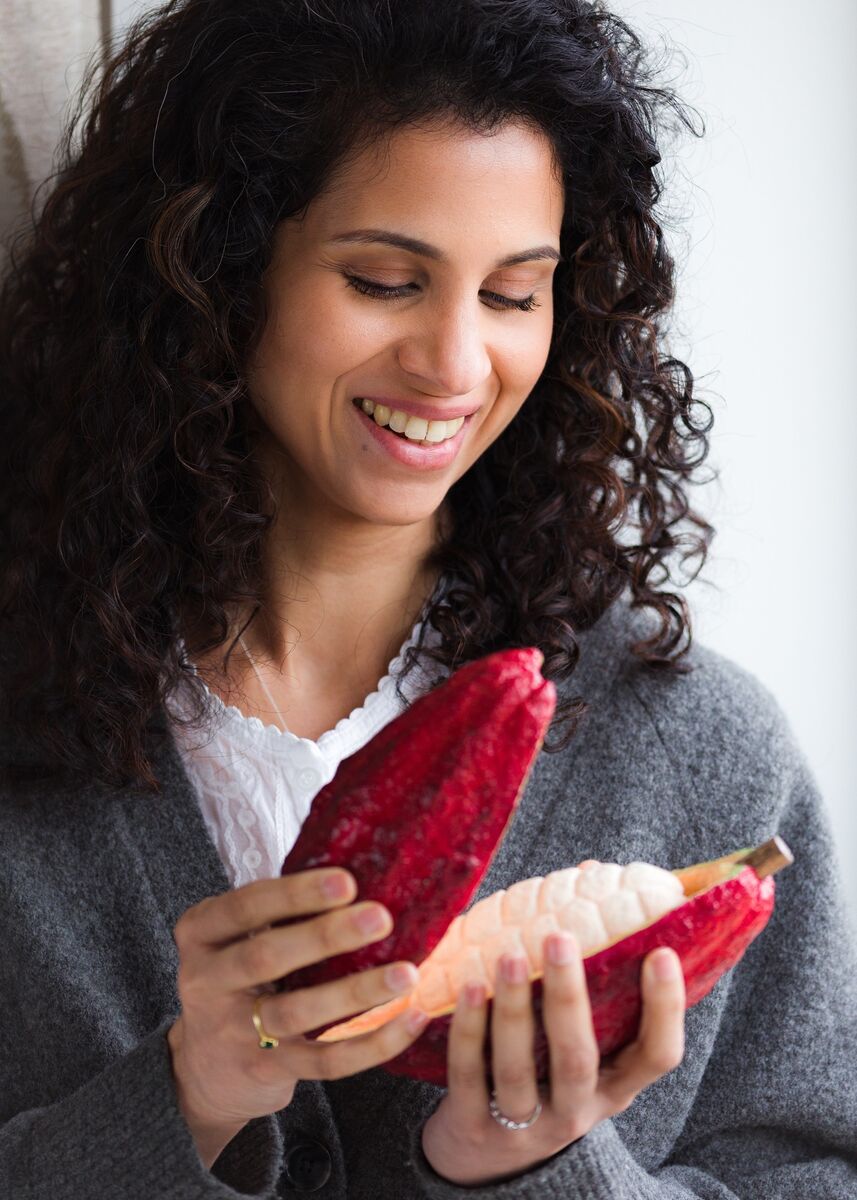
Shobitha Ramadasan, chocolate sommelier
Shobitha left a high-powered career as a lawyer in France to train under the Chloe Doutre-Roussel, one of the world’s foremost cacao and chocolate experts and, now living in Dublin, she is Ireland’s first ‘chocolate sommelier’ (www.chocolatesomm.com).
“I’m not saying its wrong to indulge in your favourite supermarket bar, I would never tell anyone what is wrong or right; it is just two totally different products. Cadbury’s Dairy Milk was the gold standard when I grew up in Malaysia and you didn’t really want chocolate, you wanted ice cream because it’s hot and tropical. I didn’t learn what good chocolate was until I got to France – the value of good cacao and craftsmanship. I look for any chocolate that can take me on a flavour journey. My favourite way to enjoy it is to take my time, like a fine glass of wine, savoured, sipped not gulped.
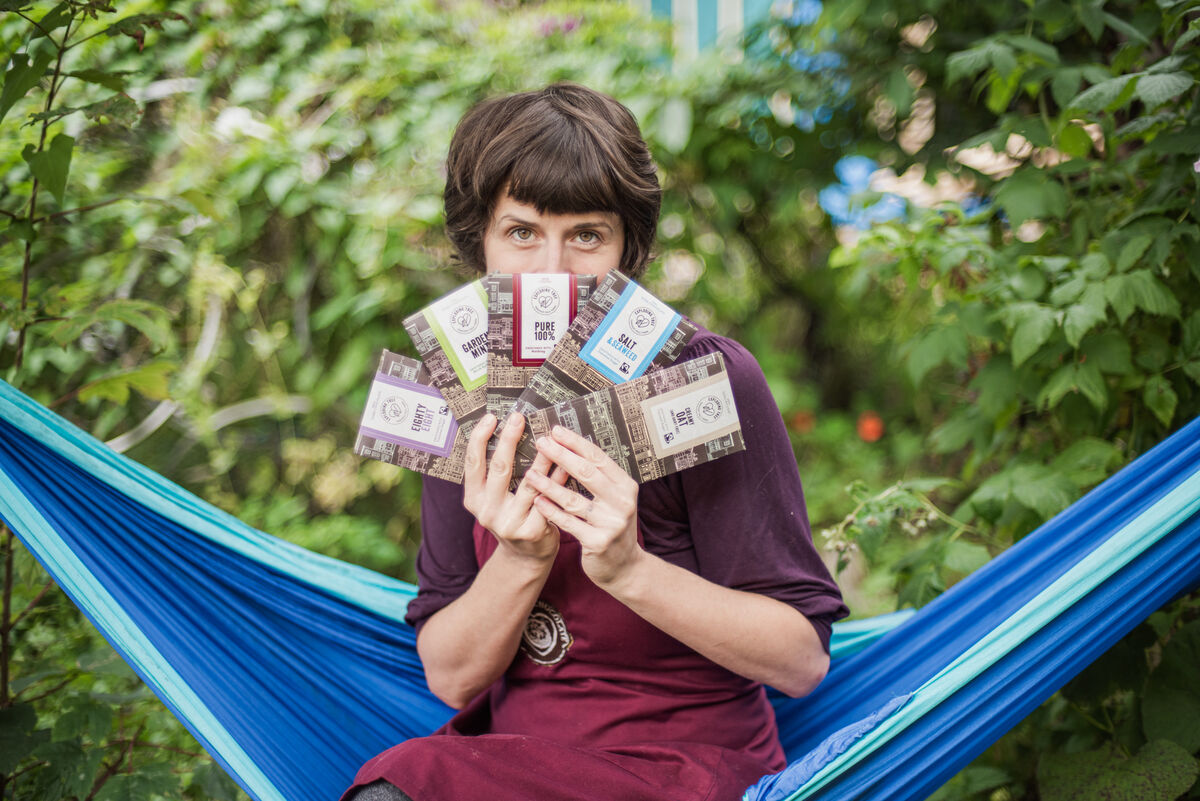
Allison Roberts, Exploding Tree
Canadian-born Allison’s range produced from cacao beans in her micro-factory, places ethical considerations front and centre, from direct relationships with growers to sustainable packaging (she even sells unwrapped chocolate!) and transport, and her range includes vegan, dairy- and gluten-free, and even goat’s milk chocolate.
“In our culture chocolate has become synonymous with gift giving and love and luxury, we think of it as a special gift. As a food it has a very interesting history and the more you learn about it the more you appreciate the depth; it is not shallow, it has a very rich history, and amazing health properties, a very mystical ancient food and even though we don’t think about it that way, it is there subliminally. Even though you might only pay a few euros, you bring it to a dinner party; you wouldn’t bring a bag of boiled sweets – there is something special about chocolates.”
Gráinne Mullins, Grá Chocolates
Galway-born Gráinne started as a pastry chef in Michelin-starred restaurants before becoming a chocolatier with her Grá chocolates, one of the hottest products in the Irish food world over the last two years.
“Chocolate makes people happy, it evokes memories and when they know it’s ethically made with finest quality ingredients it creates something special inside someone.”
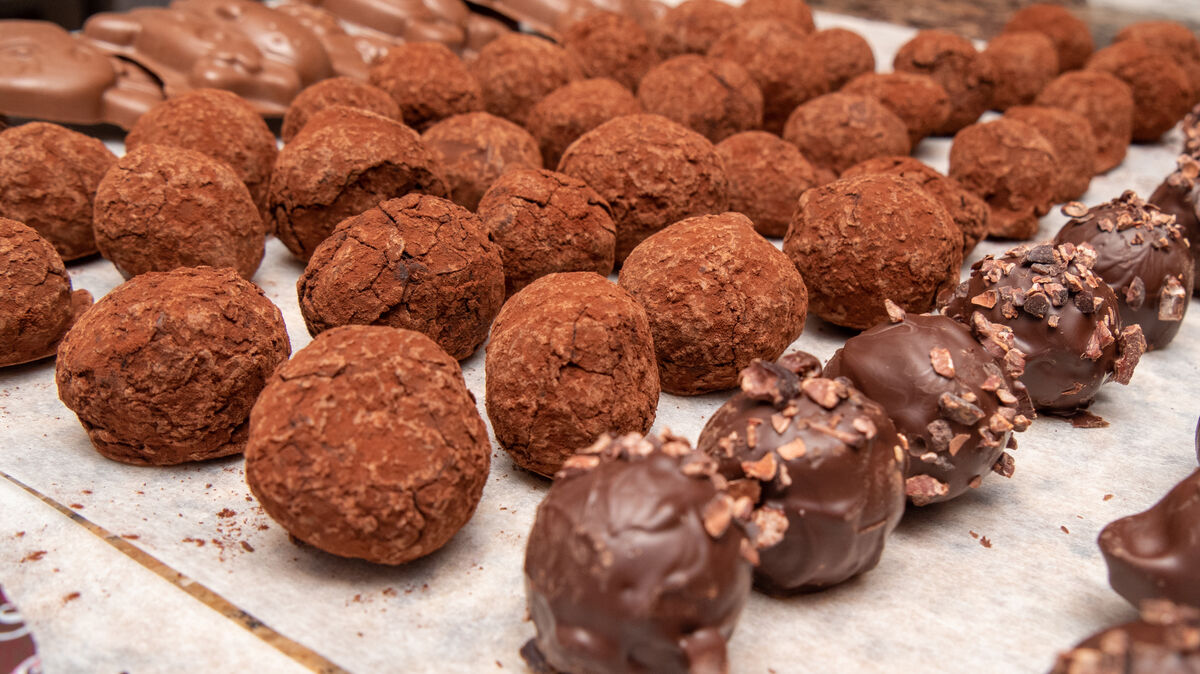
Benoit Lorge, Lorge Chocolatier
Benoit trained as a pastry chef and came to Ireland from France in 2000. He founded Lorge in 2004 and soon began delivering still very popular chocolate-making classes alongside his excellent range of chocolates and filled chocolate confections.
“During the pandemic and the recession before it, chocolate sales didn’t drop, not mine and in general. I had a builder in one of my classes and he said he was there in case there was another recession because chocolate-making is bulletproof!”

Karen and Natalie Keane, Bean & Goose
Sisters Karen and Natalie Keane own and operate Bean & Goose in Co Wexford producing a range of chocolate that is as good to look at —packaging included!— as it is to eat.
“Chocolate is a pleasure,” says Natalie, “naturally joyful and we started Bean and Goose to make joyful and thoughtful chocolate. To take back what others had distorted in the race to create more things, cheaply. Chocolate no longer tasted good, the packaging no longer felt special. It didn’t mean luxury and had become a rushed last minute gift. And behind all of this was damage to the planet and its people.”


Cancel anytime