Seagull Bakery: this Waterford bread has the taste of more
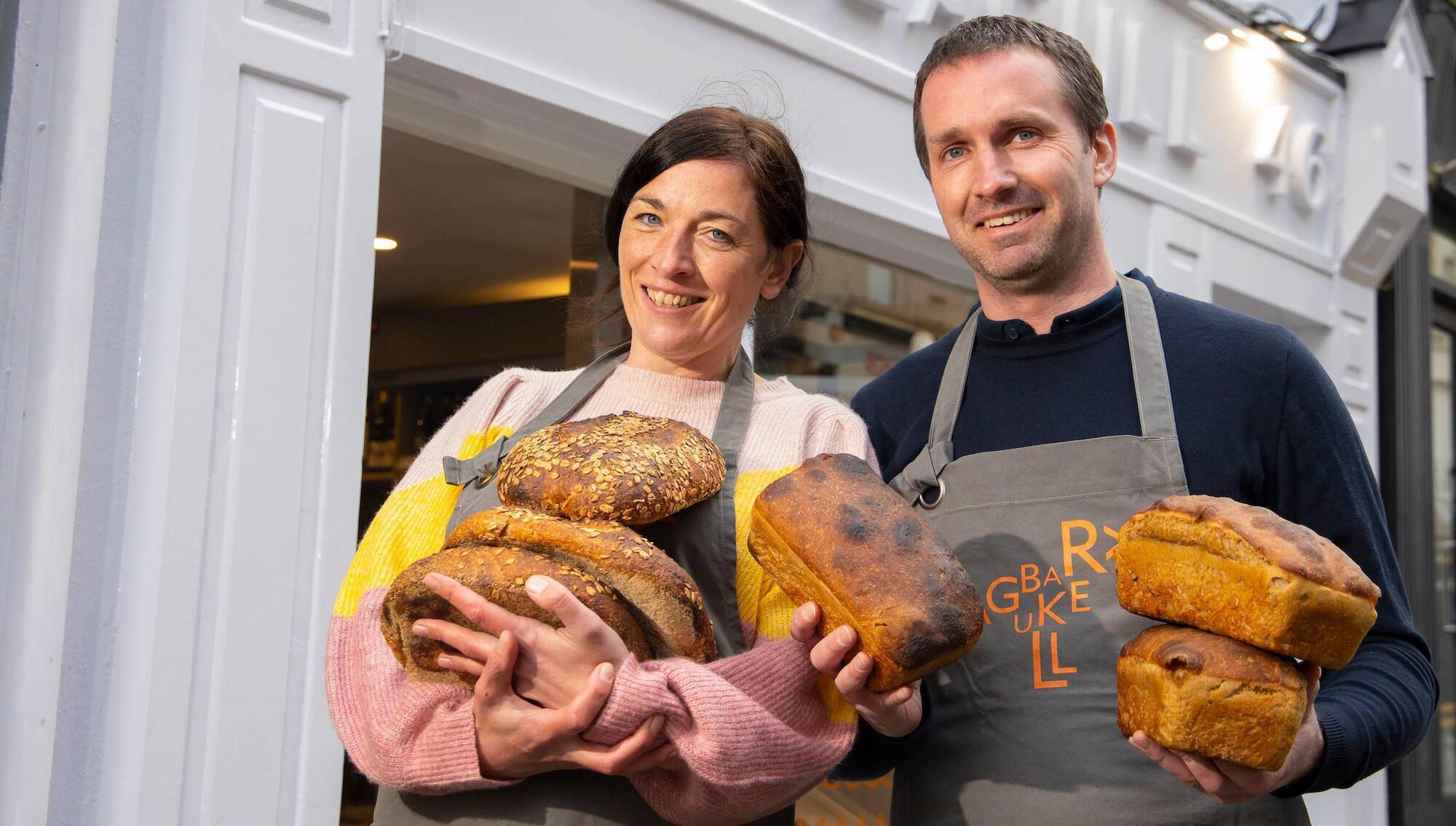
Sarah Richards of Seagull Bakery uses Irish-grown flours to bring flavour and nutrition to her bread and support a local grain economy
Seagull Bakery: this Waterford bread has the taste of more

Lisa Richards and Conor Naughton, owners of Seagull Bakery. Picture: Patrick Browne

Oland, rye, purple wheat, spelt, emmer and einkorn: when Sarah Richards of Waterford’s Seagull Bakery talks about the Irish-grown flours that she uses, it’s a litany of grains from local producers.

Richards uses these grains to produce delicious sourdough loaves that are nutritionally dense and support the local grain economy. For her, it’s a natural evolution through 20 years of baking, starting out with simple yeast bread, a move into working exclusively with sourdough and now using Irish flour in the majority of her loaves.

Tramore native Richards studied art at Cork’s Crawford College of Art and Design and got involved in bread as a sideline to her painting practice. After completing the 12-week course at Ballymaloe Cookery School and a stint working at Declan Ryan’s Arbutus Bakery, she started making bread to sell. Richards built her business slowly, first baking at Tramore’s The Vic Deli then — as the first of three children arrived — in her home kitchen where she made a name for herself by selling at farmers’ markets.

In 2013, it was time for the next step: “Just before my son was born, I went fully sourdough, converted my art studio into a bakery and gave up selling art.”

The art world’s loss was a gain for Waterford consumers as Richards focused on producing bread that was “much easier to digest, much tastier, more interesting to make and had less chemicals.”

CLIMATE & SUSTAINABILITY HUB

Seagull Bakery: a bread that's "much easier to digest, much tastier, more interesting to make and had less chemicals"

Fermenting change

She was inspired by a course she did with British bread expert and organic baker Andrew Whitley, author of the seminal Bread Matters (2009). “I was living on his words and looking at the provenance of the flour, the nutrients in the flour and the health benefits of how those nutrients become bioavailable to the body when [the dough] is fermented.”

It wasn’t the easiest move for Richards initially, with resistance from customers who already enjoyed the bread that she made.

“The regulars all came around eventually,” she notes, “but there was a lot of ‘can you not make that one that you used to?’ I’m stubborn, though, which helped.”

With the demand for her bread increasing, Richards and her husband Conor Naughton (“Conor is the business side, I’m the creative butterfly side,” she laughs) opened the first Seagull Bakery in Tramore in 2016. “The bread had only been available for a few hours at the market on a Saturday morning and there was a real pent-up demand.”

That first bakery only seemed to whet people’s appetite for sourdough; in 2021 Richards and Naughton opened two new Seagull Bakeries in Waterford City and Dunmore East.

Simultaneously, Richards’ focus on flour led her down a new path. For many years there was an accepted narrative that Ireland couldn’t grow milling wheat with enough protein to raise a yeast or sourdough loaf. When the EU awarded the Waterford blaa PGI (Protected Geographical Indication) status in 2013, it triggered Richards’ curiosity and she started researching.

A soft, floury bread roll that has been made in Waterford since the early 1700s, the development of the blaa is attributed to the Huguenot refugees that arrived from France in the late 17th century. For Richards, the fact that these white breads were made with leavened strong flour did not fit with the idea that Ireland could only produce flour with low protein content. She embarked on a quest to find Irish-grown high-protein flour that she could use in the bakery: “I kept hitting a wall in my research and wasn’t getting anywhere until I met Fintan Keenan and he was able to shed lots of light on the topic.”

A regenerative tillage farmer and miller, Keenan is originally from Co Monaghan, and runs an 80-hectare farm and mill in Denmark, growing and milling heritage grains for use in bread. According to Richards, his research into wheat grown in Ireland, through landlords’ records, “showed that there had been a lot of varieties grown in Ireland” but after World War II the focus shifted to grain that was higher in volume and easier to grow. A 2009 Teagasc wheat brochure states: “As protein is inversely related to yield, it is difficult to get high proteins from very high-yielding crops.”

Lisa Richards of Seagull Bakery. Photo: Philip Doyle

Against the grain

Richards discovered that Keenan, working with his Ireland-based brother, Turlough, had been growing oland and purple wheat varieties in Monaghan. Richards purchased a mill and, using the Keenans Monaghan-grown grain, made her first loaf from Irish-grown wheat. “It made a beautiful loaf, disproving the theory that you couldn’t grow strong bread flour in Ireland.”

In 2018 she got her hands on some squareheads master wheat, an old variety that provides straw for thatch and grain for bread. Richards started making an Irish heritage loaf in the bakery. “I’d just do it as a special on Saturdays. It was a hard sell. We were using stone ground flour [which looks darker] and people were just getting used to sourdough and I’m hitting them with this but we were all learning together.”

“We” included new growers like Emma Clutterbuck and Pat Foley of Oak Forest Mills, Rob Mosse from Kells Wholemeal and Andrew and Leonie Workman at Dunany Flour, people that Richards has worked with over the last few years to source flours like spelt, emmer, einkorn and rye.

“Cost is a factor,” Richards admits, “but the flour is worth it.” She manages her prices carefully: “I don’t want to be some pretentious bakery selling to well-off people. I want everyone to have access to this bread but we need to get the customers on board.”

Bakeries using more Irish-grown flour is a movement that has direct implications for sustainability and food security.

The more grain that is grown here, the less we will be subject to fluctuations in the international markets. At Seagull, Richards can now work from a range of flavoursome flours, challenging and changing people’s perceptions of the kind of bread that we can make in Ireland from locally grown grains, one delicious loaf at a time.

  • You can find Richards’ bread at Seagull Bakery shops in Tramore, Dunmore East and Waterford. Find out more at www.seagullbakeryshop.com or Instagram @seagullbakerytramore.

More in this section

ieFood

Newsletter

Sign up for our weekly journey into the best of Ireland’s food scene with recipes, reviews and stories from our award‑winning food writers.

Cookie Policy Privacy Policy Brand Safety FAQ Help Contact Us Terms and Conditions

© Examiner Echo Group Limited