Improve your health - by eating like a human
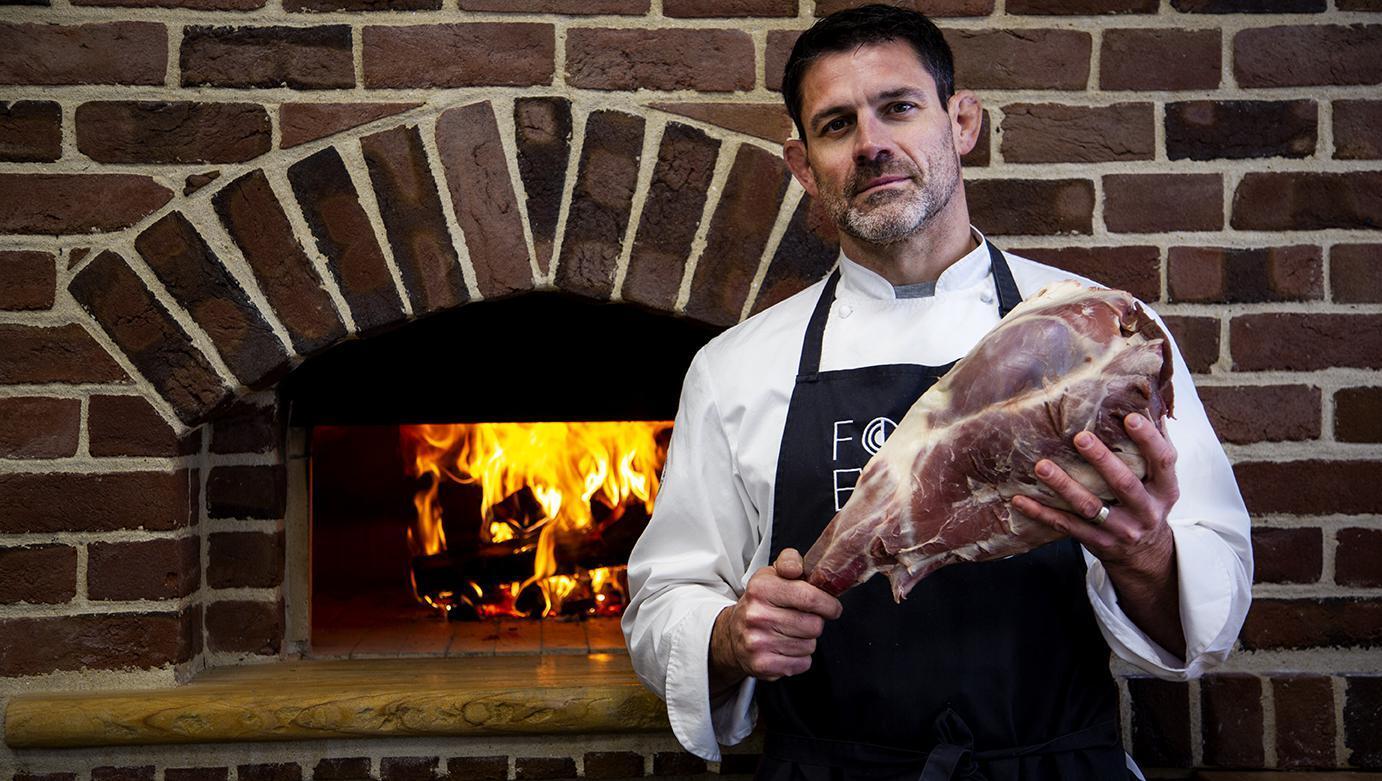
Modern-day hunter-gatherer Bill Schindler reconnects our dietary past with our present-day lives to make food as safe and as nourishing as possible
Improve your health - by eating like a human

NATURE’S BEST: Bill Schindler believes in going
back to primitive ingredients and food production -he drinks blood, forages in the wild, and makes his own butter.

A professor of anthropology is not necessarily someone that you expect to find writing a book about healthy food but in Eat Like a Human: Nourishing Foods and Ancient Ways of Cooking to Revolutionise Your Health (Yellow Kite) Dr Bill Schindler does exactly that. He’s adamant that this is not a diet book: “It’s an exploration of food,” says Schindler. “I don’t like the word diet, the connotation is short term for one specific goal. This is more of a healthy lifestyle book. It’s not restrictive.”

The wide-ranging nature of the book — with chapters focusing on food from plants, animals, grains, maize, dairy, bugs, earth/ash/charcoal and sugar — bears this out, as Schindler drinks blood, forages in the wild, plays with sourdough and makes his own butter. It’s experiential research with Schindler learning by doing: documenting nose-to-tail yak butchery in northern Mongolia, travelling to Thailand with his family to eat insects, a valuable source of protein, and discovering traditional tortilla production in Mexico City.

This quest to find a way of feeding himself and his family started with his unhealthy relationship with food. “I was overweight as a kid. I never saw food as something that nourished me, food was something that made me fat. Food was something that I was scared of.”

While studying and working in the area of food anthropology - he was then teaching anthropology at Washington College, Maryland - Schindler was still focused on food in the everyday: “I looked for a way to nourish myself, to nourish the people that I loved and I couldn’t find the answer in fad diets or from nutritionists.”

But he did find the answer in his work. “What I realised is that over the last three and a half million years the best inventions of our ancestors were focused on technology that helped us to do something with food: grow, process, store, transport. When I realised all this was focused on food and how the diet helped support us evolutionarily, I realised how important food was.”

Taking his lead from the past, Schindler started to - as he says - eat like a human, focusing on nutrient-dense food, preparing it using ancient and traditional techniques that make it safe to eat and ensure that the nutrients can be digested. His research is all experiential and he learns by doing: documenting nose-to-tail yak butchery in northern Mongolia, travelling to Thailand with his family to eat insects, a valuable source of protein, and discovering traditional tortilla production in Mexico City.

Nothing is theory - it’s all hands-on practice. Schindler travels the world to learn from people who use traditional techniques, teaching them to those who attend his classes at the Eastern Shore Food Lab, a non-profit organisation that focuses on research and education. He’s a modern-day hunter-gatherer, reconnecting our dietary past with our present-day lives to help improve our health.

Bill Schindler: 'Eat Like a Human' inspired by Ireland.

Eat Like a Human was written while Schindler was on a sabbatical in Ireland - a time he describes as a “magical year” - living with his family in a cottage at Airfield Estate, where he was surrounded by food grown in Dublin’s own urban farm. He developed his recipe for bread, the Airfield sourdough loaf, while living there and did a baking class with chef Kevin Thornton.

He retains strong links to Ireland: I first heard him speak at the 2021 Food on the Edge symposium, he is a culinary ambassador for contract catering company Compass Ireland and an adjunct associate professor at University College of Dublin.

What does he think of the Irish diet? “It’s trending in a similar way to the US,” says Schindler. “But I will say this: the natural resources in Ireland, the quality of milk, butter, produce and meats were off the charts. I wish I had direct access to such high-quality ingredients. Many food suppliers and producers in Ireland were so impressive and inspiring - I only got to scratch the surface.”

Using recipes that are achievable (homemade tortillas, sourdough waffles, fermented butter) and intriguing (cricket power balls, charcoal mayonnaise), Schindler demonstrates ancient food processing techniques that will make your everyday food more nourishing. He is adamant that it is time for a change. “Now is the time to reconnect with your food and take back control of your health,” he says. “It all begins in your kitchen and around your table.”

Schindler’s top tips for eating like a human

  • Remove as many links from the food chain as possible. Take one step, remove a link from the food chain and move closer to the source of your food. Go to the farmers’ market rather than the grocery shop, make the sandwich bread for your kid’s lunch, take a foraging class.
  • Cook from scratch. It’s not possible all the time but if you take something that you eat every day - mac and cheese, pizza, hot dogs - and learn how to make it entirely from scratch, you will have learned more about that food than you will learn from a book.
  • Get rid of all industrial nut and seed oils from your diet. This is a simple step that gets difficult when you find out all the foods they are in. We have had high-quality fat in our diet for three and a half million years but only industrial nut and seed oils for a little over 100 years. High-quality fat - butter, olive oil, avocado oil - is essential.
  • Understand that while plants provide fantastic nutrition, we need to treat them to make them as safe and as nourishing as possible. This is particularly important for those eating plant-based diets.
  • Eat less meat, but more of the animal. I believe that the most nutrient-dense and bioavailable diet is one that includes animals in our diets. I also firmly believe that there are ways of raising, butchering, and cooking animals that can be nourishing, ethical, and sustainable, such as a nose-to-tail approach.

  • Eat Like a Human: Nourishing Foods and Ancient Ways of Cooking to Revolutionise Your Health, Yellow Kite. More information at eatlikeahuman.com

More in this section

ieFood

Newsletter

Feast on delicious recipes and eat your way across the island with the best reviews from our award-winning food writers.

Cookie Policy Privacy Policy Brand Safety FAQ Help Contact Us Terms and Conditions

© Examiner Echo Group Limited