Easter recipes: eight easy main courses that are not roast lamb
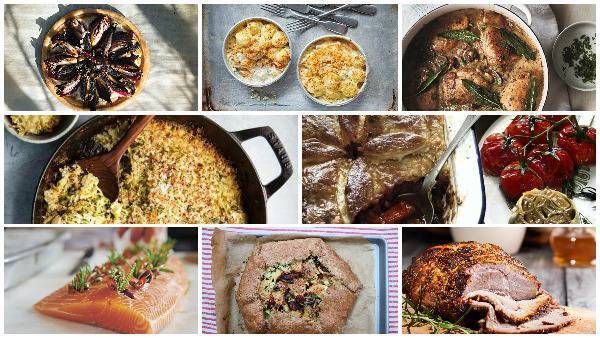
Delicious alternatives to roast lamb for Easter Sunday.
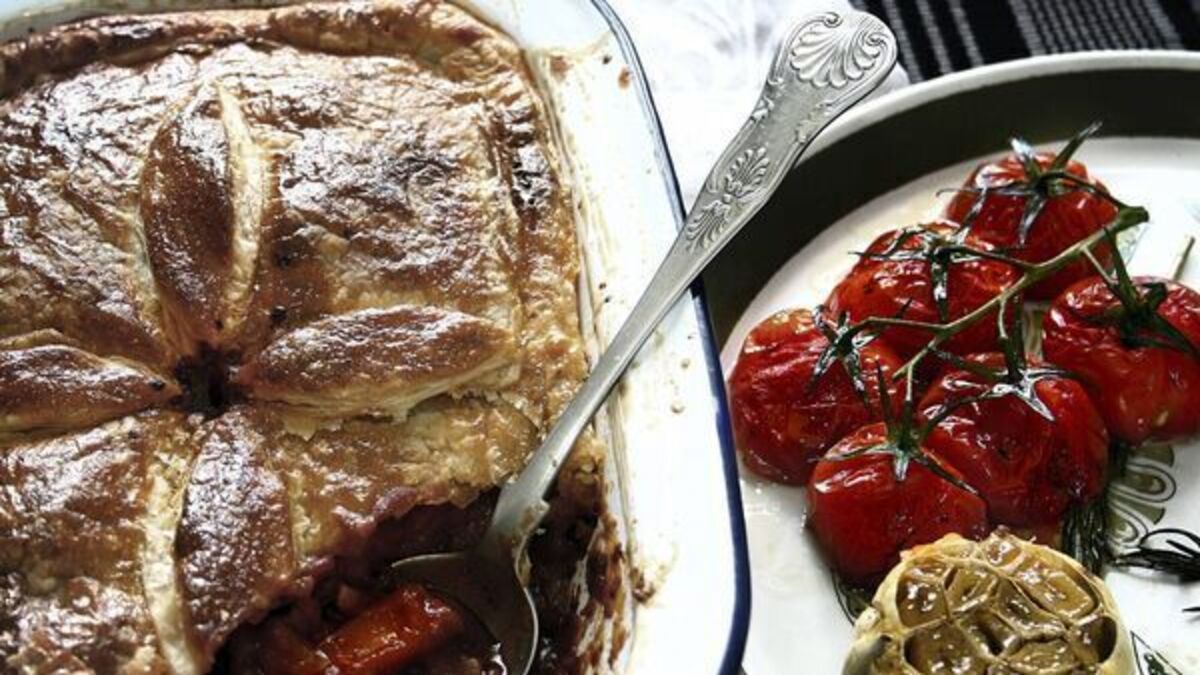
Puff pastry beef pie
With a puff pastry lid, this pie is an easy but delicious main course
Servings
6Preparation Time
20 minsCooking Time
1 hours 20 minsTotal Time
1 hours 40 minsCourse
MainIngredients
dash of olive oil
500g stewing beef
2 onions, finely sliced
4 garlic cloves, chopped
2 medium carrots chopped
bunch of thyme, chopped
bunch of rosemary, chopped
350ml stock, hot
150ml red wine
350g puff pastry
1 egg yolk
small dash of milk
Method
Season the flour and pour into a bowl. Toss the beef in the flour until it is coated all over. Heat the oil in large pan and fry the onion until it is turning translucent, add the garlic and carrots and fry on a low heat for another minute. Remove from the pan.
Add the meat to the same oil on a slightly higher heat and fry until it has browned all over. Now add the onions, carrots and garlic back in with the herbs, stock and wine. Leave to bubble away on a low heat for 45 minutes until most of the liquid has evaporated.
Heat the oven to 180°C. Pour the contents of the pan into an oven proof dish. Cover the top with a layer of the puff pastry. Pinch the pastry in at the edges of the dish and trim any that hangs over the edge. Cut a slit in the centre of the pie. You can decorate the top of the pie with the pieces you trimmed from the edge.
Mix the egg yolk with the same amount of milk and stir well. Brush the mixture over the pastry. Bake for 35 minutes until the pastry is golden.
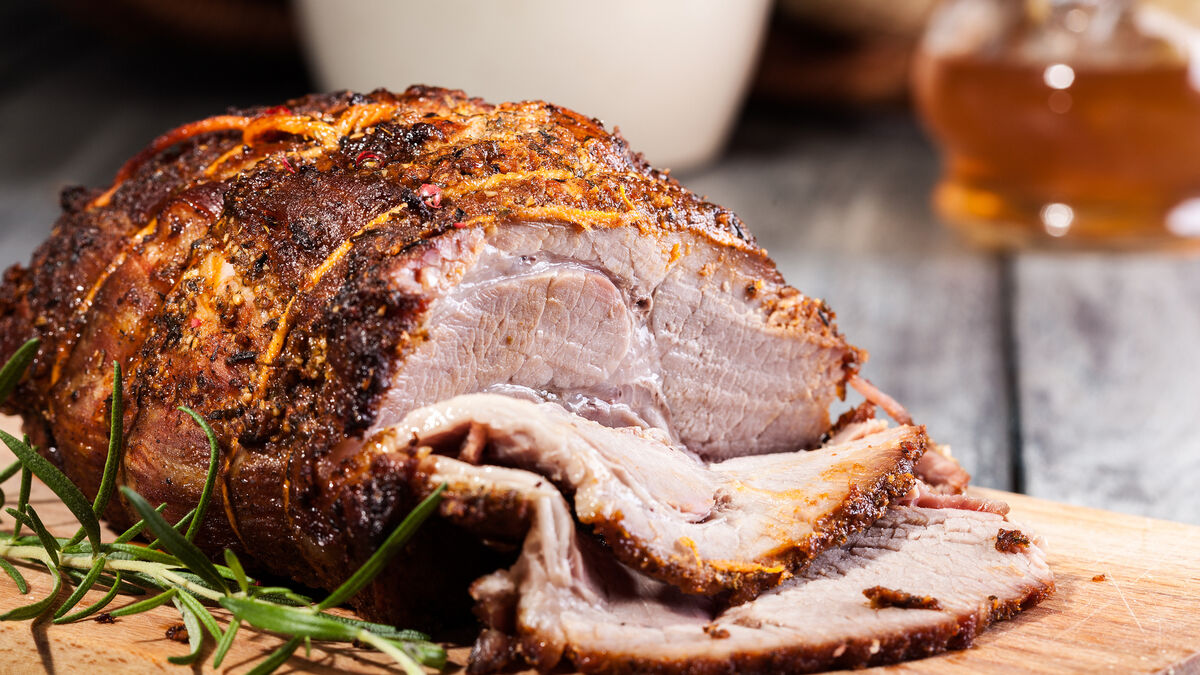
Slow-roasted shoulder of pork with fennel seeds
Shoulder of pork is best for this long slow cooking method, as the meat is layered with fat which slowly melts away
Servings
8Preparation Time
20 minsCooking Time
5 hours 30 minsTotal Time
5 hours 50 minsCourse
MainIngredients
1 whole shoulder of free-range pork, with skin, about 2.75-3.25 kg
8 garlic cloves, peeled
30 g fennel seeds
Salt and pepper
1 tsp chilli flakes (optional)
Sprigs of fennel
Method
Preheat the oven to 230°C.
Using a small sharp knife, score the rind of the shoulder with deep cuts about 5mm wide.
Peel and crush the garlic with the fennel seeds, then mix with salt, pepper and chilli flakes to taste. Push this mixture into the cuts, over the rind and on the surface of the meat. Place the shoulder on a rack in a tin and roast for 30 minutes or until the skin begins to blister and brown. Reduce the oven temperature to 150°C, and leave the meat to roast for 5-6 hours or more until it is completely soft under the crisp skin. The meat will give way and will almost fall off the bone.
Serve each person some crisp skin and some chunks of meat cut from different parts of the shoulder. Loin and streaky pork is also delicious cooked in this way but it will take a shorter cooking time.
Rather special chicken and herb casserole
An all-in-one dish to cook and serve. Sage was often used as a dried herb in recipes but now it is readily available fresh and is simple to grow. It comes with either green or purple leaves – they both taste the same.

Servings
6Preparation Time
10 minsCooking Time
60 minsTotal Time
1 hours 10 minsCourse
MainIngredients
250g (9oz) dry cured bacon, snipped into small pieces
2 large onions, chopped
8 skinless chicken thighs, bone in
2 tbsp sunflower oil
30g plain flour
150ml hot chicken stock
150ml dry white wine
2 large sprigs of thyme
Small bunch of sage, 6 leaves removed for garnish
2 bay leaves
200g (7oz) small chestnut mushrooms, quartered
100g (4oz) full-fat creme fraiche
A knob of butter
Small bunch of parsley, chopped
Method
Preheat the oven to 160°C/140°C fan/Gas 3.
Place the bacon in a large non-stick ovenproof frying pan or flameproof casserole and fry over a medium heat for a few minutes to render out the fat. Add the onions and continue to fry until the bacon is brown at the edges. Transfer the bacon and onions to a plate using a slotted spoon and set aside.
Lightly season the chicken. Place the oil in the unwashed dish, add the chicken and brown over a high heat, turning once. Transfer to the plate with the bacon and onions.
Scatter the flour into the dish (adding a little more oil, if needed) and stir to combine. Gradually incorporate the hot stock, whisking, and allow to thicken. Pour in the wine and return the bacon, onions and chicken to the pan. Stir well, add the thyme sprigs, sage sprigs and bay leaves. The sauce will be quite thick at this stage. Bring to the boil, season well with salt and black pepper and cover. Transfer to the oven for 30 minutes.
Remove the dish from the oven and add the mushrooms and creme fraiche. Stir well and return to the oven for a further 15–20 minutes, until the chicken is tender.
Meanwhile, heat the butter in a small pan over a medium heat. Add the whole sage leaves and fry until crisp.
Remove the bay leaves, thyme and sage sprigs from the casserole and discard (some leaves will have fallen off to flavour the casserole). Stir in the parsley and serve with the crisp sage leaves on top.
Mary’s tips
Can be made up to a day ahead. Add the crème fraîche and mushrooms when reheating.
Freezes well.
From Love to Cook by Mary Berry published by BBC Books
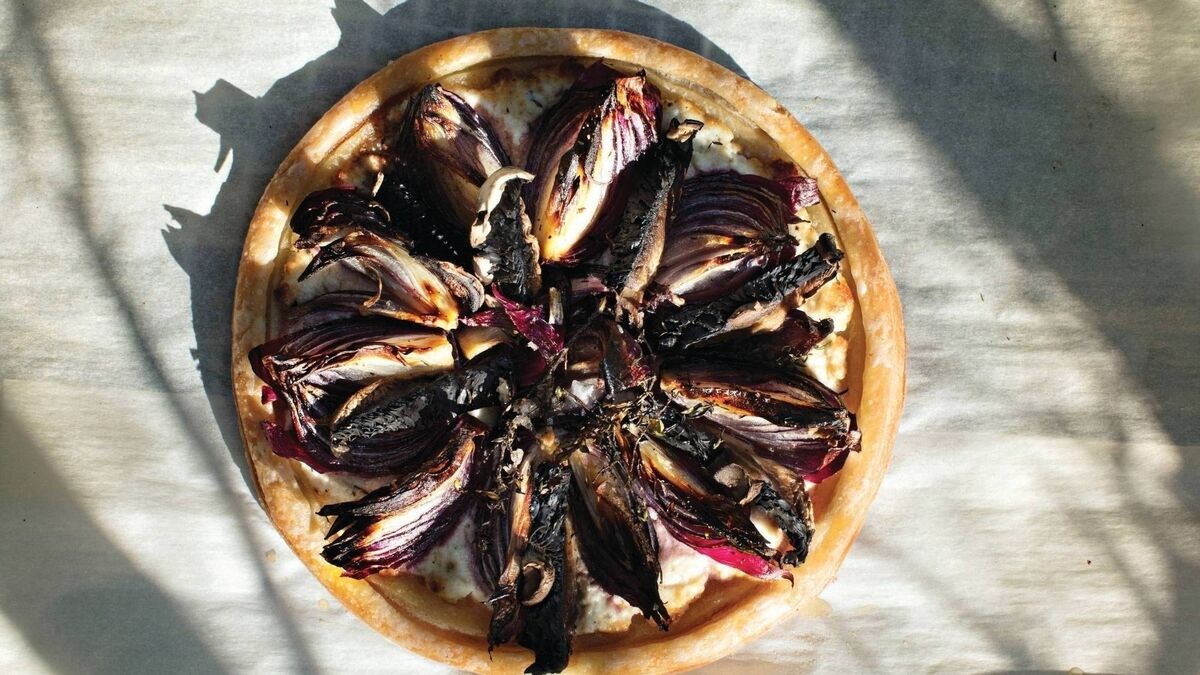
Buffalo Ricotta tart with red onions, mushrooms and herbs
Combining deeply flavoured mushrooms, thyme and marjoram, this puff pastry tart can be served as a starter or as a main course and served with a mixed leaf salad
Servings
4Preparation Time
20 minsCooking Time
60 minsTotal Time
1 hours 20 minsCourse
MainIngredients
250g puff pastry
2 medium red onions, peeled and each onion cut into 8 even-sized wedges
2 tablespoons plus 2 tsp extra virgin olive oil
2 large sprigs of fresh thyme
sea salt
freshly ground black pepper
100g buffalo or sheep’s milk Ricotta
25g Parmesan, grated
½ tsp fresh thyme leaves
1 large flat mushroom
2 tsp fresh marjoram leaves
mixed leaf salad, to serve
Method
Preheat the oven to 200°C. Line a baking sheet with non-stick baking paper.
Roll the pastry out and cut into a neat 22cm circle, saving the pastry trimmings for another day. Place on the lined baking sheet. To achieve a rim on the cooked tart, cut another circle 1cm in from the edge of the pastry. Your knife should pierce the pastry about 1mm deep and should be an obvious cut, not just a mark. This 1cm rim will be the risen edge of the cooked tart and will hold the vegetables in place.
Pierce the pastry inside the 1cm rim all over with a normal table fork, making sure you feel the tines of the fork hitting the baking sheet. Do not pierce outside of the 1cm rim with your fork. The somewhat alarming holes you have created with the fork in the bottom of the pastry will close and reseal when it cooks. Chill the pastry until you are ready to assemble the tart.
Toss the onions in 2 tablespoons of the olive oil, add the thyme sprigs and season with salt and pepper. Tip into a roasting tray and cook in the oven for 30 minutes, until tender. Cool completely.
Mix the Ricotta with the Parmesan, thyme leaves and the remaining 2 teaspoons of olive oil and season with salt and pepper.
To assemble the tart, spread the ricotta mixture over the base, making sure not to go onto the pastry rim. Arrange the roasted onions on top. Cut the mushroom into slices 1cm thick and place cap side down, stalk side up, in a circle on top of the onions. Season the mushroom slices. If the thyme sprigs still look reasonably respectable, I pop those on top as well as I love their roasted appearance.
Cook in the oven for 30 minutes, until the pastry is crisp and cooked through. Add a final few grains of sea salt and the marjoram leaves and serve as soon as possible.
From Rory O’Connells “Cook Well, Eat Well” published by Gill Books
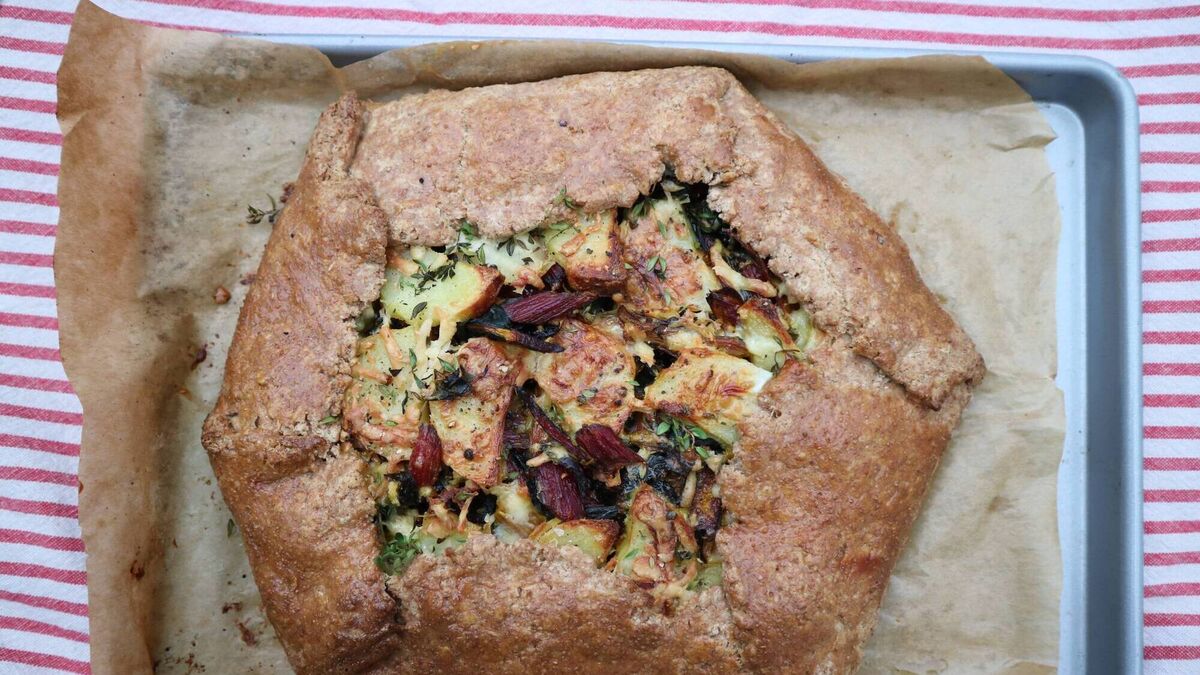
Chard and potato galette
This free-form tart is both rustic and elegant and we make it often as a sort of side dish throughout the spring. It is a fabulous vegetarian main course too
Servings
2Preparation Time
20 minsCooking Time
40 minsTotal Time
60 minsCourse
MainIngredients
400g chard, stems and leaves
3 cloves of garlic, finely chopped
2 sprigs of rosemary, needles chopped finely
2 medium waxy potatoes, peeled
100g good strong cheddar cheese
50g butter
olive oil
For the pastry:
300g wholewheat spelt flour
175g butter
2 eggs, beaten
sea salt
Method
Separate out the chard leaves from the stems. Cut the stems into ½ inch pieces. Heat the butter in a large frying pan over a medium-high heat with a drizzle of olive oil.
Add the chard stems to the pan and cook for 6-8 minutes until softened.
Add the chopped garlic and chard leaves, allowing the leaves to wilt a little.
After two minutes add around 80ml of water, cover and leave it to bubble away for another couple of minutes until the chard leaves have completely wilted down. Uncover, take off the heat and stir in the chopped rosemary.
Decant into a bowl and leave to cool. Boil the potatoes until just undercooked. Leave to cool and then slice into thick discs.
To make the pastry, measure the flour into a large mixing bowl and add a pinch of sea salt.
Cut the butter into small cubes and add to the bowl. Using your fingers, rub the butter into the flour until you get a sort of fine crumble.
Add 1 beaten egg and mix together until you get a smooth dough, you may need to add a splash of cold water if it is too dry.
Pat the dough into a thick disk, cover it in baking paper and place it in the fridge for around 30 minutes.
Preheat the oven to 200°C.
Roll out the pastry on a floured surface, or on a large piece of baking parchment. You want the pastry to be roughly round and be relatively thin.
Transfer the pastry to a large lined baking tray. Drain the chard mixture of any excess liquid and place it in the middle of the pastry. Place the potato discs on top and season with sea salt and black pepper.
Sprinkle the grated cheddar cheese over it and then fold up the edges so that you cover the outer perimeter of the filling, leaving an opening in the middle. Brush the pastry with the remaining beaten egg.
Place in the preheated oven and bake for around 35-40 minutes until the pastry is golden brown. Leave to cool a little before slicing up and serving.
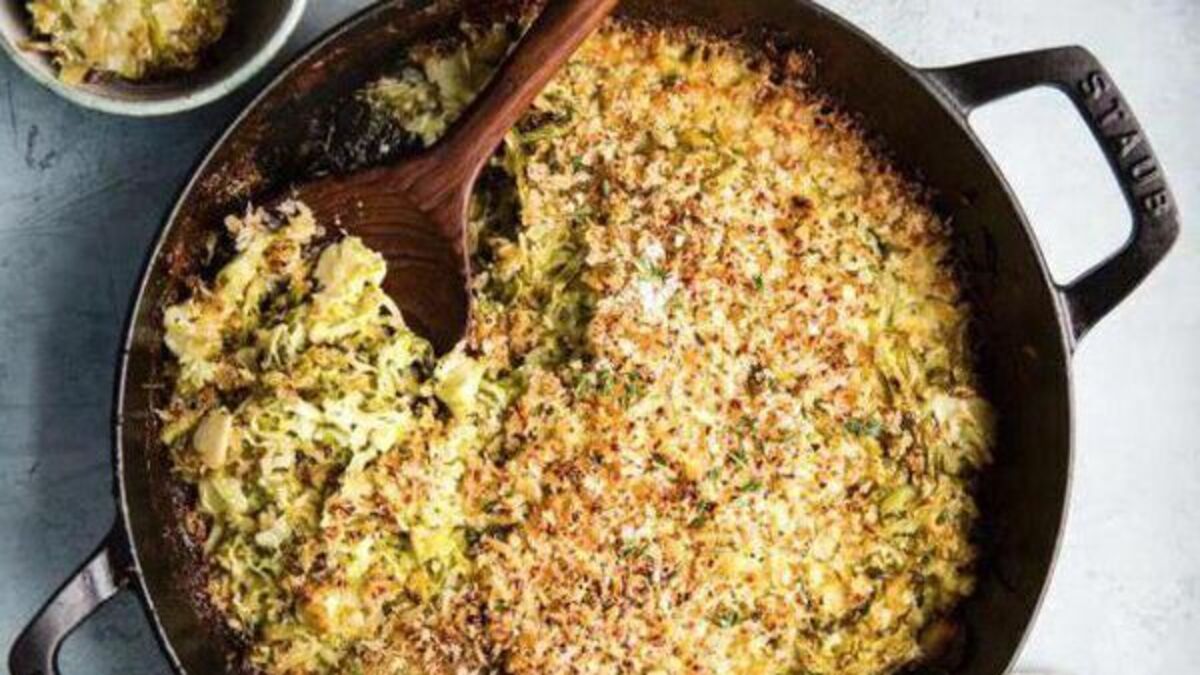
Cheesy gratin of leeks and brussels sprouts
This hot, creamy gratin is comforting dish and the perfect way to use up leftover vegetables
Servings
6Preparation Time
20 minsCooking Time
15 minsTotal Time
35 minsCourse
MainIngredients
8 medium leeks or 1 ½ lbs plus ½ lbs quartered, blanched and refreshed sprouts
600ml whole milk
a few slices of carrot and onion
3 or 4 peppercorns
sprig of thyme or parsley
175g grated Cheddar cheese or a mixture of grated Cheddar, Parmesan and Gruyère
¼ tsp Dijon mustard
salt
freshly ground black pepper
For the buttered crumbs:
50g butter
110g soft white breadcrumbs
Method
To make the buttered crumbs, melt the butter in a pan and stir in the breadcrumbs. Remove from the heat immediately and allow to cool. Use what you need and store the remainder in a box in the fridge to scatter over gratins or fish pies.
Trim most of the green part off the leeks (use to make soup or pop into the stock pot). Leave the white parts whole, slit the top and wash well under cold running water. Cook in a little boiling salted water in a covered saucepan until just tender, 15 minutes approx.
Meanwhile, put the cold milk into a saucepan with a few slices of carrot and onion, 3 or 4 peppercorns and a sprig of thyme or parsley. Bring to the boil, simmer for 5 minutes, remove from the heat and leave to infuse for 10 minutes. Strain out the vegetables, bring the milk back to the boil, and thicken with roux to a light coating consistency. Add the mustard and two-thirds of the grated cheese, keep the remainder of the cheese for grating over the top. Season with salt and freshly-ground pepper: taste and correct the seasoning if necessary.
Drain the leeks well, slice into chunks, mix with the blanched Brussel sprouts. Arrange in an ovenproof serving dish, season well, coat with the sauce and sprinkle with grated cheese mixed with a few buttered crumbs. Reheat in a moderate oven 180˚C until golden and bubbly – about 15 minutes.
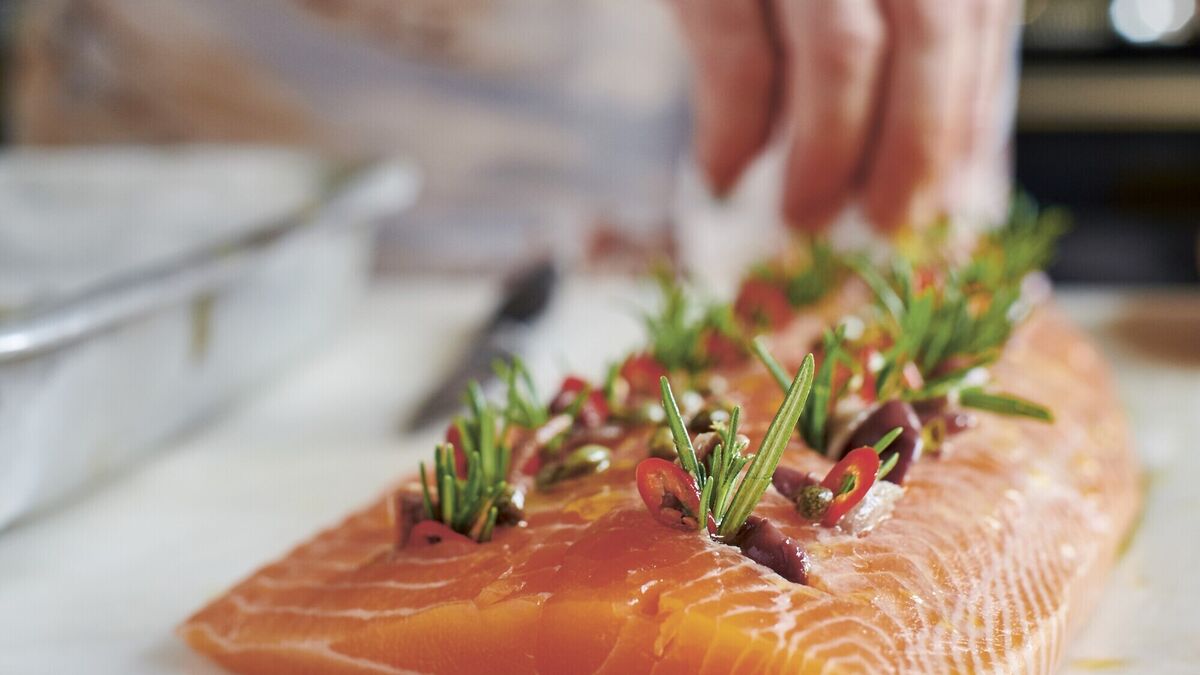
Stuffed salmon
What I like about this recipe is that the method, which is incredibly easy to follow, elevates the salmon to a new level
Servings
8Course
MainIngredients
1 heaped tablespoon baby capers in brine
10 anchovy fillets in oil, from sustainable sources
2 sprigs of rosemary
10 mixed-colour olives, stone in
1 fresh red chilli
1 lemon olive oil
1.2kg side of salmon, skin on, pin-boned, from sustainable sources
Method
GET AHEAD You can prep this on the day, if you prefer. Put the capers into a small bowl, then tear in the anchovies and strip in the rosemary leaves. Squash and destone the olives, tearing the flesh into the bowl, then finely slice and add the chilli. Finely grate over the lemon zest, squeeze in the juice, add 2 tablespoons of olive oil, and mix well. Cover and refrigerate overnight.
ON THE DAY Place the salmon skin-side down in the middle of your largest roasting tray and use the tip of a small sharp knife to make deep cuts into the flesh at 3cm intervals. Now stuff each cut, using the knife to help you. I start by dividing up the olives and anchovies, then add the rosemary, chilli and capers. Take your time and enjoy the process. Sprinkle any excess around the salmon.
TO SERVE Preheat the oven to 180°C. Roast the salmon at the bottom of the oven for 20 minutes. Let it rest for 10 minutes, then serve
VEGGIE LOVE: A giant stuffed portobello mushroom for each veggie guest instead of salmon is a thing of joy – just lose the anchovies.
ENERGY 313kcal FAT 20.6g SAT FAT 3.5g PROTEIN 31.4g CARBS 0.1g SUGARS 0.1g SALT 1g FIBRE 0.1g
Together by Jamie Oliver is published by Penguin Random House © Jamie Oliver Enterprises Limited (2021 Together). Photography: Levon Biss.
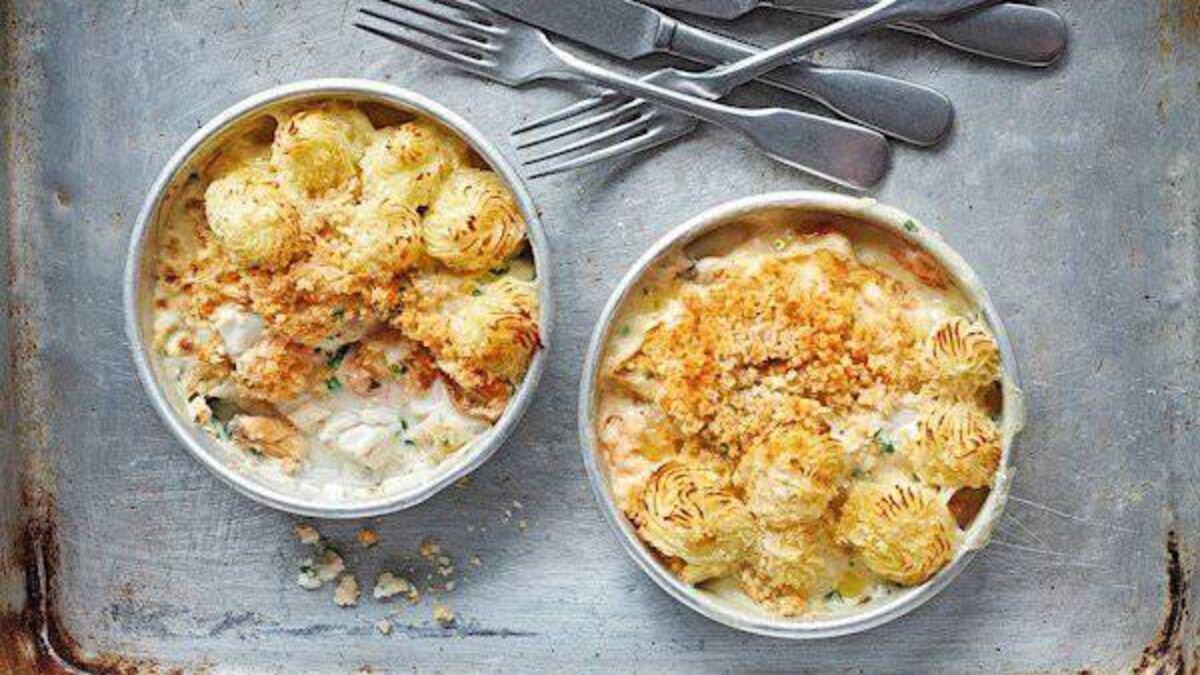
Ballycotton fish pie
This is how we make our fish pie - use whatever fresh fish is available to you
Servings
6Preparation Time
25 minsCooking Time
20 minsTotal Time
45 minsCourse
MainCuisine
IrishIngredients
1.25kg fillets of cod, haddock, ling, hake, salmon or pollock or a mixture, skinned
salt
pepper
600ml full cream milk and a little cream
1-2 slices onion
3-4 slices of carrot
1 small bay leaf
a sprig of thyme
3 peppercorns
18 cooked mussels (optional)
roux (30g butter, 30g flour)
4 eggs, hard boiled
15g butter
120g onion, chopped
170g sliced mushrooms, preferably flat
2 tbsp parsley, chopped
900g fluffy mashed potato or champ
Method
Cut the fish into 140-170g chunks. Season with salt and freshly ground pepper.
Put the onion, carrot, bay leaf, thyme, and peppercorns into the milk, bring slowly to the boil and simmer for 3-4 minutes. Remove from the heat and leave to infuse for 10-15 minutes. Strain. (This step is optional but adds extra flavour to the milk).
Wash the mussels (if using), put into a shallow pan in a single layer, cover and cook over a medium heat just until the shells open, about 3 or 4 minutes approx. Cool.
Meanwhile, hard boil the eggs for 10 minutes in boiling salted water, cool and shell.
Sweat the onion in a little melted butter on a gentle heat until soft but not coloured, remove to a plate. Increase the heat, sauté the sliced mushrooms in the hot pan, season with salt and freshly ground pepper and add to the onions.
Put the fish into a wide sauté pan or frying pan, in a single layer, cover with the flavoured or plain milk. Don’t use more than 4 ozs of smoked haddock unless you want the smoky flavour to predominate. Season with salt and freshly ground pepper. Cover and simmer gently until the fish is just cooked – no more than 3-4 minutes. Remove the fish carefully with a slotted spoon, carefully removing any bones or skin.
Bring the liquid to the boil and thicken with roux (see recipe), add a little cream (optional) and the chopped parsley, roughly chopped hard boiled eggs, mushrooms, onions, chunks of fish and the mussels. Stir gently, taste and correct the seasoning.
Spoon into 1 large or 6-8 small dishes and pipe fluffy mashed potato or Scallion Champ on top. The pie may be prepared ahead to this point.
To reheat, put into a moderate oven 180°C for 10-15 minutes approx if the filling and potato are warm, or 30 minutes approx if reheating from cold.
Flash under the grill if necessary to brown the top. Serve with garlic or parsley butter.
To make the roux, melt the butter and cook the flour in it for 2 minutes on a low heat, stirring occasionally. It will keep at least a fortnight in a refrigerator.