Restaurant review: An intoxicating energy at Camus Farm Field Kitchen in West Cork
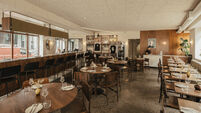
The main dining room and open kitchen at Camus Farm Field Kitchen, in Ardfield, Clonakilty, Co Cork (Picture: Joe McNamee)
- Ardfield, Clonakilty, Co Cork
- Tel 023 886 9268
- fieldkitchen.ie
- Opening Hours (Winter): Fri/Sat, open 6pm, dine 7pm; Sun, open 12pm, dine 1pm
Towards the end of a summer largely spent in West Cork, the wrench of leaving was painful and our morose, meandering trek home saw us regularly pausing, including an al fresco lunch in Connolly’s of Leap. I’ve visited Connolly’s over the decades for all manner of musical feasts but their move into food service began in 2019 when chefs Bob Cairns and Simon Kershaw (also of Ron D’s food truck, in Ballydehob) created a menu of magnificent pizzas.
Cairns and Kershaw moved on but, though new to hospitality, Connolly’s were smart enough to retain the template. And while mac’n’cheese and chicken wings are pleasant, stars of the table are two extraordinarily good pizzas; Margherita, flush with sweet tart tomato, and a ‘Bianca’, Brie instead of tomato sauce, thin slices of baby roast potatoes, lardons and Raclette.
I have followed Cairns since his return to Ireland in 2016, after more than a decade cooking in Soho, in London, and his cooking has blossomed since: never showy but increasingly more confident as he has come to know intimately the wonderful West Cork larder. He and ever-inventive Kershaw form a highly complementary team, both now installed as head chef and sous chef, respectively, at Camus Farm Field Kitchen, outside Clonakilty.

Former nuclear physicist, Vic Sprake, met his partner, art therapist, Deborah Ní Chaoimhe, at a festival in Wales, eventually moving to Ireland to live in her native Kildare. 15 years ago, keen to explore their shared passion for biodiversity and live near the sea, Vic sold off his business in Britain and they bought Camus Farm, converting the 30-acre holding to a self-sustaining organic operation, starting with vegetables and fruit, then introducing a herd of organic Dexter cattle.
A farm shop followed and, as custom increased, tea rooms were added. Finally, they went the full hog and constructed a purpose-built dining room with a superb open kitchen, creating a full-blown restaurant space, also hosting occasional workshops, live music performances and private dining events. An old open barn and outdoor seating is also available during the summer but, on a cool evening, we are delighted to be inside the big, bright room.
A concise yet smart, precise wine list dispenses with populist crowd-pleasing, instead featuring a considered selection of mostly organic and natural wines. Our fruity Rioja (San Vicente Moraza) with mild tannic crunch proves ideal for the fare ahead.

Chewy, tart sourdough flatbread is smeared with textured and extremely tasty pesto alla Trapanese, a Sicilian condiment of ground almonds, tomatoes, pecorino, garlic and olive oil. Atop this are very fine oily green chargrilled peppers.

Great chunks of sweet, earthy roast beet are served with creamy Fior di Latte. A scattering of Hazelnut picada (roast hazelnuts, crispy seasoned and herbed breadcrumbs) adding seasoned, nutty crunch.
Pride of place on the menu goes to Camus Farm’s premium product, Organic Dexter beef. Sirloin is cooked over charcoal, slender slices of tender, toothsome, pink meat imbued with sweet smoky flavours.

A mixed salad includes quite delicious Sarpo Una potatoes — waxy, sweet, nutty and sublimely seasoned; green beans snapping crisply under tooth, flooding the palate with green chlorphyll; and sweet, rich charred red cabbage.

Dessert is a deeply comforting frangipane tart with lush and louche Meribel plums with creamy crème fraîche a mildly bracing counterpoint. A splendid vegan chocolate mousse tart with plump, tart raspberries gives little hint it is constructed without eggs or cream.

Cairns’ style is distinctive, flush with a penchant for rustic Italian dishes, many based on traditional La Cucina Povera (The Kitchen of the Poor) of Southern Italy, where extreme poverty dictated that humble vegetables were given the care, attention and imaginative interpretation more usually accorded to rarely affordable meat.
Applying his style to superb produce sourced from Camus Farm and elsewhere in West Cork, results in quite delicious, deceptively simple yet deeply enjoyable food. What’s more, Cairns has barely begun to scratch the surface of the Field Kitchen’s enormous potential.
Though the dining room is only a quarter full on the night, there is an intoxicating and palpable energy to the space; to witness it in full flight (it is easily capable of seating 100 diners, maybe more) will, I suspect, prove to be an exhilarating experience, and Camus Farm Field Kitchen is set to become one of the big draws of Irish hospitality in the next couple of years.