The Currabinny cooks: James Kavanagh and William Murray's simple and delicious baked peach recipe

James Kavanagh and William Murray show the versatility of peaches. Picture: Bríd O'Donovan
I have a memory of two peach trees being planted somewhere in the garden in Currabinny.
There was a lot of fuss about choosing the right ones, apparently you needed two trees, one male and one female, to bare fruit. This of course is not true, I either made it up or else the person at the garden centre made it up. In any case, I am fairly certain that growing peaches in Ireland is fairly limited due to our climate but I may also have made that up.
Peaches are ‘self-fertile’ in that their flowers contain both male and female parts. If you do want to grow your own peaches, it would probably have to be in a greenhouse or at the very least against a south-facing wall, which gets a lot of sunshine. It must be said, if you do get the chance to eat a peach, fresh off a tree, it is sublime and incomparable to what we are used to buying in the supermarket.
When ripe, a peach should feel heavy with juice.
When biting into the sunset coloured flesh, all that juice should run down your chin and down your front.
You won’t mind, because there is nothing quite like a good ripe peach. I have bought peaches in the supermarket, hard as a rock and refusing to ripen as they sit there taking up room in my fruit bowl. The greengrocer is a better bet as you can examine what you are buying.
Go for bigger, heavier ones and avoid peaches that are overly hard or that feel suspicious light. I find that peaches are far better at this time of the year, late in the summer rather than earlier. A summer of heat will make a peach so juicy you will need a bib to eat it.
Cooking with peaches and plums are a joy. They are reliably delicious in both savoury and sweet dishes. If you do come across the pesky peaches which absolutely refuse to ripen, there really is not much you can do with one. They might soften a little in the heat of cooking, but the flavour will still be lacking.
Choose your peaches wisely. Plums seem to be more reliably ripe and I have seen a lot more varieties like greengages and yellow plums available recently offering new and exciting possibilities.
Apricots are actually not as closely related to peaches as nectarines, but I tend to feel more comfortable lumping them together with peaches due to their slightly fuzzy skin. The flesh is less sweet, having a slightly tart flavour. It is a wonderful thing when you find fresh apricots in the market. They are not nearly as ubiquitous as the other stone fruit but they are a delight when you do find them. Feel free to use them interchangeably with peaches, you will get a similar result but with a slightly different flavour.
This is a great recipe for an easy late summer evening where you want something simple and delicious. The heat of the oven does all the work for you. All you need to do is add some split vanilla beans, a few sprigs of thyme and plenty of butter for something truly sublime.
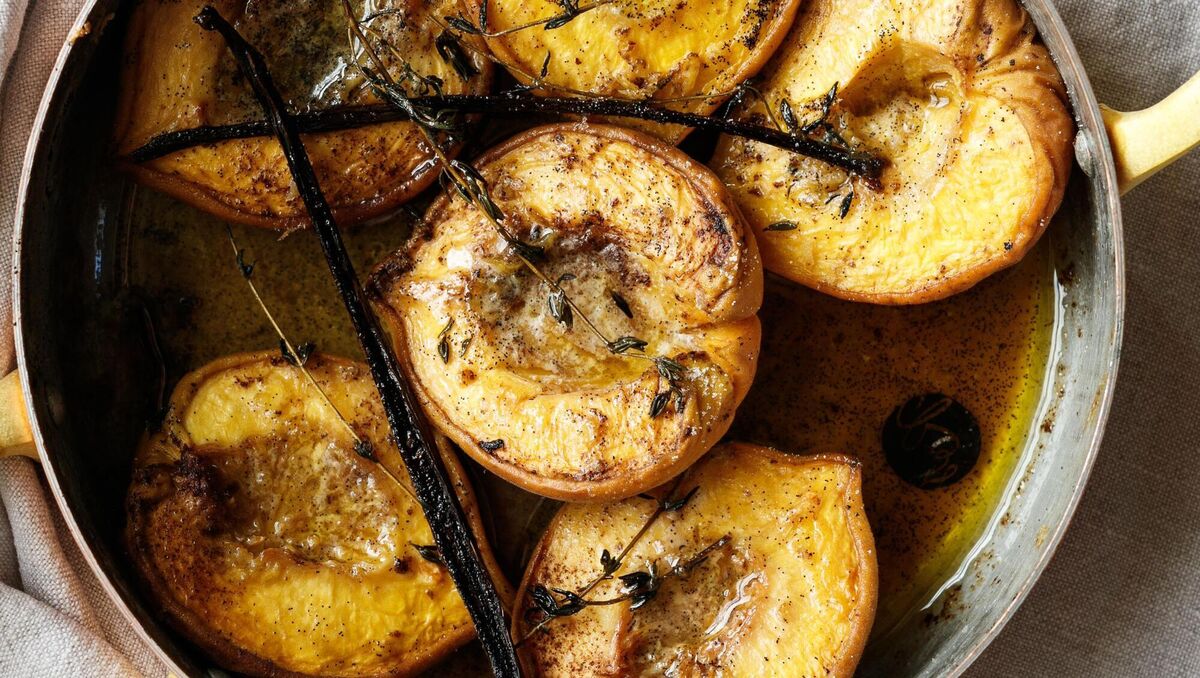
I tend to baste the peaches in the sugary butter a couple of times while it is cooking, but that is the most work I recommend doing, I promise.
4 ripe peaches
100g butter
1 large vanilla pod, split lengthways
2 heaped tablespoons of soft brown sugar
Grated zest of 1 lemon 4 sprigs of thyme
Preheat the oven to 200C.
Halve the peaches and remove the stone. Place in a casserole just about big enough for them, so they fit in snuggly. Scrape the seeds out of the vanilla pod and mix with the butter. Allow the butter to soften and spread on top of the peaches, generously coating them. Sprinkle over the soft brown sugar and lastly add the sprigs of thyme and the split pods.
Place in the oven for 25 to 30 minutes. The butter will melt and mix with the sugar and vanilla.
Make sure you keep basting the peaches with all this delicious flavour and moisture while they cook.
When they are done, serve immediately with the sugary buttery juices spooned over and maybe some cream or creme fraiche if you like.
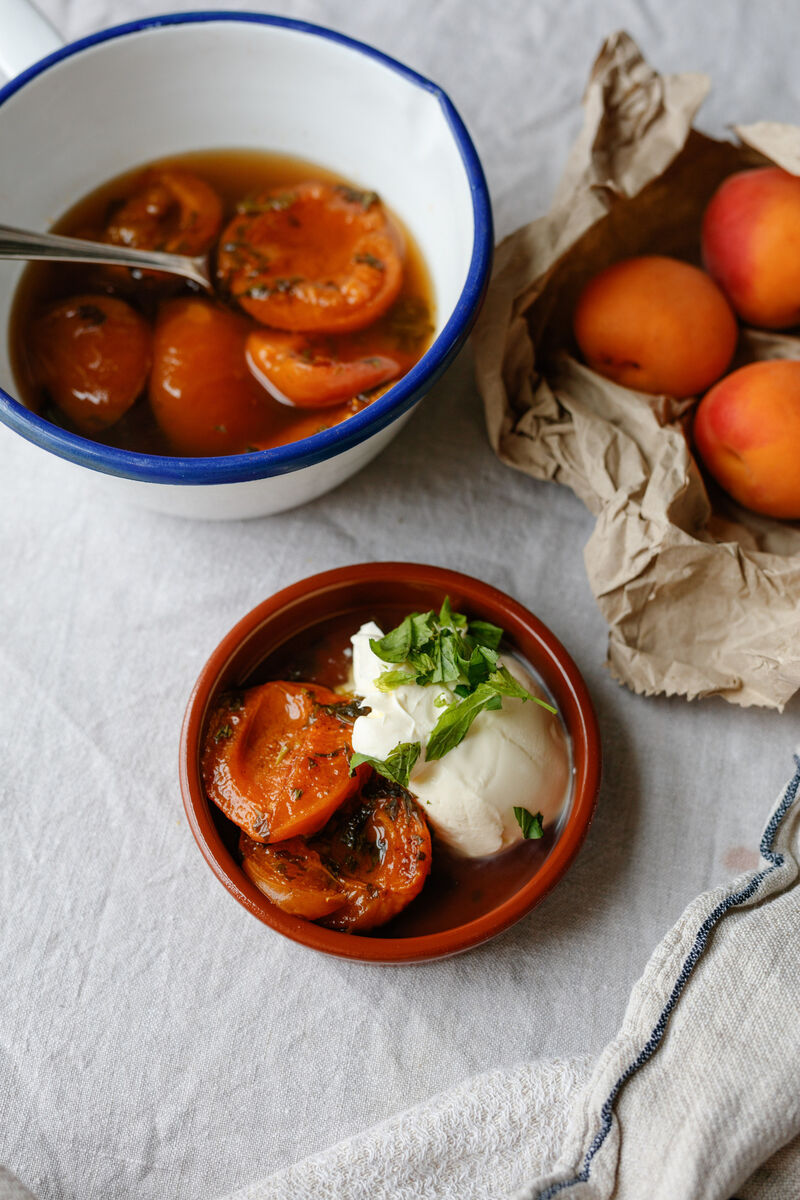
Apricots are full of wonderful antioxidants, vitamins and something called ‘flavanoids’, so don’t feel guilty about eating them covered in sugar syrup with mascarpone heaped on the side. Look for plump apricots with a bright orange colour.
If you absolutely have to, you can use dried apricots for this.
10-12 fresh apricots, cut in half, stone removed
Handful of fresh mint
100g caster sugar
500ml water
200g mascarpone
Place the sugar and water in a small pan and bring to the boil. Remove the mint leaves from the stems and chop them. Add the mint and apricots to the syrup and reduce the heat to a simmer.
Cook until the apricots become tender, which should take around 12-15 minutes.
Serve in bowls with the syrup poured over with apricots, a big dollop of mascarpone per portion and garnished with fresh mint leaves.
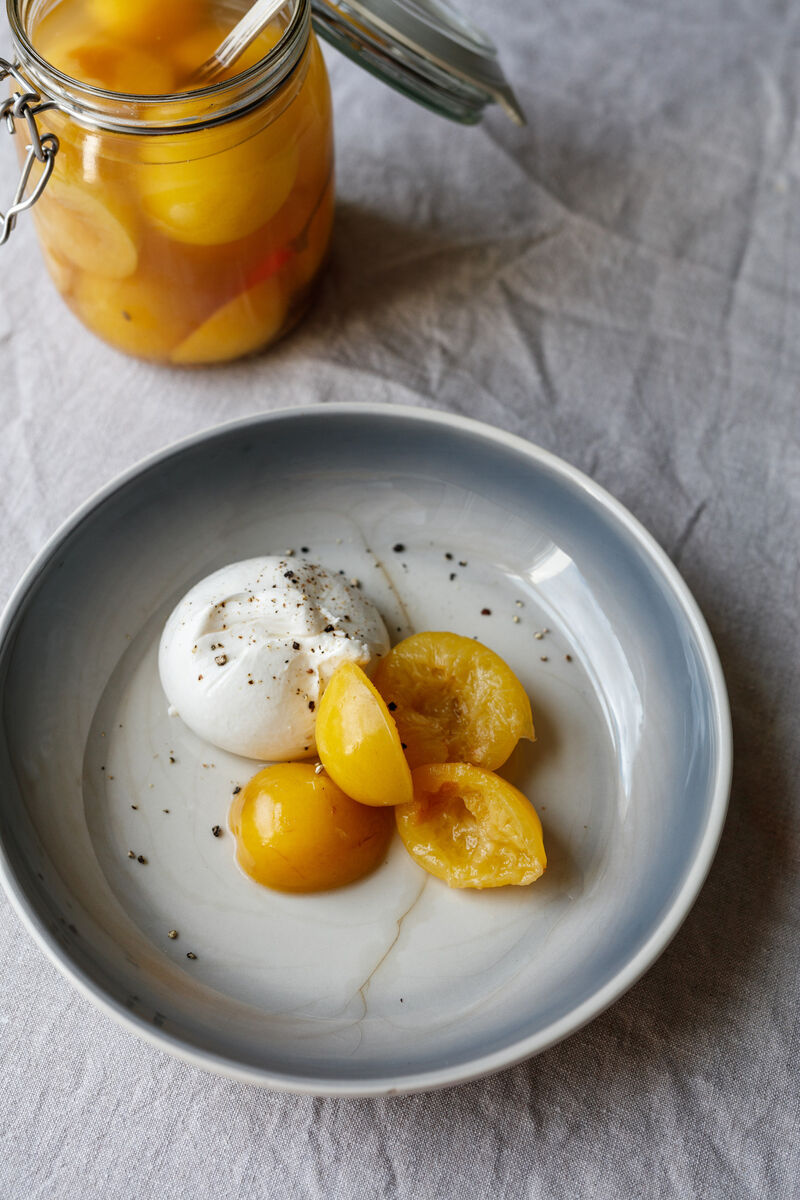
This time of year is perfect for these beautiful Italian plums, which you might be lucky enough to pick up in a good greengrocer or farmers market. This recipe works great for greengages, which also ripen in late August.
2kg yellow plums or greengages, halved and stoned
1.5l water
750ml apple cider vinegar
300g sugar
2 tablespoons of honey
4 star anise
2 lemongrass sticks, bashed
1 red chilli, sliced thinly
1 tablespoon of fennel seeds
1 teaspoon of salt
Place all the ingredients, apart from the plums, in a saucepan, over a medium high heat and bring to the boil. Reduce to a simmer and cook for a further 15 minutes.
Pack the plums into sterilised jar(s) and pour the pickling liquid over. Seal the jars and leave to pickle for at least 48 hours before eating.
Once opened, store in the fridge for up to two weeks. We like to serve our pickled plums simply with some good burrata.